DEKKER Vacuum Technologies, Inc. – Vmax/July 2016
pump is in operation. We suggest that each pump be tested ("bump started") in the HAND mode
initially to check rotation of the pump. When facing the drive end of the pump, the correct rotation is
clockwise. When in HAND mode, the pumps will run continuously unless an alarm condition is
triggered. If such a condition occurs, see the "Troubleshooting" section (page 39).
When the HAND-OFF-AUTO pushbutton is set to the AUTO mode (Green LED), the pumps will
operate from vacuum transducer. In multiplex pump systems, each vacuum setpoint is set with a
differential as well as an offset relative to the next systems setpoint. The setpoints should not be set
identically. The differential is usually between 1” to 6” HgV. For details on setting the vacuum setpoints,
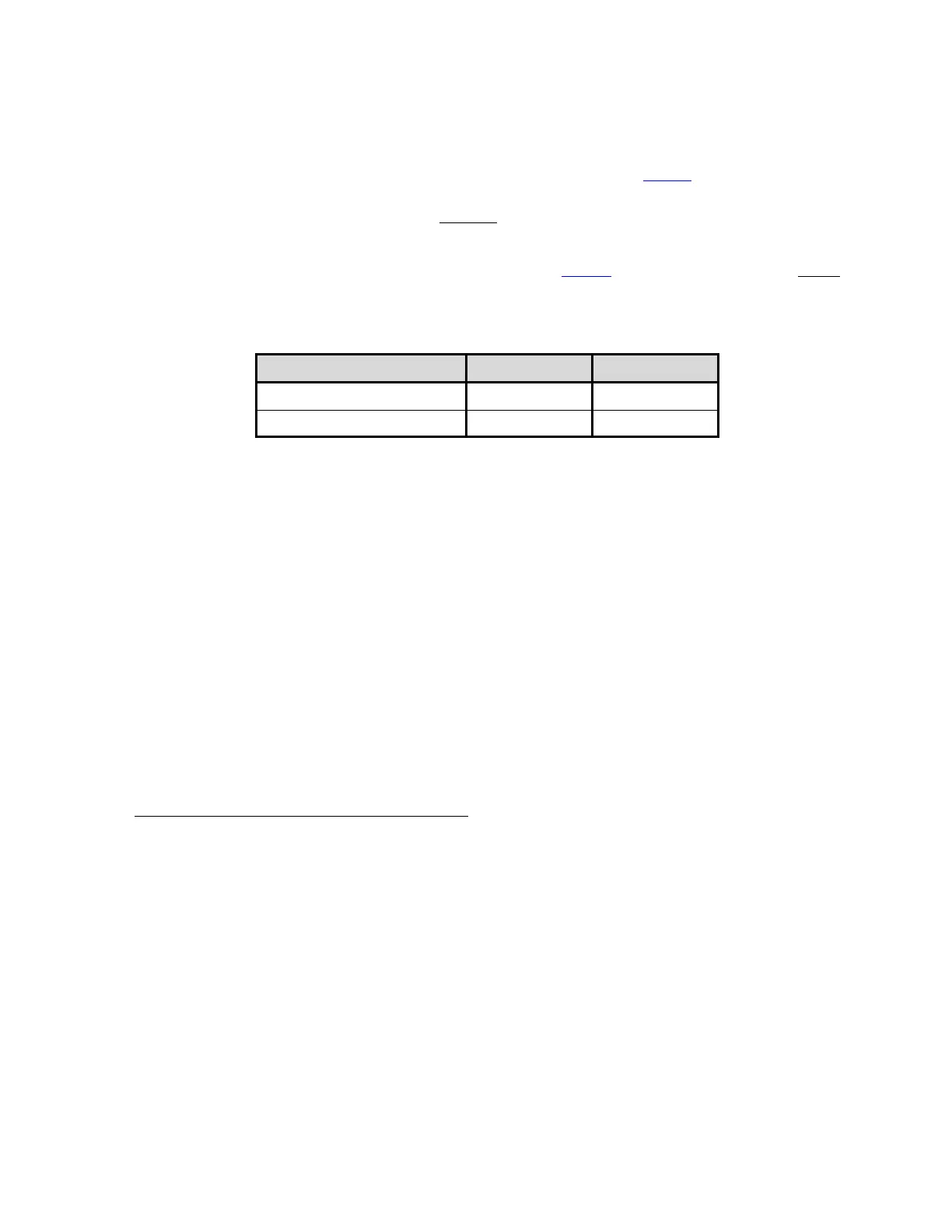
see the “Accessories and Protective Devices” section on page 37. Below is an example for a duplex
system. The differential for each setpoint is 4"HgV, the offset between the two systems setpoints is
2"HgV.
The setpoints are set in this manner so that if pump 1 (lead pump) cannot satisfy demand and the
vacuum level drops below 21"HgV, the lag pump 2 (lag pump) will start-up when the vacuum level
reaches 19"HgV and stops at 23” HgV.
All multiplex systems are supplied with "automatic alternation" and "frequent stop/start protection"
unless otherwise specified.
"Automatic alternation" allows the pumps to operate equally (even run time) by alternating each
pump whenever the pump(s) shut down. When alternation occurs, the "lead" pump becomes the "lag"
pump and the "lag" pump becomes the "lead" pump. Lead pump is selected as pump with lowest run
hours in order to evenly balance run hours.
"Frequent stop/start protection" is used to allow the pump(s) to operate a minimum amount of
time. The time period is factory-set at 10 minutes. This allows the pump(s) to warm up and eliminate
frequent starting of the pump(s) which can cause premature coupling failure and breakdown of
electrical components. The pump(s) will continue to operate after the vacuum level has been satisfied.
If the possibility exists that the pump could work with a closed suction, a relief valve must be installed
to prevent hydraulic knock / cavitation.
SYSTEM ALARM CONDITIONS
The following is a description of how alarm conditions will affect the operation of the system:
If a "Lag pump in operation" (Optional) alarm is installed in the panel, observe the following. Such
an alarm is usually only supplied with NFPA 99 compliant (medical) packages. The alarm consists of a
warning light and an audible alarm. The alarm will trigger when the "lag" pump starts up. The alarm will
not affect the operation of the system. The light will illuminate and the alarm will sound. The audible
alarm can only be silenced by physically (or remotely) pushing the ALARM RESET pushbutton on the
panel. This will not stop the LAG PUMP ON light from illuminating. The light can be reset by
physically (or remotely) pressing the ALARM RESET button.
Note: If the lag pump is still operating when the ALARM SILENCE or ALARM RESET buttons are
pressed, the alarm will continue to sound. The alarm will only reset if the lag pump is not running.
"High Temperature Warning” (Optional on VMX
LT
) If the pump is Running, or in Standby mode,
and the discharge temperature reaches this value, the warning message “High Discharge Temp” will be
displayed. In addition, the Run Status light will be orange and will flash on and off. The pump will not
be shutdown by this warning condition. Standard Warning is 210°F


 To Next Page