DEKKER Vacuum Technologies, Inc. – Vmax/July 2016
Oil Change Procedure
To change the fluid, first make sure there is no power to the system and the pump is off. We recommend
that the fluid be changed when the system is at operating temperature.
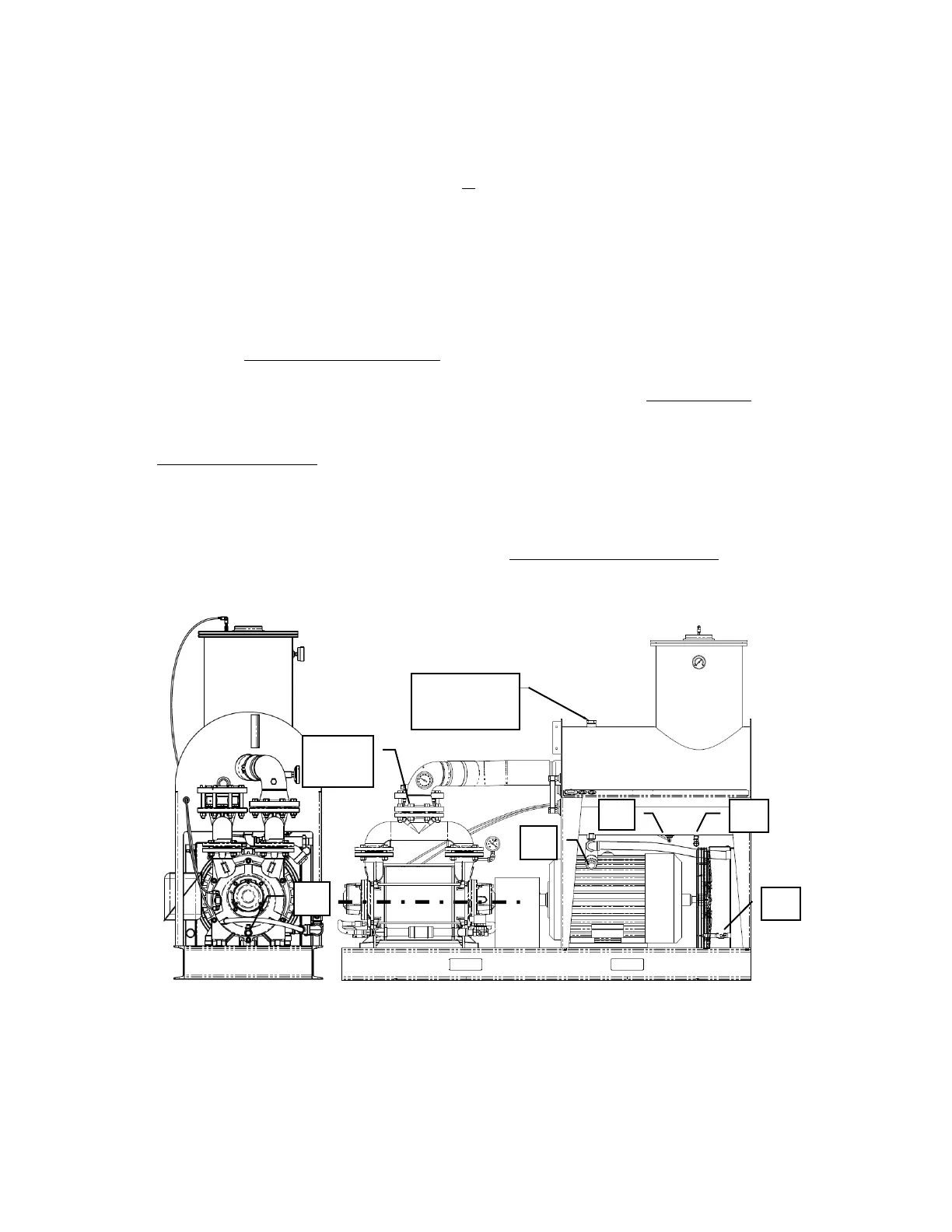
To ensure that all seal fluid is removed, drain at all ports labeled below. Failure to service any of these ports
will eventually result in premature failure of the system.
When charging the system with new fluid, make sure that the pump is filled with oil to the shaft centerline
level. Do not fill the pump above the shaft centerline. Starting the pump with oil level above the shaft
centerline may result in shaft or impeller damage or failure. You can add oil by removing the suction or
discharge flange and pouring oil through pump suction or discharge port.
Fill the reservoir to the FILL LINE on the sight gauge. Open the air bleed valve on the heat exchanger to
remove all air from the system. Run the pump for a few minutes, stop and check fluid level again. If
required, add additional fluid to the reservoir. Be sure not to overfill. Unscrew the Brass Push-Lock
Fitting, and Check port ‘D’ for excess oil!
Check seal fluid level in the reservoir. A high fluid level could mean a build-up of water in the reservoir,
which should be drained. Since water settles below oil, drain from port ‘C’ until only the oil drains. Check every
500 hours.
VMX0203 – VMX0553
A. Pump Drain (Ball Valve)
B. Y-Strainer (Hex Plug/Mesh Screen)
C. Inner Shell Drain (Pipe/Hex Plug/Ball Valve)
D. Outer Shell Drain (90 Degree Brass Push-Lock Fitting) Sight Glass does not read from this Outer Shell.
Before adding oil when you see it low in the sight glass, check for carried-over oil here!
E. Heat Exchanger Drain (Hex Plug/Ball Valve)


 To Next Page