AGE Reader mu Background on
User Manual AGE values
19
7 Background on AGE values
Age is the most important factor determining the level of Advanced Glycation End-
products (AGEs) in tissue. The AGE value as measured by the AGE Reader is also
correlated with age. The reference values for AGE values have been based on 456
measurements in Caucasian subjects without cardiovascular disease (smokers and
non-smokers) [Lutgers et al., Diabetes Care 2006, and Koetsier et al, Diabetes
Technology & Therapeutics, 2010; 12(5):399-403]. Table 2 shows the mean values
of the AGE value for several age decades. AGE values are given in arbitrary units ±
1 standard deviation. N represents the number of subjects in the respective age
groups.
Table 2. Mean Skin auto fluorescence per age decades
Age group
(years)
AGE Reader
measurement
result
N
0-10 0.97 ± 0.17 45
10-20 1.11 ± 0.20 50
20-30 1.53 ± 0.30 62
30-40 1.73 ± 0.42 86
40-50 1.81 ± 0.36 72
50-60 2.09 ± 0.36 64
60-70 2.46 ± 0.57 45
70-80 2.73 ± 0.55 27
80+ 2.71 ± 0.44 5
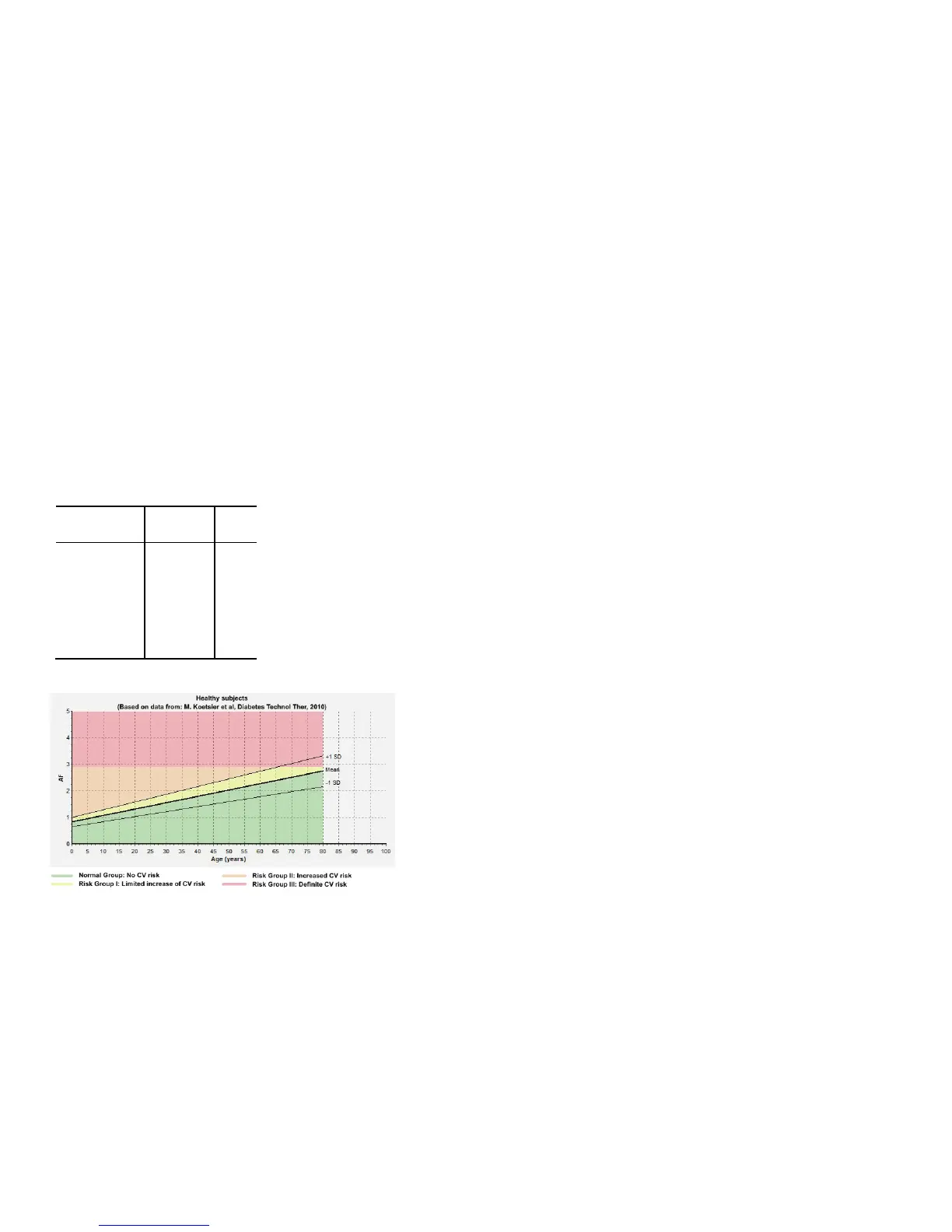
Graph 1. Mean Skin auto fluorescence as function of age
AGE Reader mu Background on
User Manual AGE values
20
Graph 1 shows the mean AGE values as a function of age, together with the lines
representing mean +/- 1 standard deviation. The coloured areas indicate the risk
classes corresponding to the AGE value combined with age value.
No reliable AGE values can be given with the current AGE Reader mu software if
the measured UV reflectance is below 10%. In that case no AGE value is given and
the screen shows a message that a reliable measurement is not possible.
Cardiovascular risk interpretation for type 2 diabetes patients based
on the AGE Reader measurement.
The AGE Reader measurement result increases considerably with age, both in
healthy persons and in those with diabetes or renal disease. Calendar age is in fact
the strongest determinant of the AGE Reader measurement. Keep in mind that
calendar age itself is also by far the strongest risk indicator in terms of
cardiovascular risk (CV risk), as is evident from all known risk scores. Thus, a
healthy elderly person may have a higher measurement result than a much younger
patient with diabetes. Therefore, age-dependent AGE Reader measurements within
levels up to 1 standard deviation (1SD) above the age-corrected mean may serve
as reference values for a certain age, but can be considered normal only for the
corresponding age group.
AGE Reader measurements should be considered as complementary to, and not a
replacement for assessment of conventional cardiovascular risk factors and risk
scores. When other risk factors such as blood pressure or cholesterol levels are
clearly increased, a low AGE Reader measurement is not a reason to withhold
treatment. This especially holds for younger people with extreme values of
conventional risk factors.
Always keep in mind that in case of markedly abnormal AGE Reader
measurements (high or low) one should make sure that the measurement has been
properly performed and that the measured person has not used skin creams, sun
blockers or tanning agents.
Normal Group: No increased CV risk
If the AGE Reader measurement is below or equal to the age-related mean, the
subject has no calendar age-corrected increase in cardiovascular risk. However if
the subject is an elderly person and the result is above 2.5 (even though it is at the
age-related mean), the subject may still have increased cardiovascular risk due to
his/her calendar age.
Risk Group I: Limited increase of CV risk
If the AGE Reader measurement is above the average but within 1SD of the age-
related mean, the subject has a limited increase, corrected for calendar age, in
cardiovascular risk.


 To Next Page