2) Notice
The centrifuge rotor can separate samples with a density lower than 2.0g/ml. If the samples density is
over 2.0g/ml, please calculate allowable speed depending on the following formula.
)/density( ample
)g/(0.2
max)speed(llow
mlgs
ml
speedrpma
● Calculate RCF
An RCF can be determined with the following calculation formula.
RCF=1.118×r×n
2
×10
-5
r—rotating radius, unit: cm; n—rotating speed, unit: rpm
3) Autoclaving
A12-10P rotor is made of plastic, cannot be high-pressure sterilization and UV irradiation, only ordinary
sterilization can be used.
10.2 Tubes
1) Cleaning and sterilizing tubes
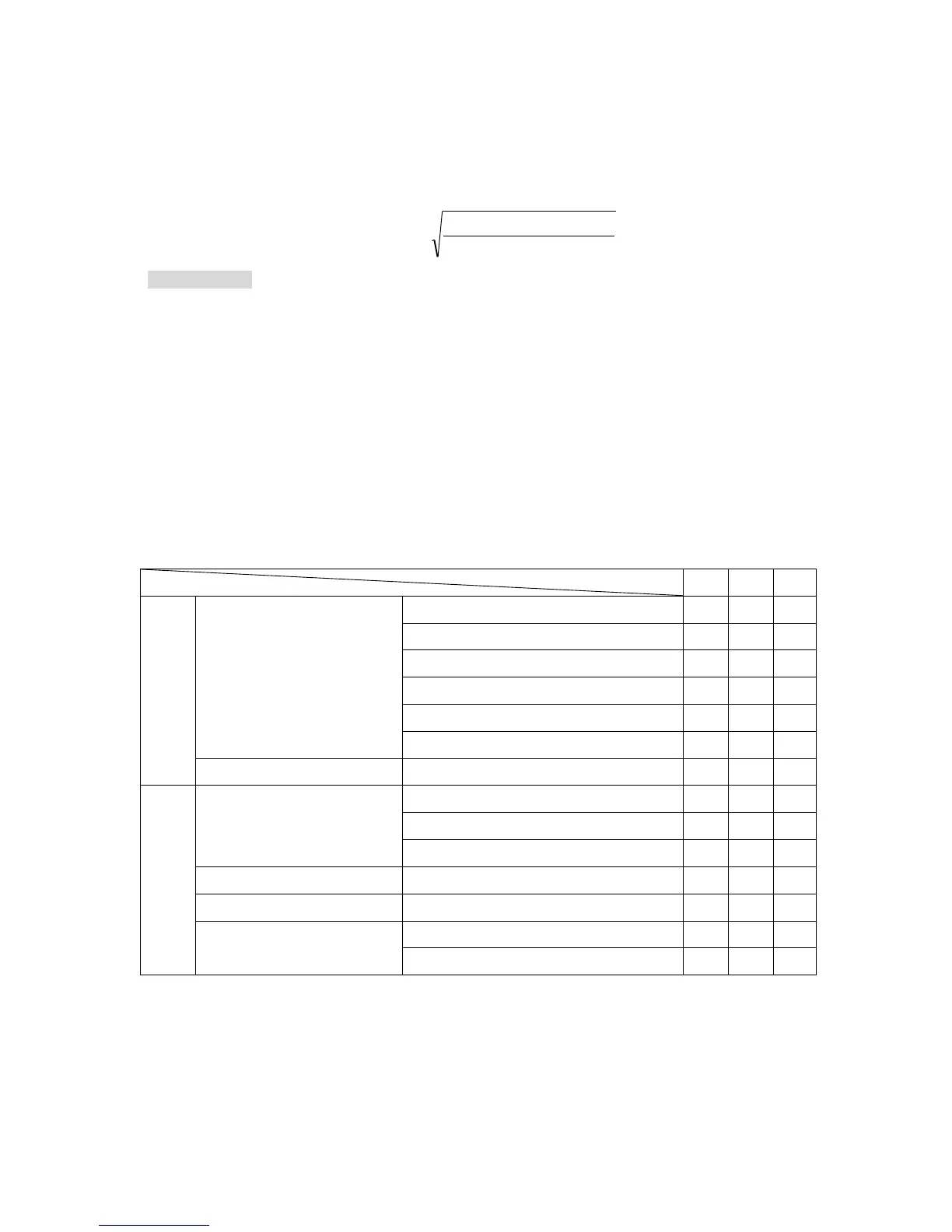
O:Applicable X:Inapplicable
Alkaline(higher than pH9 )
121℃(1.0kg/cm
2
)20 minutes
126℃(1.4kg/cm
2
)15 minutes
Ultraviolet sterilization
PA: Polyallomer PC: Polycarbonate PP: Polypropylene
Table 10.2 Cleaning and sterilizing conditions for tubes
1) Cleaning PC tubes
PC material is low in chemical resistance against alkaline solutions. Avoid using neutral detergents with
pH higher than 9. Note that pH of some neutral detergents are still higher than 9 even if diluted according


 To Next Page