4646
Helm Control Systems
IN SOME SITUATIONS, IT MAY BE POSSIBLE TO
ACCIDENTALLY START THE ENGINES IN GEAR WITH
THE THROTTLES ABOVE IDLE IF THE NEUTRAL SAFETY
SWITCH IS NOT OPERATING PROPERLY. THIS WOULD
CAUSE THE BOAT TO ACCELERATE UNEXPECTEDLY IN
FORWARD OR REVERSE AND COULD RESULT IN LOSS
OF CONTROL, DAMAGE TO THE BOAT OR INJURY TO
PASSENGERS. ALWAYS TEST THE NEUTRAL SAFETY
SWITCH PERIODICALLY AND CORRECT ANY PROBLEMS
BEFORE USING THE BOAT.
4.4 Engine Power Tilt & Trim
All outboard engines have a tilt and trim feature.
Most outboard engines have tilt/trim switches built
into the engine shift and throttle control that allow
the operator to control the position of the outboards
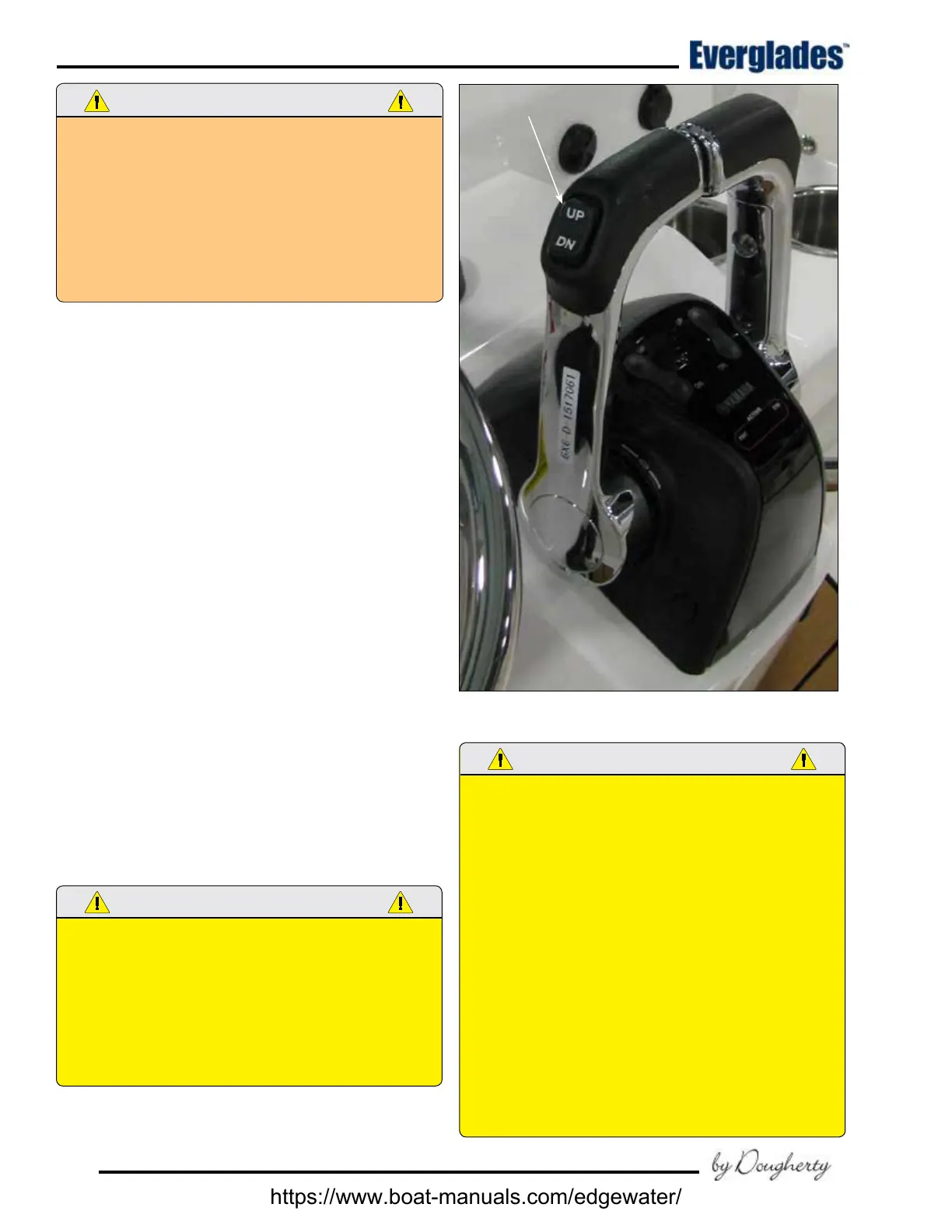
from the helm. Typically, a switch or switches on the
control lever grip activates the tilt/trim. Twin engine
controls typically have two additional switches on
the cover that activate each engine tilt/trim individu-
ally. On most engines, the maximum tilt angle can
be adjusted by your dealer by reprogramming the
settings using the engine diagnostic system.
Moving the outboard closer to the boat transom is
called trimming “in” or “down.” Moving the outboard
further away from the boat transom is called trim-
ming “out” or “up.” In most cases, the boat will run
best with the outboard adjusted so the hull will run
at a 3 to 5 degree angle to the water.
The term “trim” generally refers to the adjustment
of the outboard within the rst 20
o
range of travel.
This is the range used while operating your boat on
plane. The term “tilt” is generally used when refer-
ring to adjusting the outboard further up for shallow
water operation or trailering. For information on the
proper use and maintenance of the power tilt and
trim, please refer to the engine owner’s manual.
THE ENGINE COWLINGS WILL HIT THE COOLER HATCH
OR STERN SEAT BACKRESTS IF THEY ARE OPEN WHEN
THE ENGINES ARE TILTED BEYOND TRIM RANGE FOR
SHALLOW WATER OPERATION OR TO THE TRAILERING
POSITION. THIS CAN CAUSE SEVERE DAMAGE TO THE
ENGINE COWLINGS AND THE BOAT. ALWAYS MONITOR
THE ENGINES AS THEY TILT AND MAKE SURE THE HATCH
AND SEAT BACKRESTS ARE CLOSED BEFORE TILTING THE
ENGINES BEYOND THE TRIM RANGE.
ENGINE HOSES AND CABLES OR THE TRANSOM GEL
COAT CAN BE DAMAGED BY TILTING ENGINES TO THE
FULL UP POSITION WITH THE ENGINES TURNED TO THE
WRONG POSITION. MOST BOATS REQUIRE THE STEERING
WHEEL TO BE TURNED COMPLETELY TO STARBOARD
BEFORE TILTING THE ENGINES TO THE FULL UP POSITION.
YOU SHOULD MONITOR EACH ENGINE AS IT TILTS TO
DETERMINE BEST FULL TILT ENGINE POSITION FOR YOUR
BOAT.
SOME AUTOPILOTS HAVE ENGINE POSITION SENSORS THAT
ARE MOUNTED TO THE HYDRAULIC STEERING CYLINDER.
WITH THESE AUTOPILOTS, THE ENGINE POSITION SENSOR
BRACKET COULD HIT THE TRANSOM WHEN THE ENGINES
ARE TILTED TO THE FULL UP POSITION AND CAUSE
DAMAGE TO THE ENGINE RIGGING, THE AUTOPILOT OR
THE TRANSOM. IF YOU HAVE AN AUTOPILOT INSTALLED
ON YOUR BOAT, YOU SHOULD MONITOR THE LOCATION
OF THE ENGINE CABLES AND AUTOPILOT BRACKETS
AS THE ENGINES ARE TILTED TO DETERMINE THE BEST
ENGINE POSITION AND MAXIMUM ENGINE TILT FOR YOUR
APPLICATION.
Twin Engine Control Engine Tilt & Trim Switch
https://www.boat-manuals.com/edgewater/



 To Next Page