56
Fuel System
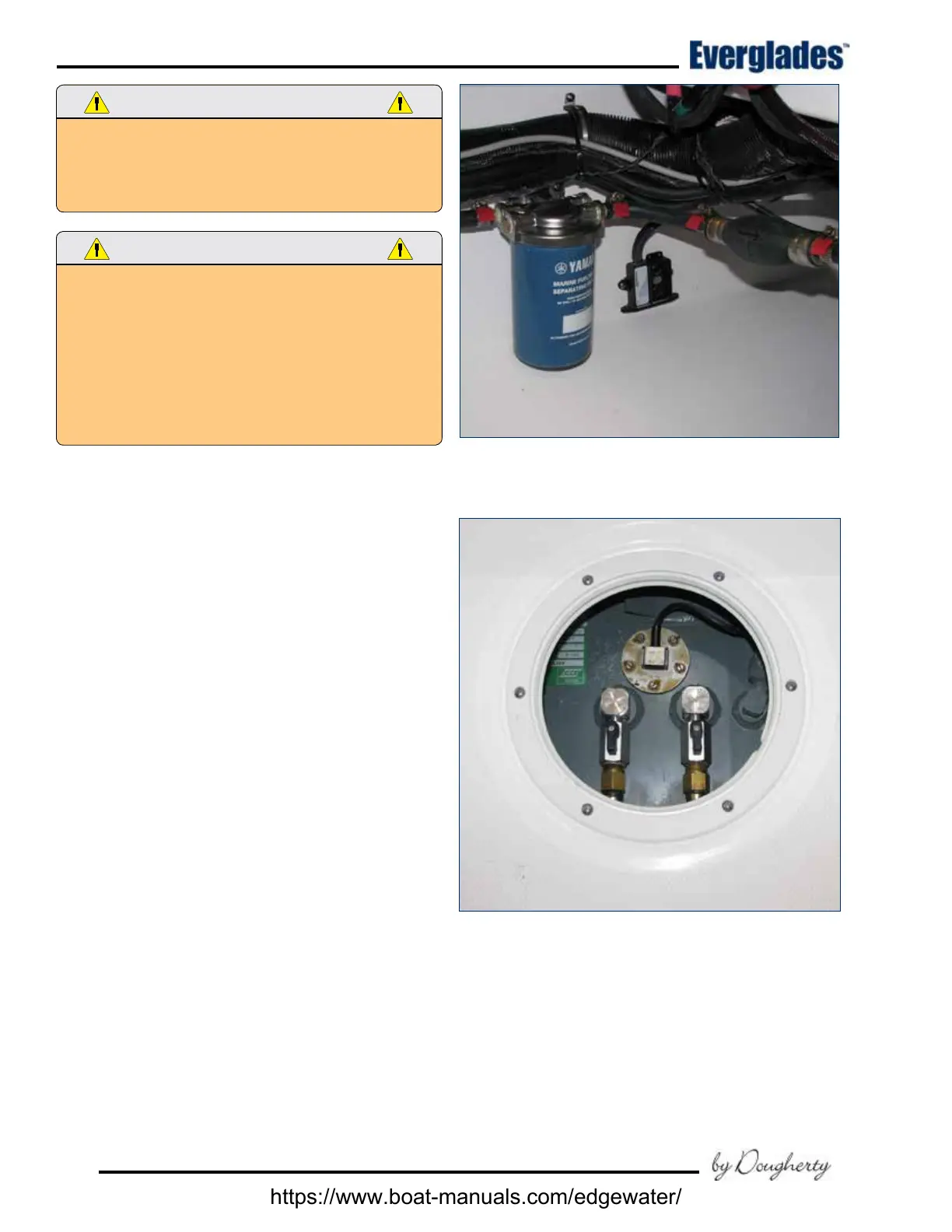
Typical Yamaha Fuel Filter In Aft Systems Compartment
FUEL TANK CONTENTS CAN BE UNDER PRESSURE.
TO AVOID SERIOUS INJURY OR DEATH FROM FIRE
OR EXPLOSION, OPEN FUEL CAP SLOWLY IN A WELL
VENTILATED AREA. NO SMOKING OR OPEN FLAMES.
SPILLED FUEL CAN CAUSE A FIRE OR AN EXPLOSION.
MAKE SURE YOU DO NOT SPILL ANY FUEL. IF A SMALL
AMOUNT OF FUEL IS SPILLED ON THE FIBERGLASS, USE A
CLOTH TO REMOVE THE FUEL AND PROPERLY DISPOSE OF
THE CONTAMINATED CLOTH. IF FUEL IS SPILLED ON THE
WATER, EXERCISE EXTREME CAUTION. FUEL FLOATS ON
THE SURFACE OF THE WATER AND CAN IGNITE. IF FUEL
IS SPILLED INTO THE WATER, IMMEDIATELY EVACUATE
THE AREA AND NOTIFY THE MARINA AND THE PROPER
OFFICIALS.
Preparing the Boat For Operation
Use the following procedure to prepare the boat for
operation when fueling operations are complete:
• Open all hatches, windows and doors.
• Check the fuel compartment and below the
deck for fuel odors. If you smell fuel, do not
start the engines.
5.4 Fuel System Maintenance
Periodically inspect all primer bulbs, connections,
clamps and hoses for leakage, damage or deterio-
ration. Replace as necessary. Spray the valves,
tank fuel gauge sender and ground connections
with a metal protector.
Access to the fuel tank sending unit and fuel valves
is located below a removable hatch located just
aft of the helm seat base. Access to fuel tank
ll and vent hose connections is located below a
removable hatch aft of the center console.
Frequently inspect and lubricate the fuel ll cap
seal with Teon or silicone grease. The seal
prevents water from entering the fuel system
through the fuel ll cap and it should be immedi-
ately replaced if there is any sign of damage or
deterioration.
Fuel Withdrawal Valves & Tank Sending Unit
https://www.boat-manuals.com/edgewater/



 To Next Page