73
Electrical System
UNDETECTED FAULTS IN THE AC BATTERY CHARGING
SYSTEM COULD CAUSE THE WATER AROUND THE BOAT
TO BECOME ENERGIZED. THIS COULD CAUSE A SEVERE
SHOCK OR EVEN DEATH TO SOMEONE IN THE WATER NEAR
THE BOAT. NEVER SWIM OR ALLOW SWIMMING AROUND
THE BOAT WHEN THE BATTERY CHARGING SYSTEM IS
ACTIVATED BY THE SHORE POWER CONNECTION.
Procedure For Disconnecting A Shore
Connection
Turn the disconnect switch or circuit breaker on the
dockside outlet to the OFF position. Disconnect
the cable from the dockside outlet and replace the
outlet cap. Disconnect the cable from the inlet
port and close the cap. Store cable.
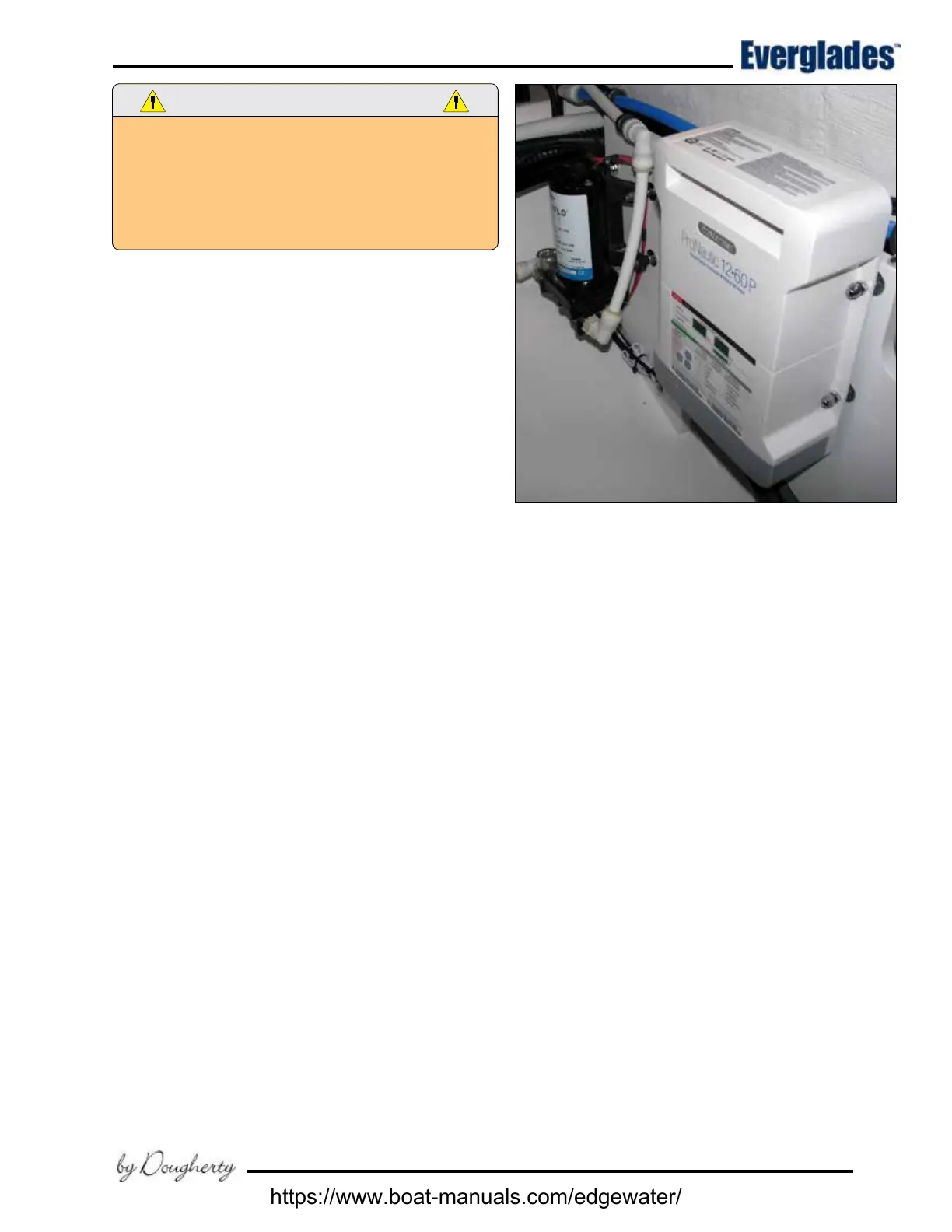
Battery Charger
The battery charger is mounted near the batteries
in the aft systems compartment. Your boat could
be equipped with a three or four bank charger,
depending on the engine options selected. If your
boat is equipped with the trolling motor option,
it will be equipped with another 3 bank charger
dedicated to the trolling motor batteries. The
trolling motor battery charger operates the same
as the engine and house battery charger. It will
automatically charge the trolling motor batteries
when activated.
AC electrical current is supplied directly to the
battery charger by the shore power cable. The
charger automatically charges and maintains the
engine and house batteries simultaneously when
activated. It is equipped with led lights to indicate
the state of charge for each battery.
The charge to the engine batteries can be moni-
tored by using the volt meters in the engine gauge
cluster or the LED lights on the charger. To moni-
tor the engine batteries with the volt meters in the
engine gauge cluster, activate the charger and turn
the engine battery switches on. Turn the ignition
key switch for each engine to the ON position (DO
NOT START THE ENGINES) and read the voltage
on the volt meter for each engine.
If the batteries are in good condition and charging
properly, the volt meters will indicate between 12
and 14.5 volts. If the reading is below 12 volts,
then the battery is not accepting a charge or the
charger is not working properly. Always turn the
ignition switches o immediately after the moni-
toring is complete when using the voltmeters in
the engine gauge cluster.
The wires that supply DC charging current to
the batteries are protected by an internal fuse in
the battery charger and external fuses or circuit
breakers, one for each battery output wire, located
near each battery. The external fuses protect
the DC charging circuit from the batteries to the
charger. The internal fuses in the charger protect
the DC charging circuit from the charger to the
batteries. See the battery charger manual for
more information.
6.10 Bonding System
Your boat is equipped with a bonding system that
interconnects the underwater metal hardware and
the engine to ensure that they are of the same
electrical potential. Sacricial anodes of the size
and type recommended by the engine manufac-
turer are attached to the outboard motor. There
could also be sacricial anodes on each trim tab
plane that are isolated from the boat bonding
system to protect each tab plane assembly if the
boat is to kept in salt water.
Typical Battery Charger
https://www.boat-manuals.com/edgewater/



 To Next Page