“URBAN SOARING” TECHNIQUE
Background:
Successfully flying an R/C sailplane doesn’t require a far journey in search of large open spaces. The
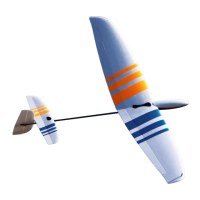
Libelle’s ability to be flung to considerable height with the simple swing of an arm makes for convenient
soaring, both on the slope and over flatland. The Libelle’s low weight, compact size, and maneuverability,
allow you to participate in what we call “urban soaring;” a small schoolyard, an empty parking lot, a row of
dense trees, a sea-wall, or perhaps the side of a large building, now all become potential soaring locations.
Of course, know that there are some guidelines to follow when looking for viable soaring locations and we
always encourage safe and conscientious flying habits (see the important guidelines listed in the beginning
of the manual). RC soaring is quiet, clean, challenging, and fun. While mastering the soaring techniques listed
on the following pages, one develops a unique appreciation and understanding of the environment and
weather patterns.
Important guidelines to follow when flying the Libelle:
►When learning how to fly, always seek advice and training from experienced local pilots.
►Choose a flying location with a nice grassy area and free of large obstacles.
►When slope soaring, use a figure-eight shaped flight pattern to remain in best lift zone.
►When slope soaring, always make turns away from slope whenever possible and give right of way to
larger, heavier aircraft.
►Launch and land glider into wind and away from obstacles, people, and turbulence.
►Treat the land and its occupants with the utmost of respect.
►Fly glider a safe distance away from any individuals present.
►Have fun and enjoy the sun, wind, and your surroundings!
Slope Soaring:
Also known as ridge soaring, slope soaring may be one of the easiest and most rewarding ways to
experience the thrills of R/C soaring flight. The glider sustains flight by utilizing updrafts created when wind
is deflected upward by any sizeable land feature (hill, mountain, cliff, large building, row of trees, etc).
Flatland Soaring:
Flatland soaring with the Libelle can be extremely rewarding; however, a certain amount of skill is required
to sustain flight at low altitudes using rising bubbles of warm air known as thermals (caused by the sun’s
heating of the earth’s surface). Navigating thermals, which tend to be inconsistent and turbulent near the
ground, makes for a good challenge. A good way to think of hand-launched thermalling is “sky fishing,”
since a typical flight consists of a quick discus launch to altitude, a nose over of the glider to level flight, and
then off to search for a thermal. The majority of flights will to be short (15-30 seconds), but if you persist,
you will eventually hook a nice thermal and gain altitude for an extended flight several minutes in duration.
Next are a few tips that make mastering the art of near-ground thermalling a bit easier:


 To Next Page