10
OPERATION INFORMATION
The information in this section is intended for the use
of qualified operating personnel. Qualified Operating
Personnel are those individuals who have carefully
read the information contained in this manual, are
familiar with the function of the oven and/or have had
experience with operating the equipment described.
We recommend following these instructions to insure
optimum performance, long life and trouble-free
service from your oven.
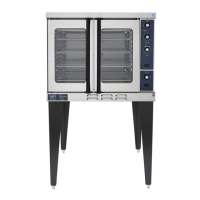
The 6/13-G Series of Convection Ovens
Convection cooking has been around from the 1960’s. Its
advantages are well known. It differs from conventional
cooking by the movement of heated air within the cooking
cavity by means of a fan. This moving, heated air helps to
strip the cool air from around the product being cooked,
allowing the heat to penetrate more rapidly. The results are
that your product is cooked quicker and at a lower
temperature with the comparable product quality found in
conventional ovens.
The “6/13” Series of ovens represents the very latest in
energy efficiency technology with an appreciable
reduction in NOx emissions over other gassed fired
ovens, both convection and conventional. The
introduction of heat directly to the cooking cavity
precludes any undue thermal loss due to the venting
away of heated air before it has utilized its energy to
cook product. This results in lower flue temperatures
and hence, less heat loss to your kitchen so your
exhaust and air conditioning systems do not work as
hard. Also, the “over-sized” cooking cavity allows you
to cook more product in each load.
All of this in addition to superior cooking results means
the “6/13” Series of gas fired convection ovens is an
outstanding value. In addition, lower NOx emissions
means it’s environmentally friendly. Please take the
time to carefully read the operating instructions. They
are important in the successful use of your Duke “6/
13”.
IMPORTANT NOTE: The “6/13” Convection
Oven relies on electricity for powering the ignition
system and the fan. Do not attempt to operate this
unit during a power failure.


 To Next Page