14
8. Installation: discharge arrangement
1. Ideally below the xed grating and above the water seal in a trapped gulley.
2. Downward discharges at a low level; i.e. up to 100mm above external surfaces such as car parks, hard standings, grassed areas
etc. are acceptable providing that where children play or otherwise come into contact with discharges, a wire cage or similar guard
is positioned to prevent contact whilst maintaining visibility.
3. Discharges at a high level; e.g. in to metal hopper and metal down pipe with the end of the discharge pipe clearly visible (tundish
visible or not) or onto a roof capable of withstanding high temperature discharges of water and 3m from any plastic guttering
systems that would collect such discharges (tundish available).
4. Where a single pipe serves a number of discharges, such as in blocks of ats, the number served should be limited to not more than
6 systems so that any installation can be traced reasonably easily. The single common discharge pipe should be at least one pipe
size larger than the largest individual discharge pipe to be connected. If unvented hot water storage systems are installed where
discharges from safety devices may not be apparent i.e. in dwellings occupied by blind, inrm or disabled people, consideration
should be given to the installation of an electronically operated device to warn when discharge takes place.
Worked example
The example below is for G1/2 temperature relief valve with a discharge pipe (D2) having four elbows and length of 7m from the
tundish to the point of discharge.
From Table 1:
Maximum resistance allowed for a straight length of 22mm copper discharge pipe (D2) from a G1/2 temperature relief valve is: 9.0m
Subtract the resistance for 4 x 22mm elbows at 0.8m each = 3.2m
Therefore the maximum permitted length equates to: 5.8m
5.8m is less than the actual length of 7m therefore calculate the next largest size. Maximum resistance allowed for a straight length
of 28mm pipe (D2) from a G1/2 temperature relief valve equates to: 14m
As the actual length is 7m, a 28mm (D2) copper pipe will be satisfactory.
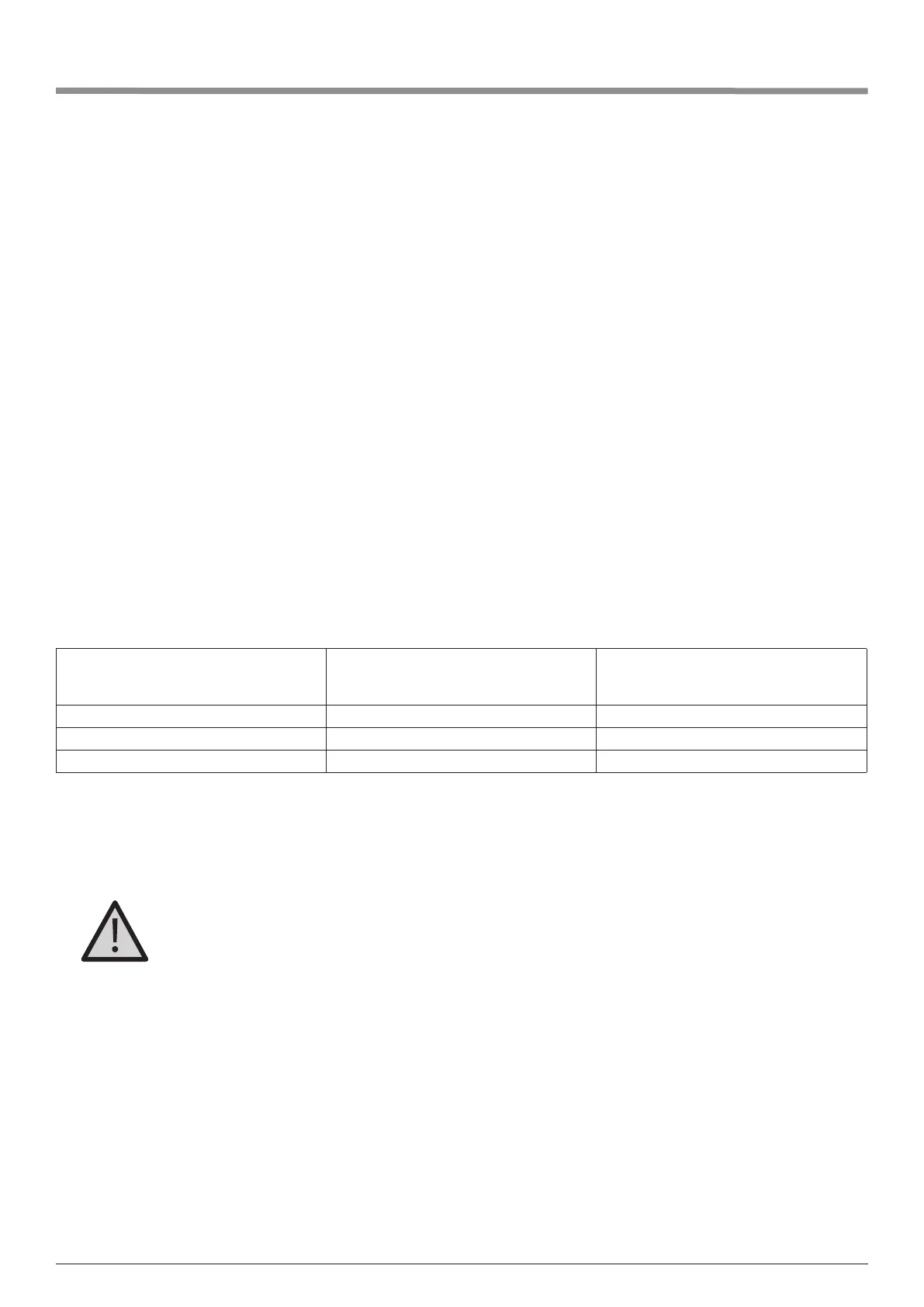
Table 1
Sizing of copper discharge pipe ‘D2’ for a temperature relief valve with a G1/2 outlet size (as supplied).
Size of discharge pipework Maximum length of straight pipe
(no bends or elbows)
Deduct the gure below from the
maximum length for each bend or elbow
in the discharge pipe
22mm Up to 9m 0.8m
28mm Up to 18m 1m
35mm Up to 27m 1.4m
Note:
• The tundish must be installed in such away that it is visible to the occupants,and positioned away from any electrical controls
or connections.
• Cylinder Relief valve connections should not be used for any other purpose than intended.
• No valve should be tted between the expansion relief valve and the storage cylinder.


 To Next Page