1
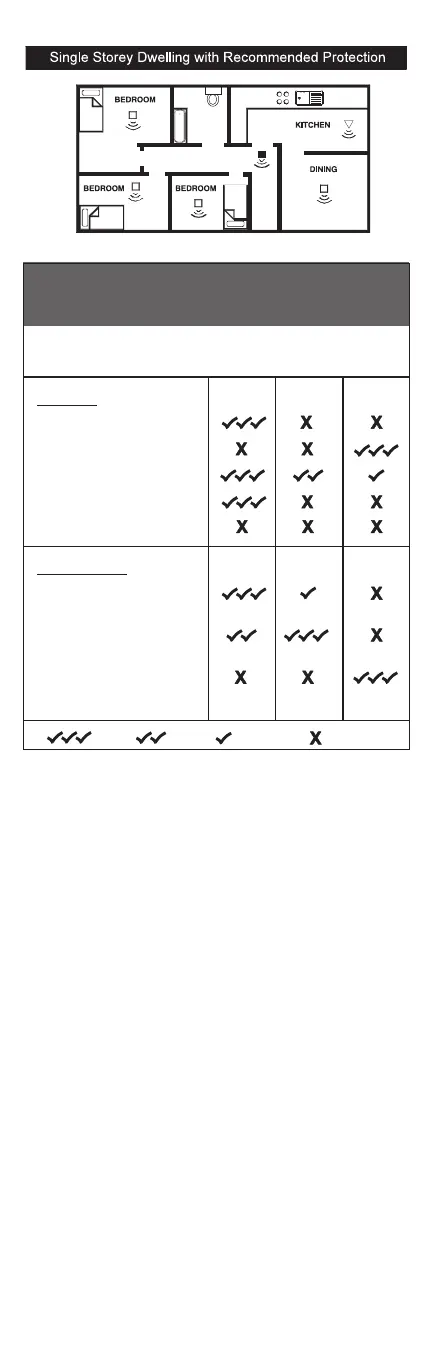
Optical Smoke Alarms are recommended due to their excellent
response to smouldering fires. Optical Alarms can have issues
with steam and dust and Ionisation Alarms have isues with
cooking fumes. These factors should be taken into account when
choosing Alarm type.
2
Ionisation and Optical Smoke Alarms should be fitted for the
fastest response to all types of fires.
3
Some Fire authorities (concerned with the slow response of
Heat Alarms) advise that Smoke Alarms should be fitted. This is
acceptable provided there are clearly not going to be problems
with nuisance/false alarms. Fit Heat Alarms only if nuisance/false
alarms are very likely and it is acceptable that a warning will
only be given by the Heat Alarm when there is a very significant
flaming fire in the room. If the door(s) and windows are not
closed to contain the fire and heat, it is extremely unlikely that the
Heat Alarm would respond before a Smoke Alarm sited outside
in the corridor.
4
In enclosed kitchens with doors closed.
5
Greatly depends on ventilation and distance from source of
fumes.
Locations
Hall, Corridors, Escape Routes
Alarm Type
Optical Ionisation Heat
Bedrooms
Shower / Bathroom
Kitchens
Living Rooms
Fire Response
Slow Smouldering Fires
(polyurethane foam, ignited bedding etc.)
Fast Flaming Fires
(chip pans, flaming wood/plastic, oil,
solvents etc.)
- Best
- Good
- Acceptable
- Not Suitable
Temperature >58
0
C
(only in areas with cooking fumes, steam,
very dirty/dusty)
Optical/Ionisation/Heat Alarm Selection
Locations & Performance
12
3
4
11



 To Next Page