VV
VV
V
A-1A,A-1A,
A-1A,A-1A,
A-1A,
VV
VV
V
A-1A-XXA-1A-XX
A-1A-XXA-1A-XX
A-1A-XX
Installation InstructionsInstallation Instructions
Installation InstructionsInstallation Instructions
Installation Instructions
II 040934
General Information
There are two types of volt/amp meters used in aircraft: Internal Shunt Units and External Shunt
Units.
1. Internal Shunt Units
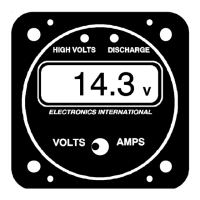
Electronics International Inc. manufactures a VA-1A which is our only internal shunt unit. It has
the shunt built into the unit, has two large lugs on the back of the unit and all of the electrical
current passes through this gauge. Use this gauge if your aircraft is currently wired for an inter-
nal shunt unit or if you elect to route your main alternator or battery supply line up to the instru-
ment panel. As with all internal shunt units, the current capability is limited. The VA-1A is ca-
pable of handling 100 amps continuous current. If your aircraft’s electrical system is designed to
draw more than 100 amps continuous current, you should use one of our external shunt units.
2. External Shunt Units
An external shunt is a strip of metal, usually mounted on a bakelite base. This metal is made of
special alloys to produce a very small, precise signal when current passes through it and is not
affected by temperature changes.
If your aircraft currently has an external shunt you should order a gauge to match that shunt.
Electronics International manufactures a line of external shunt units (VA-lA-XX, “XX” = shunt
value in amps) that will match any shunt on the market. If your aircraft does not have an external
shunt and you elect to install an external shunt, then order the VA-1A-50 and S-50 shunt (100 amp
capability). For aircraft drawing more than 100 amps order the VA-1A-300 and an S-300 shunt
(300 amp capability). Please note: The VA-1A and VA-1A-50 resolve to .l amp and all other units
resolve to l amp. With our digital display, one amp resolution will still make an excellent electrical
diagnostic tool since the current requirements for almost all pieces of equipment in an aircraft are
more than one amp.
Installation
1. Important Information and Initial Check Out
A.
The installer and aircraft owner must read the Warranty before starting theThe installer and aircraft owner must read the Warranty before starting the
The installer and aircraft owner must read the Warranty before starting theThe installer and aircraft owner must read the Warranty before starting the
The installer and aircraft owner must read the Warranty before starting the
installation.installation.
installation.installation.
installation. There is information in the Warranty that may alter your decision to install this
instrument.
If you do not accept the terms of the Warranty, do not install this in-If you do not accept the terms of the Warranty, do not install this in-
If you do not accept the terms of the Warranty, do not install this in-If you do not accept the terms of the Warranty, do not install this in-
If you do not accept the terms of the Warranty, do not install this in-
strument.strument.
strument.strument.
strument.
B
. If you are not an FAA Certified Aircraft Mechanic familiar with the issues of. If you are not an FAA Certified Aircraft Mechanic familiar with the issues of
. If you are not an FAA Certified Aircraft Mechanic familiar with the issues of. If you are not an FAA Certified Aircraft Mechanic familiar with the issues of
. If you are not an FAA Certified Aircraft Mechanic familiar with the issues of
installing aircraft VA instruments, installing aircraft VA instruments,
installing aircraft VA instruments, installing aircraft VA instruments,
installing aircraft VA instruments,
Do Not attempt to install this instrument.Do Not attempt to install this instrument.
Do Not attempt to install this instrument.Do Not attempt to install this instrument.
Do Not attempt to install this instrument.
The The
The The
The
installer should use current aircraft standards and practices to install this instru-installer should use current aircraft standards and practices to install this instru-
installer should use current aircraft standards and practices to install this instru-installer should use current aircraft standards and practices to install this instru-
installer should use current aircraft standards and practices to install this instru-
ment (refer to AC 43.13).ment (refer to AC 43.13).
ment (refer to AC 43.13).ment (refer to AC 43.13).
ment (refer to AC 43.13).
8


 To Next Page