- 21 -
11. Notices about the temperature compensation and interpretation of
the measurement results
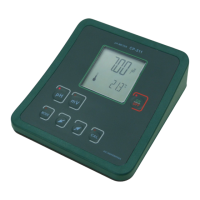
The CP-511 pH meter has an automatic temperature compensation, which
enables eliminating errors resulting from affecting the electrode
characteristics by temperature changes. To explain the role of the
temperature compensation it is important to remind that pH meter is an mV
meter which displays redox counted to pH. In constant temperature one pH
unit corresponds to constant mV value. In 20
0
C it is 58.17 mV. The value of
mV for one pH unit is affected by the temperature, what is taken into
consideration in the formula for “k coefficient” of the pH electrode:
k=0.198423 T
This coefficient is connected with the electrode’s slope and not with the
measured solution. Temperature compensation doesn’t consider
changes of the pH value of the solution caused by the temperature.
Usually these are slight changes, however in e.g. pure water they tend to be
significant. Values of solutions, which tend to be affected by the temperature
changes, should be compared in the same temperature. Sometimes the
results are unstable, which is connected with the quality of the electrode.
Unstable measurement results, slow drifting of the result or very long
time of stabilisation are usually caused by clogged junction,
contaminated or broken electrode. It often happens in case of choosing
inappropriate kind of electrode for the measured solution.
Putting the electrode into distilled water for a few hours or placing it in water
with detergent may eliminate this symptoms, especially if measurements
were made in solutions with deposits, fats or oils. The electrode which hasn’t
been used for a long time, may have the junction clogged by KCl crystals,
what may be removed by placing the electrode in distilled water. Heavily
contaminated electrode may be cleaned in chloroform and deposits of iron in
2N HCl.


 To Next Page