OPERATION INSTRUCTIONS
NOTE: Before using the tool, read the
instruction book carefully.
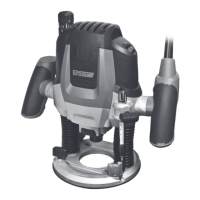
INTENDED USE
The machine is intended for routing grooves, edges,
profiles and elongated holes as well as for copy
routing in wood, plastic and light building materials,
while resting firmly on the workpiece.
1. INSERTING AND REMOVING THE ROUNTER
BITS
Router Bit Selection
Depending on processing and application, router bits
are available in many different designs and qualities:
Router bits made of high-speed steel (HSS) are
suitable for the machining of soft materials, e. g.
softwood and plastic.
Carbide tipped router bits (HM) are particularly
suitable for hard and abrasive materials, e. g. hard
wood and aluminum.
TCT (Tungsten Carbide Tipped) - for use on hardwood,
chipboard, plastics or aluminium.
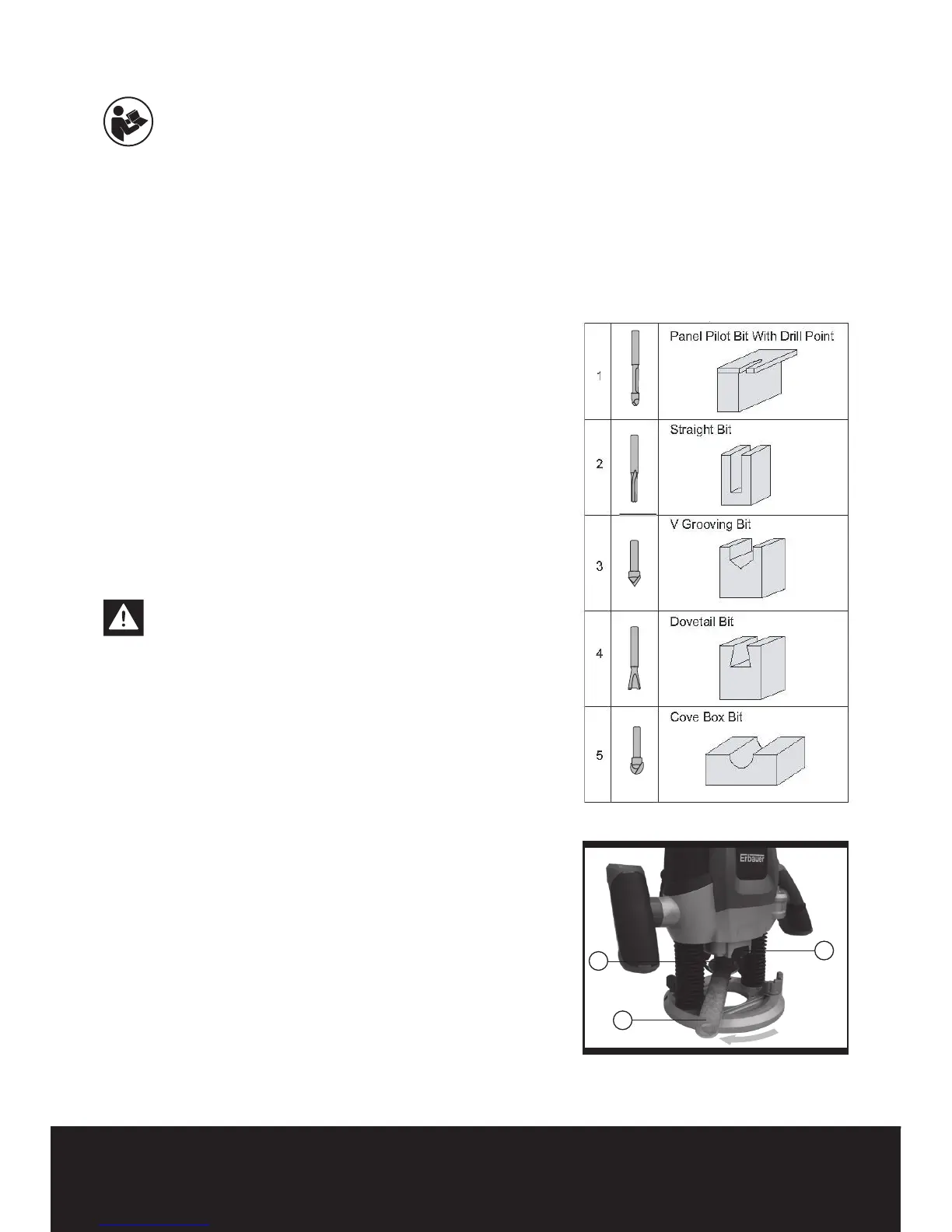
The most commonly used bits are listed below.
Warning: Use only routing tools with an
allowable speed matching at least the
highest no load speed of the machine. The shank
diameter of the router bit must correspond with
the rated diameter of the collet. Never use router
bits with a diameter exceeding the diameter of
the collects.
Inserting Router Bits (See Fig 1)
Always disconnect the mains plug when fitting
router bits and accessories. It is recommended
to wear protective gloves when inserting or
replacing router bits.
Press spindle lock button (14) and keep depressed.
If required, turn the spindle by hand until the lock
engages.
Press the spindle lock button only when at a
standstill.
Using the 22 mm spanner (19), loosen the collet nut
(13) a few turns and insert a router bit. The shank of
the router bit must be inserted at least 20 mm (shank
length)or at least as far as the ‘K’ mark on the shank
(where marked).
Fig 1


 To Next Page