2. Schematic Checklist and PCB Layout Design
The PCB layout design guidelines are applicable to cases when the
• ESP32 module functions as a standalone device, and when the
• ESP32 functions as a slave device.
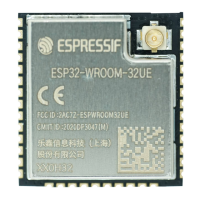
Figure 11: ESP32 PCB Layout
2.2.1 Standalone ESP32 Module
2.2.1.1 General Principles of PCB Layout
We recommend a four-layer PCB design.
• The first layer is the TOP layer for signal traces and components.
• The second layer is the GND layer without signal traces being routed so as to ensure a complete GND plane.
• The third layer is the POWER layer. It is acceptable to route signal traces on this layer, provided that there is
a complete GND plane under the RF and crystal oscillator.
• The fourth layer is the BOTTOM layer, where power traces are routed. Placing any components on this layer
is not recommended.
Below are the suggestions for a two-layer PCB design.
• The first layer is the TOP layer for traces and components.
• The second layer is the BOTTOM layer. Please do not place any components on this layer and keep traces
to a minimum. Ideally, it should be a complete GND plane.
Espressif Systems 9 ESP32 Hardware Design Guidelines V2.7


 To Next Page
 Loading...