Need help?
Do you have a question about the Espressif Systems ESP32-S3 and is the answer not in the manual?
Provides an overview of the document's purpose and target audience.
Instructs users on how to find the most current version of the document.
Details recommendations and guidelines for designing power supply circuits.
Covers specific requirements for digital power supply pins.
Covers specific requirements for analog power supply pins.
Outlines the design considerations for the RTC power supply pin.
Explains the timing requirements for chip power-up and reset sequences.
Details the connection and configuration for flash and PSRAM.
Describes pin mapping for in-package flash and PSRAM configurations.
Provides guidelines for off-package flash and PSRAM implementation.
Covers the selection and implementation of clock sources.
Details the compulsory external crystal clock source requirements.
Explains the optional RTC clock source and its configuration.
Provides essential guidelines for Radio Frequency circuit design and tuning.
Outlines the components and requirements of the RF circuit.
Describes the process and parameters for RF tuning.
Gives recommendations for UART interface circuit design.
Explains the function and configuration of strapping pins for boot mode.
Discusses GPIO configuration, MUX, and matrix usage.
Provides guidelines for ADC usage and accuracy improvement.
Details the SDIO interface configuration and layout considerations.
Covers USB peripheral integration, including OTG and Serial/JTAG.
Explains the touch sensor implementation and design considerations.
Outlines fundamental principles for PCB layout design.
Provides guidance on module placement to minimize interference.
Details power supply layout strategies for optimal performance.
Offers general recommendations for power supply trace routing.
Specifies layout guidelines for the 3.3 V power traces.
Covers layout considerations for analog power supply traces.
Provides layout guidelines for crystal placement and routing.
Details RF trace routing and matching circuit layout for optimal performance.
Offers layout guidelines for flash and PSRAM components.
Explains layout considerations for the UART interface.
Provides layout guidelines for USB interface traces.
Details layout requirements for the high-speed SDIO interface.
Covers layout guidelines for touch sensor applications.
Describes proper electrode patterns for touch sensor sensitivity.
Provides general guidelines for routing touch sensor traces.
Offers layout guidance for waterproof and proximity sensing features.
Addresses common PCB layout issues and their solutions.
Analyzes and provides solutions for poor TX performance despite low voltage ripple.
Discusses poor RF TX performance due to small ripple and crystal issues.
Addresses issues with power value disparity and poor EVM due to impedance mismatch.
Explains low RX sensitivity despite good TX performance and coupling issues.
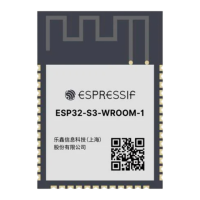
Directs users to resources for ESP32-S3 modules.
Guides users to find latest ESP32-S3 development board designs.
Provides instructions for downloading firmware via UART and USB.
Details the changes and improvements in version 1.0 of the guidelines.
 General
| Brand | Espressif Systems |
|---|---|
| Model | ESP32-S3 |
| Category | Computer Hardware |
| Language | English |


 To Next Page