etac.com
4
Transportation in motor vehicles
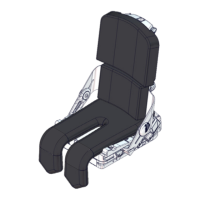
The instructions on how to prepare the seat and
chair, must be carried out before transportation.
The user should transfer to the vehicle seat
and use the vehicle-installed restraint system
whenever possible, and the unoccupied
wheelchair should be stored in a cargo area or
secured in the vehicle during travel.
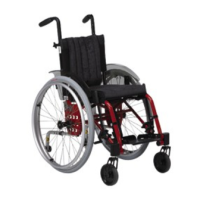
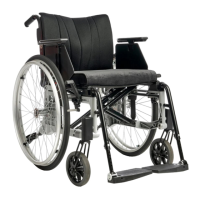
The wheelchair must be placed in a forward-
facing position, when used as a seat in a motor
vehicle.
The front wheels need to be turned under the
frame so as to be in line with the frame before
xation.
Use an approved 4-point strap-type tie-down
system according to ISO 10542-1, to secure
the product. Use either a hook or a strap in the
tting. See gure 1.
Figure 1
The location of all wheelchair securement
points are marked with a label. See gure 2.
Figure 2
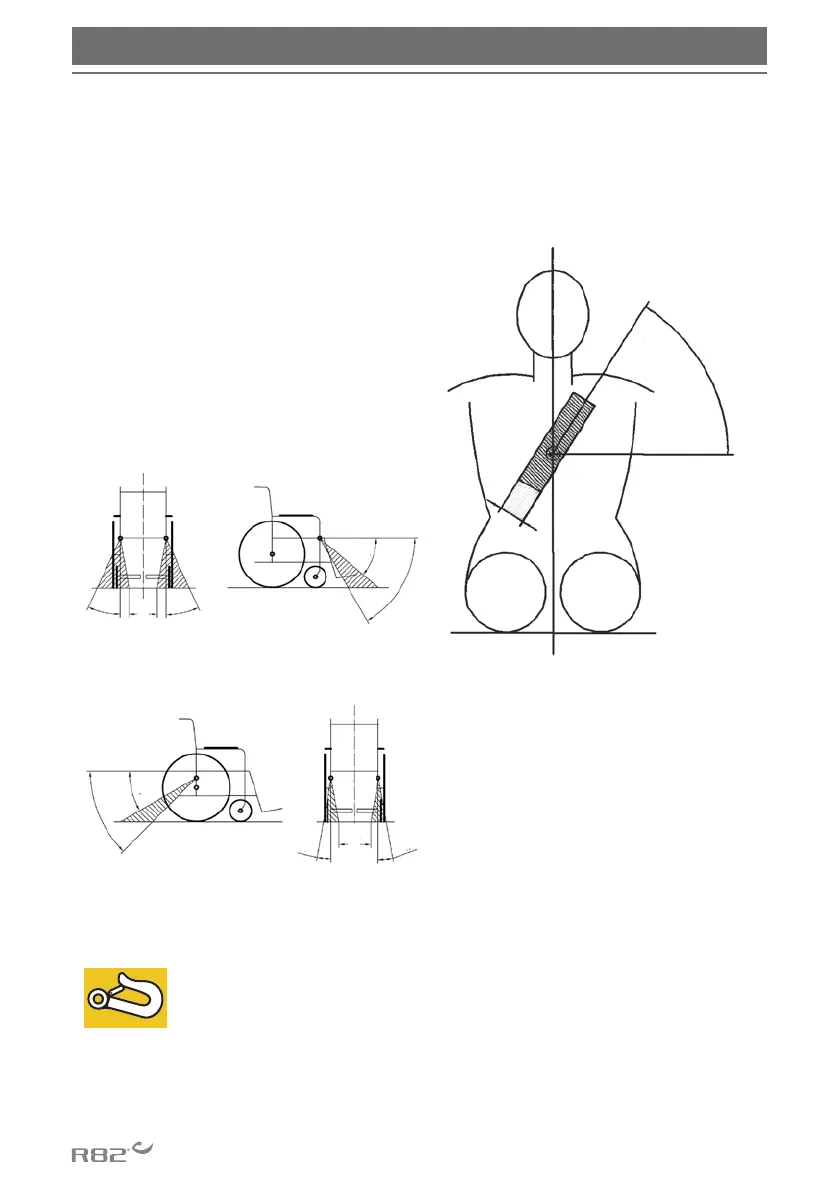
The pelvic restraint should be worn low across
the front of the pelvis, so that the angle of the
pelvic restraint is within the preferred zone of
30° to 75° to the horizontal, similar to that
shown in gure 3. A steeper (greater) angle
within the preferred zone is desirable.
Figure 3
55°
The back must be placed in vertical position
and the seat plane must be horizontal. Use an
approved 3-point belt according to ISO 10542-
1 in the product. The belt restraints should be
adjusted as tightly as possible, consistent with
user comfort. Further the belt webbing should
not be twisted when in use. Belt restraints
should not be held away from the body by
wheelchair components or parts, such as the
wheelchair armrests or wheels. See gure 4.
Front view
40°
60°
25°
300 mm
25°
30°
300 mm
10°
10°
45°
Rear view
ENGLISH



 To Next Page