The Excel TS2501 250mm Table Saw is a bench-type circular saw designed for slitting and cross-cutting various types of timber. It is intended for use with suitable saw blades made of HM or CV, and the use of HSS saw blades or cutting-off wheels is prohibited. The equipment is designed for its prescribed purpose and should not be used for cutting any type of round wood. It is not intended for commercial, trade, or industrial applications, and using it for such purposes will void the warranty.
Function Description:
The table saw is used for precise cutting of wood and similar materials. It features a saw blade that can be adjusted for depth and angle (bevel) to perform various cuts, including rip cuts, miter cuts, and bevel cross cuts. The saw includes safety features such as a blade guard, riving knife, and anti-kickback pawls to reduce the risk of injury. It also has a rip fence and miter gauge for guiding workpieces and ensuring accurate cuts.
Important Technical Specifications:
- Model: TS2501
- AC Motor: 220-240V ~ 50Hz
- Power: S1 1800W, S6 25% 2000W
- Idle Speed: 5000 min⁻¹
- Cutting-off Wheel: Ø250 x Ø16 - 30 x 2 - 4 mm
- Number of Teeth (Saw Blade): 24-60
- Table Size: 583 x 563mm
- Table Width Extension (left & right): 583 x 165mm
- Cutting Height Max: 85mm at 90°, 65mm at 45°
- Tilting Saw Blade: Infinite 0-45°
- Extractor Socket: Ø 35mm
- Weight: Approximately 22kg
- Operating Mode: S6 25% (Continuous operation with idling, cycle time 10 minutes). The motor can be operated for 25% of the cycle at the specified rating and must then idle for 75% of the cycle to prevent overheating.
- Sound Pressure Level (LpA): 91 dB(A) (KpA uncertainty: 3 dB)
- Sound Power Level (LWA): 104 dB(A) (KWA uncertainty: 3 dB)
- Maximum Permissible System Impedance: 0.340Ω at the interface point of the user's supply.
Usage Features:
- Safety First: Users must read the instruction manual, wear ear-muffs, a breathing mask, and safety goggles. Hands should never be placed near the running saw blade. The tool is double insulated (Class II).
- Work Area Safety: Keep the work area clean, well-lit, and free from flammable materials. Keep children and bystanders away.
- Electrical Safety: Power tool plugs must match outlets. Avoid body contact with earthed surfaces. Do not expose to rain or wet conditions. Use an RCD-protected supply in damp locations.
- Personal Safety: Stay alert, use common sense, and do not operate while tired or under the influence. Always wear eye protection and other safety equipment. Prevent unintentional starting by ensuring the switch is off before connecting to power.
- Power Tool Use and Care: Do not force the tool; use the correct power tool for the application. Do not use if the switch is faulty. Disconnect power before making adjustments or changing accessories. Store idle tools out of reach of children. Maintain tools by checking for misalignment, binding, or breakage. Keep cutting tools sharp and clean.
- Guarding System: Always use the saw blade guard, riving knife, and anti-kickback device for through-cutting operations. Reattach the guarding system immediately after operations requiring its removal. Ensure the saw blade is not contacting the guard, riving knife, or workpiece before starting. The riving knife must be engaged in the workpiece to be effective.
- Workpiece Feeding: Feed the workpiece against the direction of rotation. Do not use the miter gauge for ripping or the rip fence as a length stop for cross-cutting. Apply feeding force between the fence and the saw blade when ripping. Use a push stick when the distance between the fence and the saw blade is less than 150mm, and a push block when less than 50mm. Never perform "freehand" operations.
- Kickback Prevention: Avoid standing directly in line with the saw blade. Never reach over or behind the saw blade. Do not hold the cut-off piece against the rotating blade. Align the fence parallel to the saw blade. Use a featherboard for non-through cuts. Support large panels to minimize pinching and kickback. Never cut more than one workpiece at a time.
- Blade Installation: Ensure the saw blade is installed to rotate in the proper direction. Do not use grinding wheels, wire brushes, or abrasive wheels. Only use the supplied saw blade for wood, plastics, and non-ferrous metals (except magnesium and its alloys).
- ON/OFF Switch: Press the green "I" button to turn on, and the red "O" button to turn off. Wait for the blade to reach maximum speed before cutting.
- Overload Protector: The saw has an overload reset button. If the motor overloads or voltage is low, a safety mechanism stops it. Allow the motor to cool, then press the reset button to restart.
- Cutting Aids: Use push sticks and push blocks for rip cuts and narrow stock to keep hands away from the blade.
- Miter Gauge: Provides accuracy for angled cuts. It can be turned 60° to the right or left. For beveled cross cuts, position the miter gauge on the right side to tilt the blade away from your hands.
- Blade Depth Adjustment: Set the blade depth so that the outer points are 1/8 to 1/4 inch higher than the workpiece, with the gullets below the top surface. Adjust using the height/bevel adjusting handwheel.
- Blade Angle (Bevel) Adjustment: The rack and pinion bevel control allows angled cuts from 90° to 45°. Loosen the bevel locking knob, adjust the handwheel, and then tighten the knob.
- Riving Knife Positions: The riving knife can be placed in a "down" position for non-through cutting or an "up" position for through cutting.
- Blade Guard Installation: Mount the saw blade guard with the bolt on top of the riving knife, ensuring it moves freely. Connect a suction hose to the adapter.
Maintenance Features:
- Cleaning: Always disconnect the power plug before cleaning. Keep safety devices, air vents, and the motor housing free of dirt and dust. Wipe with a clean cloth or blow with compressed air. Clean regularly with a moist cloth and soft soap; avoid cleaning agents or solvents. Prevent water from seeping into the device.
- Carbon Brushes: In case of excessive sparking, have the carbon brushes checked and replaced only by a qualified electrician.
- General Maintenance: There are no parts inside the equipment that require additional maintenance.
- Ordering Replacement Parts: When ordering parts, quote the machine type, article number, identification number, and the required part number.
- Storage: Store the equipment and accessories in a dark, dry place at above freezing temperature (ideally 5-30°C). Store the electric tool in its original packaging. The wrench, blade, push stick, and power cable have on-board storage.

 Need help?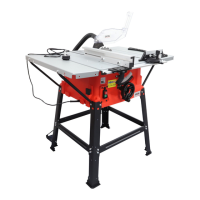

 To Next Page
 General