19
11. Cleaning, maintenance and
ordering of spare parts
Danger!
Always pull out the mains power plug before
star-ting any cleaning work.
11.1 Cleaning
• Keep all safety devices, air vents and the motor
housing free of dirt and dust as far as possible.
Wipe the equipment with a clean cloth or blow
it with compressed air at low pressure. • We
recommend that you clean the device
immediately each time you have finished using
it.
• Clean the equipment regularly with a moist
cloth and some soft soap. Do not use cleaning
agents or solvents; these could at-tack the
plastic parts of the equipment. Ensure that no
water can seep into the device. The ingress of
water into an electric tool increases the risk of
an electric shock.
11.2 Carbon brushes
In case of excessive sparking, have the carbon
brushes checked only by a qualified electrician.
Danger! The carbon brushes should not be rep
laced by anyone but a qualified electrician.
11.3 Maintenance
There are no parts inside the equipment which
require additional maintenance.
11.4 Ordering replacement parts:
Please quote the following data
when ordering replacement parts:
• Type of machine
• Article number of the machine
• Identification number of the machine
• Replacement part number of the part required
12. Storage
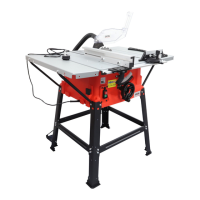
Wrench and blade storage Insert Blade and
wrench into the holes on the side of the table
saw, tighten screws securely.
The push stick and power cable have on board
Store the equipment and accessories in a dark
and dry place at above freezing temperature.
The ideal storage temperature is between 5 and
30 °C. Store the electric tool in its original
packaging.
13. Disposal and recycling
The equipment is supplied in
packaging to prevent it from being damaged in
transit. The raw materials in this packaging can
be reused or recycled. The equipment and its
accessories are made of various types of
material, such as metal and plastic. Never place
defective equipment in your household refuse.
The equipment should be taken to a suitable
collection center for proper disposal. If you do
not know the whereabouts of such a collection
point, you should ask in your local council
offices.


 To Previous Page