15
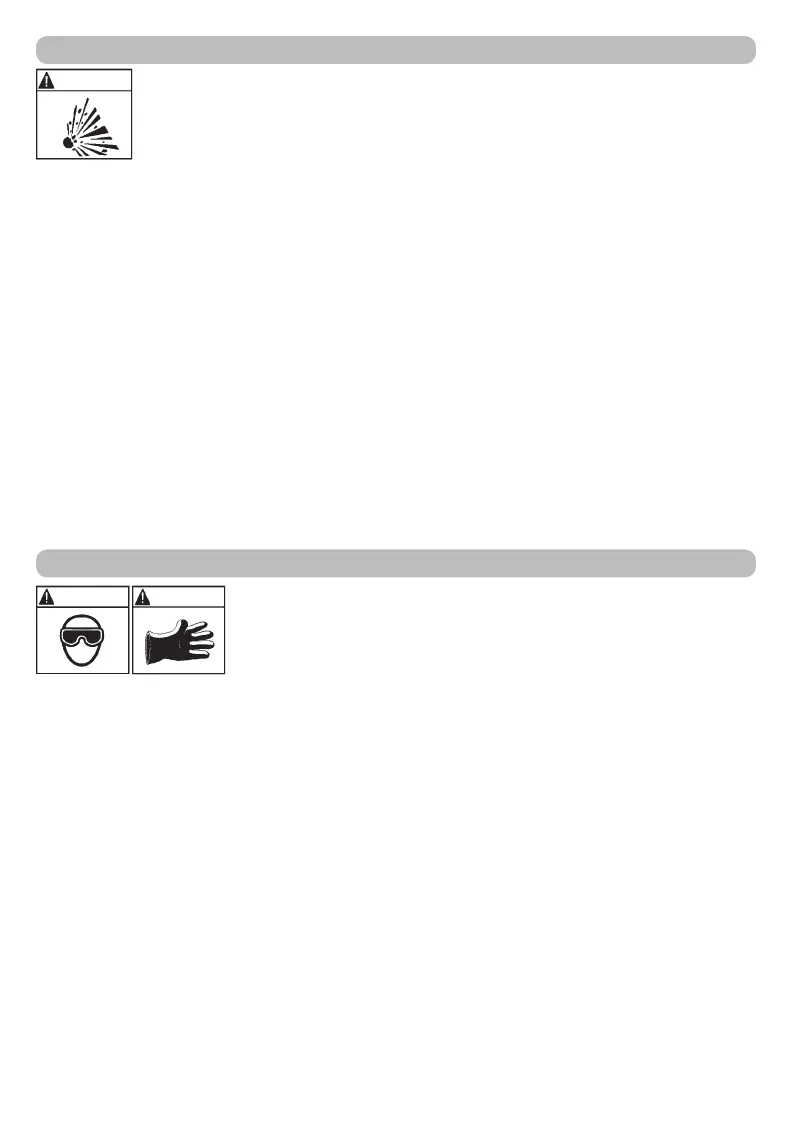
RISK OF EXPLOSIVE GASES.
2.1
2.2 Remove personal metal items such as rings, bracelets, necklaces and
watches when working with a lead-acid or lithium ion battery. These batteries can
produce a short-circuit current high enough to weld a ring or the like to metal,
causing a severe burn.
2.3 Be extra cautious, to reduce the risk of dropping a metal tool onto the battery. It might
spark or short-circuit the battery or other electrical part that may cause an explosion.
2.4
batteries
charger for charging dry-cell batteries that are commonly used with home appliances or lithium
ion batteries used in cell phones, laptops, power tools, etc. These batteries may burst and
cause injury to persons and damage to property.
2.5 NEVER charge a frozen battery.
2.6
Consider having someone nearby to come to your aid when you work near a lead-acid battery.
2.7
clothing or eyes.
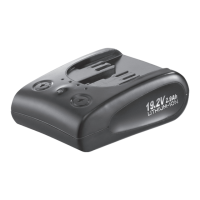
2.8 Wear complete eye and body protection, including safety goggles and protective clothing.
Avoid touching your eyes while working near the battery.
2.9 If battery acid contacts your skin or clothing, immediately wash the area with soap and
2.10 If battery acid is accidentally swallowed, drink milk, the whites of eggs or water. DO NOT
induce vomiting. Seek medical attention immediately.
RISK OF CONTACT WITH BATTERY ACID. BATTERY ACID IS A
HIGHLY CORROSIVE SULFURIC ACID.
3.1 If it is necessary to remove the battery from the vehicle to
the accessories in the vehicle are off, to prevent arcing.
3.2 Be sure the area around the battery is well ventilated while the battery is being charged.
3.3
touch your eyes, nose or mouth.
3.4
recharging instructions.
3.5 Read, understand and follow all instructions for the charger, battery, vehicle and any
equipment used near the battery and charger. Study all of the battery manufacturer’s
3.6
sure that the output voltage selector switch is set to the correct voltage. If the charger
3.7 Make sure that the charger cable clips make tight connections.
2. PERSONAL PRECAUTIONS
3. PREPARING TO CHARGE
WARNING
WARNINGWARNING


 To Next Page