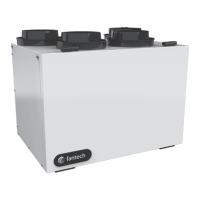
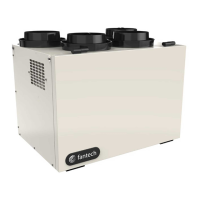
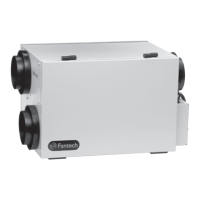
When bathroom and kitchen already have local exhaust system
May be suitable for retrofitting
Benefits:
Least expensive installation type
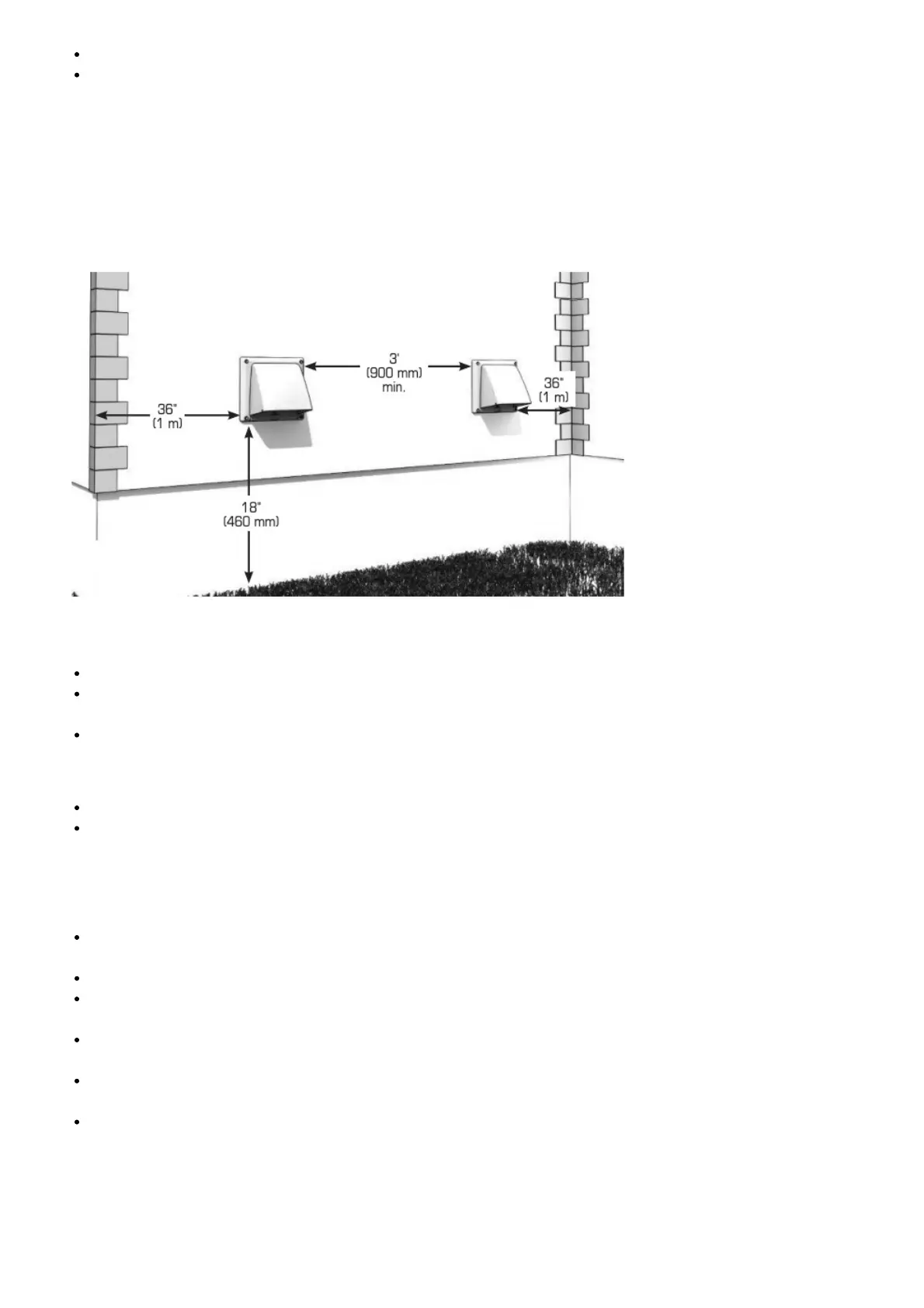
INSTALLING THE OUTDOOR VENTS
RECOMMENDED INSTALLATION
Intake
Should be located upstream of prevailing winds from exhaust
At a minimum of 900 mm (3′) away from dryer vents and furnace exhaust (medium or high efficiency furnaces),
driveways, oil fill pipes, gas meters, or garbage containers.
Do not locate in the garage, attic, crawl space, or underneath deck.
Locating the Exhaust Weatherhood
Not near a gas meter, electric meter or a walkway where fog or ice could create a hazard
Do not locate in a garage, workshop or other unheated space
INSTALLING THE VENTS
A well designed and installed ducting system will allow the HRV to operate at its maximum efficiency.
The inner liner of the flexible insulated duct must be secured to the sleeve of the hood (as close to the outside
as possible) and to the appropriate duct connection on the HRV.
The insulation should remain full and not crushed.
The outer liner, which acts as a vapor barrier, must be completely sealed to the outer wall and the HRV using
tape and/or caulking.
A good bead of high quality caulking (preferably acoustical sealant) will seal the inner flexible duct to both the
HRV duct connection and the hood prior to securing them.
To minimize airflow restriction, the flexible insulated duct that connects the two outside weatherhoods to the
HRV should be stretched tightly and be as short as possible.
Twisting or folding the duct will severely restrict airflow.
1. Cut hole between wall studs



 To Next Page