21
© Ferno-Washington, Inc 234-3451-01 February 2011
Model 35A Series Using the Cot
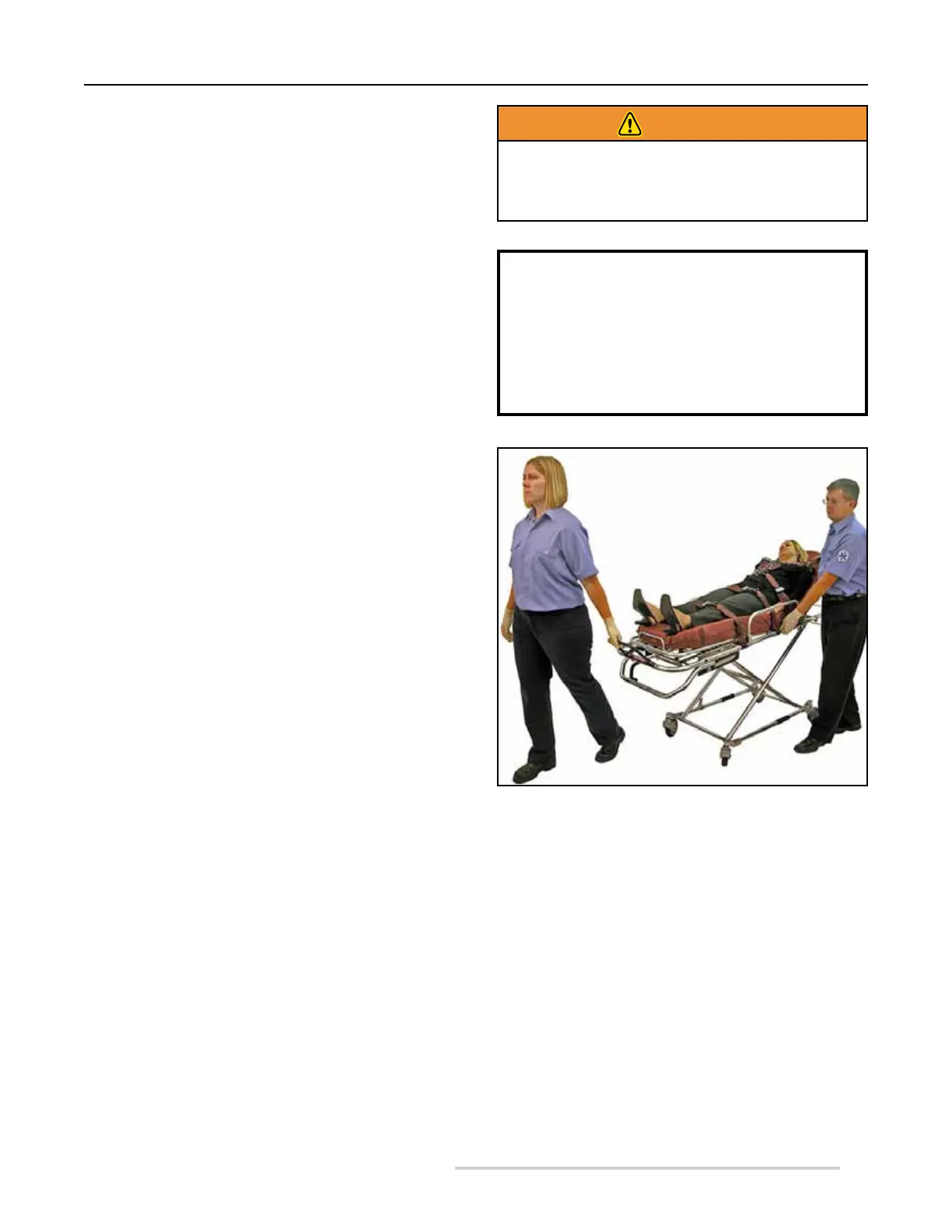
6.6 Rolling the Cot
GENERAL GUIDELINES
● Rolling the cot with a patient on the cot requires a
minimum of two trained operators working together
and maintaining control of the cot at all times.
● Rolling the cot in a loading position can increase the
chance for the cot to tip. Always use a rolling position to
roll the cot (See Cot Positions, page 8).
● Roll the cot on smooth, unobstructed surfaces whenever
possible.
● To cross a low obstacle such as a door sill, lift the cot
slightly to take the weight off the wheels so the wheels
roll smoothly over the obstacle.
● Lift and carry the cot over a high obstacle such as a curb.
Do not apply downward force on one end of the cot in
order to raise the other end of the cot over the obstacle.
● Do not roll the cot sideways. Rolling a cot sideways can
increase the chance for the cot to tip and injure the patient
and/or operators.
● Use additional help as needed to safely control the weight
of the patient and cot (see Using Additional Help, page 25).
● When rolling over rough terrain, the operators (and
helpers) should grasp the cot with both hands.
● Side helpers may need to walk sideways under some
circumstances. Follow local protocols.
Important
Roll the cot downhill foot-end rst. If it is not medically
appropriate to do this, roll the cot head-end rst, but
do the following:
To maintain cot balance while rolling the cot downhill
head-end rst, the Assisting Operator must exert
upward force on the drop frame.
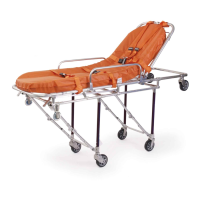
ROLLING THE COT
1. Securely fasten the restraints around the patient.
2. Both Operators: Place the cot in a rolling position. See
Cot Positions, page 8.
3. Control Operator: Position yourself at the foot end of
the cot, grasp the main frame, and pull or push the cot.
Or,ifrollingthecotonasmooth,atsurface,unfoldthe
lead handle and pull the cot (Figure 23).
4. Assisting Operator: Position yourself at either the head-
end of the cot (grasping the drop frame) or at the side of
the cot near the patient’s torso (grasping the main frame,
Figure 23). Attend the patient and assist in rolling and
steering the cot.
WARNING
Rolling the cot sideways or in a loading position
can cause the cot to tip and injure the patient
or operators. Roll the cot only in a level (rolling)
position and with the head-end or foot-end rst.
Figure 23 - Rolling the Cot


 To Next Page