19
© Ferno-Washington, Inc 234-3451-01 February 2011
Model 35A Series
6.4 Raising and Lowering the Cot
Changing cot positions with a patient on the cot requires a
minimum of two trained operators working together.
PREPARING TO RAISE OR LOWER THE COT
1. Both Operators: If the cot is equipped with a storage
tray, empty the tray before lowering or folding the cot.
2. Assisting Operator: Raise the drop frame to the extended
position if needed.
3. Both Operators: Stand at opposite ends or sides of the
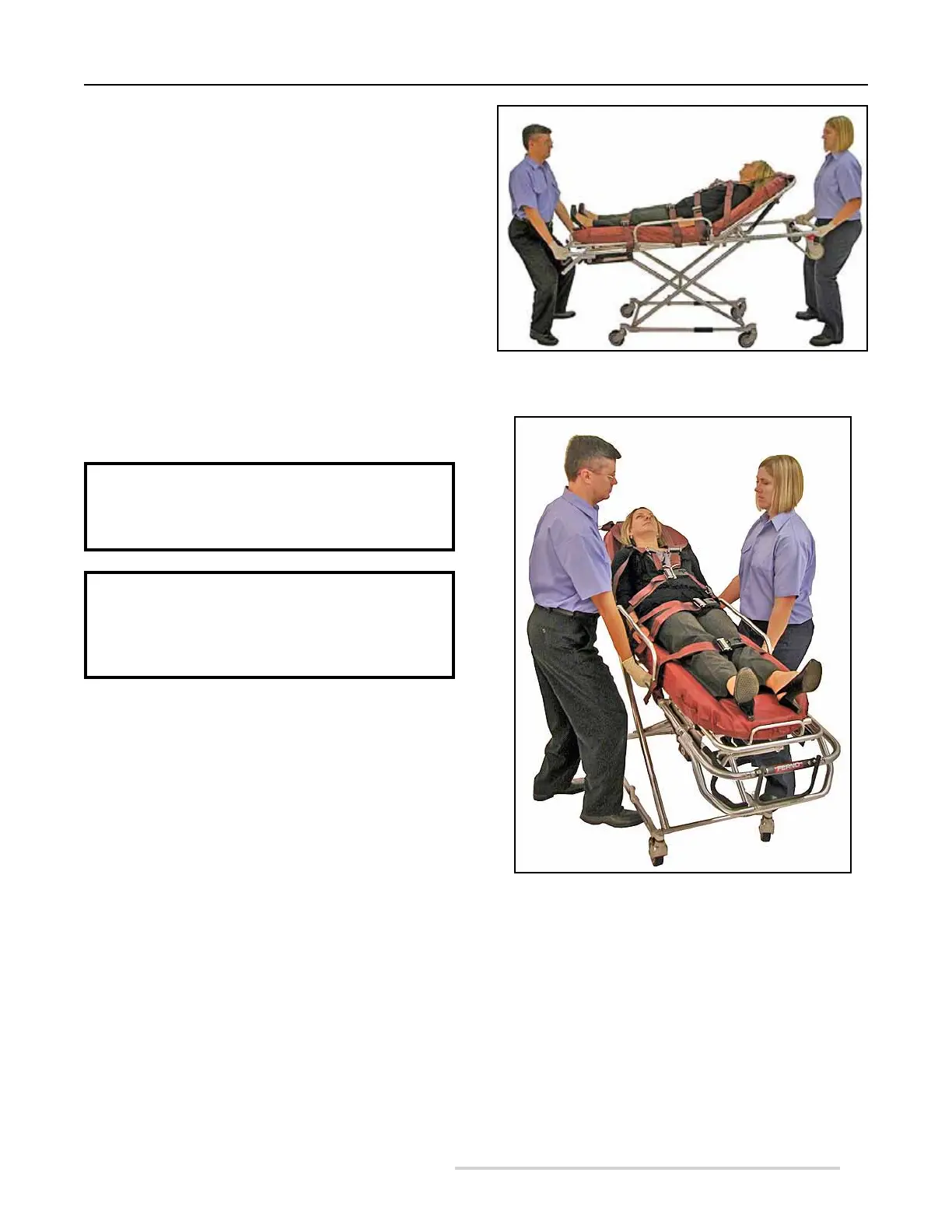
cot (Figure 19 or Figure 20).
4. Both Operators: Select the lifting position that
provides the best leverage. Use an underhand grip to
grasp the cot frame (or safety bar, see Ergonomic Lifting
Positions, page 13).
5. Foot-End or Side-Control Operator: Position your
hand to use the control handle.
Important
Operators should expect and be prepared to control
the normal downward movement of the cot which
occurs when a control handle is squeezed.
RAISING OR LOWERING THE COT
1. Both Operators: Lift the cot slightly to take the weight
off the locking mechanism.
2. Both Operators: As the control operator squeezes and
holds the control handle, both operators raise or lower
thecot.Ifthecontrolhandleisdifculttosqueeze,both
operators lift the cot a little higher to free the locking
mechanism.
3. Control Operator: Release the control handle when the
cot is near the desired height.
4. Both Operators: Together, lift the cot until all four
transport wheels are off the ground. This ensures the
undercarriage lock engages if it has not already done so.
5. Both Operators:Setthecotontotheoororground.Do
not release your grasp until you are sure the undercarriage
is locked at the new position.
Using the Cot
Figure 19 - Raising or Lowering the Cot
Figure 20 - Raising or Lowering the Cot
Important
Extend the drop frame before adjusting the height of
the cot.


 To Next Page