201
12
Provision must be made for replacing water lost from sealed system. Reference should be made to BS6798, for methods of
filling and making up sealed systems. There must be no direct connection between the boiler's central heating system and the
mains water supply. The use of mains water to charge and pressurise the system directly, is conditional upon the Local Water
Byelaw. Again any such connection must be disconnected after use.
Domestic Hot Water
Always fit a water softener or descaler in «hard water areas». A 15 mm copper connection point on the boiler jig bracket for
attaching to the main supply is provided. The maximum domestic water pressure for the inlet supply is 10 bar (145 P.S.I.). If the
cold mains supply exceeds 5 bar, a water governor or pressure reducing valve must be fitted by the installer into the mains supply
in an inconspicuous but accessible position.
Such a valve must be approved by the Water Research Council.
Attention - Is drawn to the Model Water Byelaws.
Fittings manufactured from duplex (alpha-beta) brass are not acceptable for underground use and certain water
undertakers will not accept their use above ground.
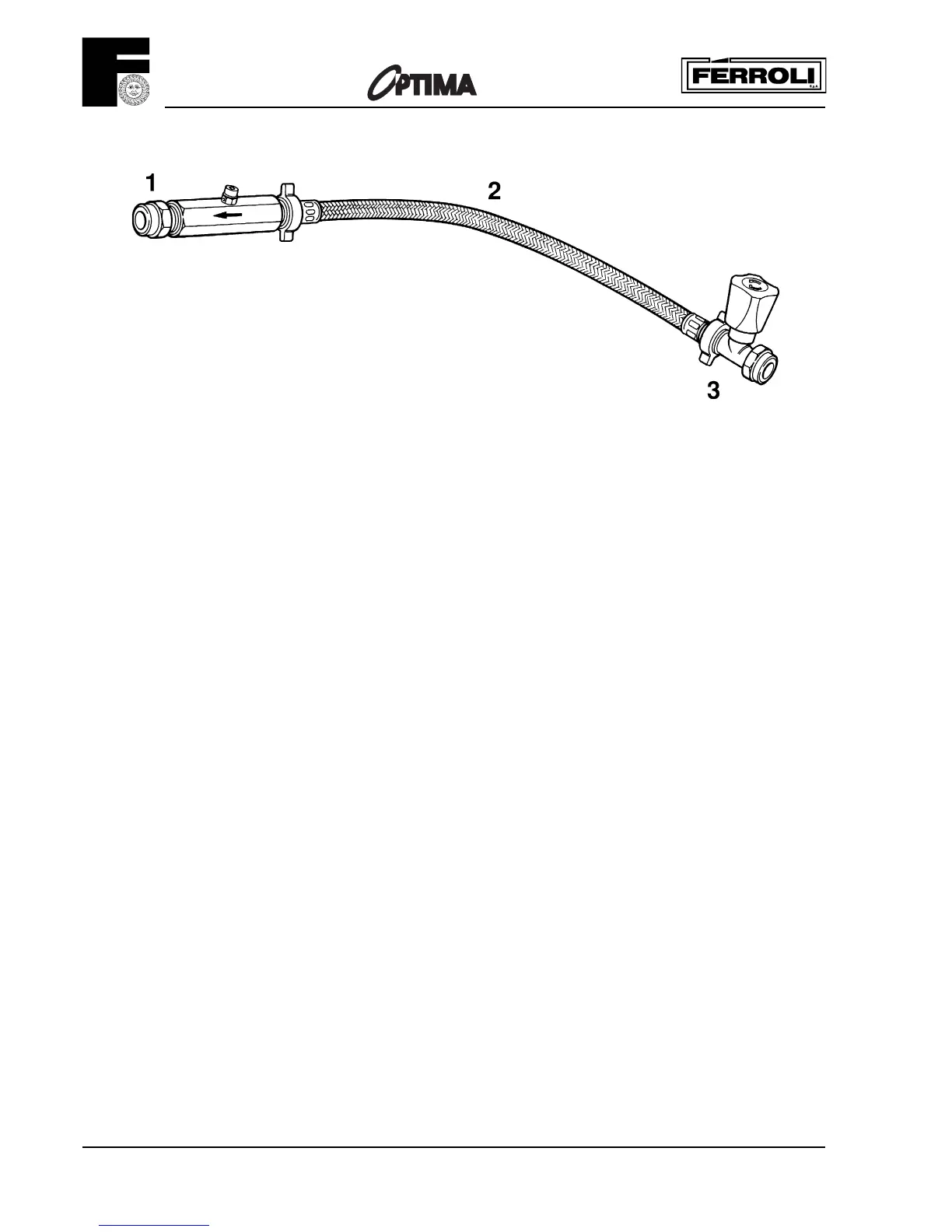
Key
1. Filling point C.H.
2. Temporary connection
3. Cold water supply
Built-in Central Heating Water Circulating Pump
The pump head available for circulating the water is given in fig. 7.
N.B. - The pump is factory set at position 3. The pump is a Grundfos type 15-50 UPS series.
Grunfos Pump performance graph
1 2 3 Speed settings
A Boiler pressure drop
B Max. available pump head C.H.
Note - Minimum flow through boiler heat exchanger at any time should not fall below 6 litres per minute.
If required an additional expansion vessel may be fitted to the central heating return inlet.
If the total volume of water in the system exceeds 40 litres an additional expansion vessel must be fitted to
the central heating return inlet.
Pump performance curve Grundfos UPS 15-50
Fig. 6




 To Next Page