2 Customer Service: 252.522.3031
Gas and oil heating appliances generate heat through the
combustion of fuel. The heat is transferred through the heat
exchanger and distributed to the conditioned space. The
products of combustion, however, must be vented safely out of
the structure. In a conventional chimney, venting is achieved
by the natural lifting action of the hot combustion gas.
New, efficient systems absorb more of the heat in the heat
exchanger and produce lower temperature vent gas. Lower
temperature gas does not rise as quickly or as reliably as
in older, less efficient systems. Power venting or sidewall
venting is more economical and safer than chimney venting.
A power venter uses a motorized blower to vent the
products of combustion. A power venter is interlocked with
the appliance to ensure that proper draft is achieved before
the appliance burner is activated.
THE SWG OR COMBOVENT™
POWER VENTER IS THE SAFEST,
MOST EFFICIENT POWER VENTER
AVAILABLE TODAY.
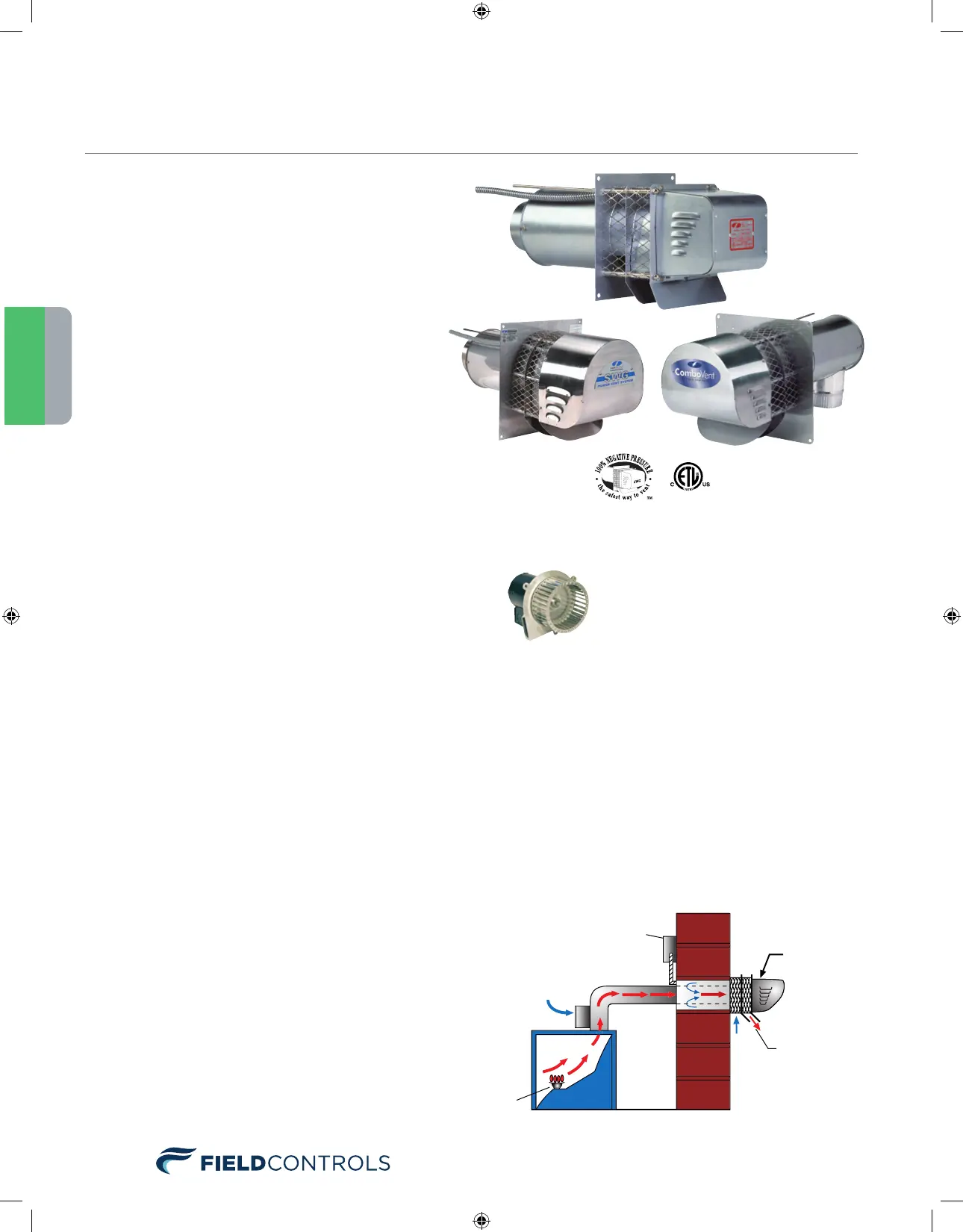
Patented SWG or ComboVent Power Venters are ETL and
cETL listed for all LP gas, natural gas, or oil-fired heating
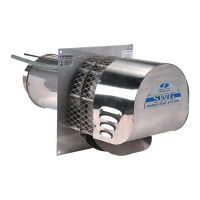
equipment. The SWG or ComboVent combines the motor,
blower, and vent hood in one complete, easy-to-install unit.
The SWG mounts on the outside of the building and pulls the
combustion gases from the appliance through the outside wall
utilizing 100% negative pressure.
Benefits of the SWG or ComboVent Power
Venter include:
• 100% negative pressure in the vent pipe for
maximum safety.
• Option to use standard galvanized pipe instead of
expensive stainless steel.
• No need to seal vent pipe joints, saving time
and money.
• Significantly longer vent lengths than positive pressure,
direct vent systems.
• Recommendation of the SWG or ComboVent by major
heating appliance manufacturers.
The SWG or ComboVent must be sized to match the
appliance or appliances’ input firing rate. Most firing rates are
published in the manufacturer’s installation manual. The SWG
and ComboVent must be installed with a CK Control Kit to
ensure proper listing and safe, efficient venting.
HOW THE SWG/CV WORKS
1. The thermostat calls for heat, energizing the Power Venter (A).
2. A negative pressure is created, closing the pressure switch on the
control kit (B).
3. The burner (C) is activated, and combustion gases
are exhausted (D).
4. After the thermostat is satisfied, the burner shuts down and the venter
continues to post purge, exhausting residual flue gases.
5. When the timer or temperature control is satisfied, the venter
is deactivated.
Replacement Motor Kit and Stainless Steel Blowerwheel shown.
Note: Max operating temperature for ComboVent is 500º F and 550ºF for SWG-4HD,
5 & 6 Motor Kits include a stainless steel blower wheel for better performance and extended life.
Supplemental
air through
Draft Control
The Power Venter pulls combustion gases to the outside,
creating 100% negative pressure in the vent pipe.
A
D
B
C
SWG/CV POWER VENTER
OUTDOOR MOUNTED POWER VENTERS FOR OIL & GAS


 To Next Page