4
2. Buttons and ports explained
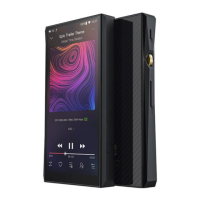
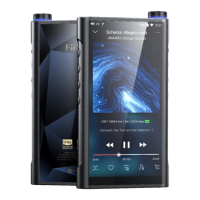
1) 5.15 inches IPS Hi-Res incell screen (1440x720 pixels): Displays the user
interface and other information; for operating the unit via screen touches and/or
in conjunction with buttons on the unit.
2) Power / Lock: While M11 is powered off, hold for 2s to turn on; while
powered on, hold to display power off / reboot menu; press briefly while
powered on to turn screen on / off; Press and hold for 10 seconds to reset.
3) Play / Pause: Press while playing to pause music, press while paused to
continue playback.
4) Volume knob: Scroll up to turn up the volume, scroll down to turn down the
volume.
5) Previous track: Short press, play the previous track; Long press, the track
quickly retired.
6) Next track: Short press, play the next track; long press, the track fast forward.
7) Micro SD card slot: supporting dual external micro SD card storage
(Theoretically up to 4TB extension).
8) Type C USB data/ charging port: Used for charging, transmitting data, USB
Audio output. The QC2.0 adapter is recommended for charging and can be filled
in 2 hours.
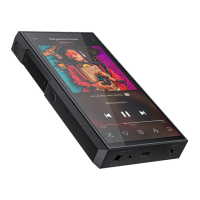
9) 4.4mm balanced headphone output: Supports 4.4mm TRRS balanced
headphones.
10) 2.5mm balanced headphone output: Supports 2.5mm TRRRS balanced
headphones.
11) 3.5mm PO/LO/ SPDIF coaxial output: Shared Phone/line / coaxial output
port. Switch between the three outputs in M11 Settings ->Audio Settings ->
Multifunctional Output.
CTIA-spec headsets with in-line remote control supported with the following
remote control operation (single button remotes and main button of multi-button
remotes supported):
Volume Up/Down: click to turn up/down the volume by one step, hold to turn
up/down the volume continuously to Max volume/Mute;
Play / Pause: press main button once briefly to toggle between play and pause;
Next track: double-click main button quickly;
Previous track: triple-click main button quickly.


 To Next Page