8
Troubleshooting
The Fastener Plates Are Loose:
Fasteners were not fully set.
‘Final Set’ procedure was performed on a surface other than a hardened steel plate.
• A hardened steel plate, such as the Flexco ST-28 setting plate, should be used.
Surfaces such as soft steel or wood will not allow staples to be fully set and/or
can cause staple leg to deect out of the pocket.
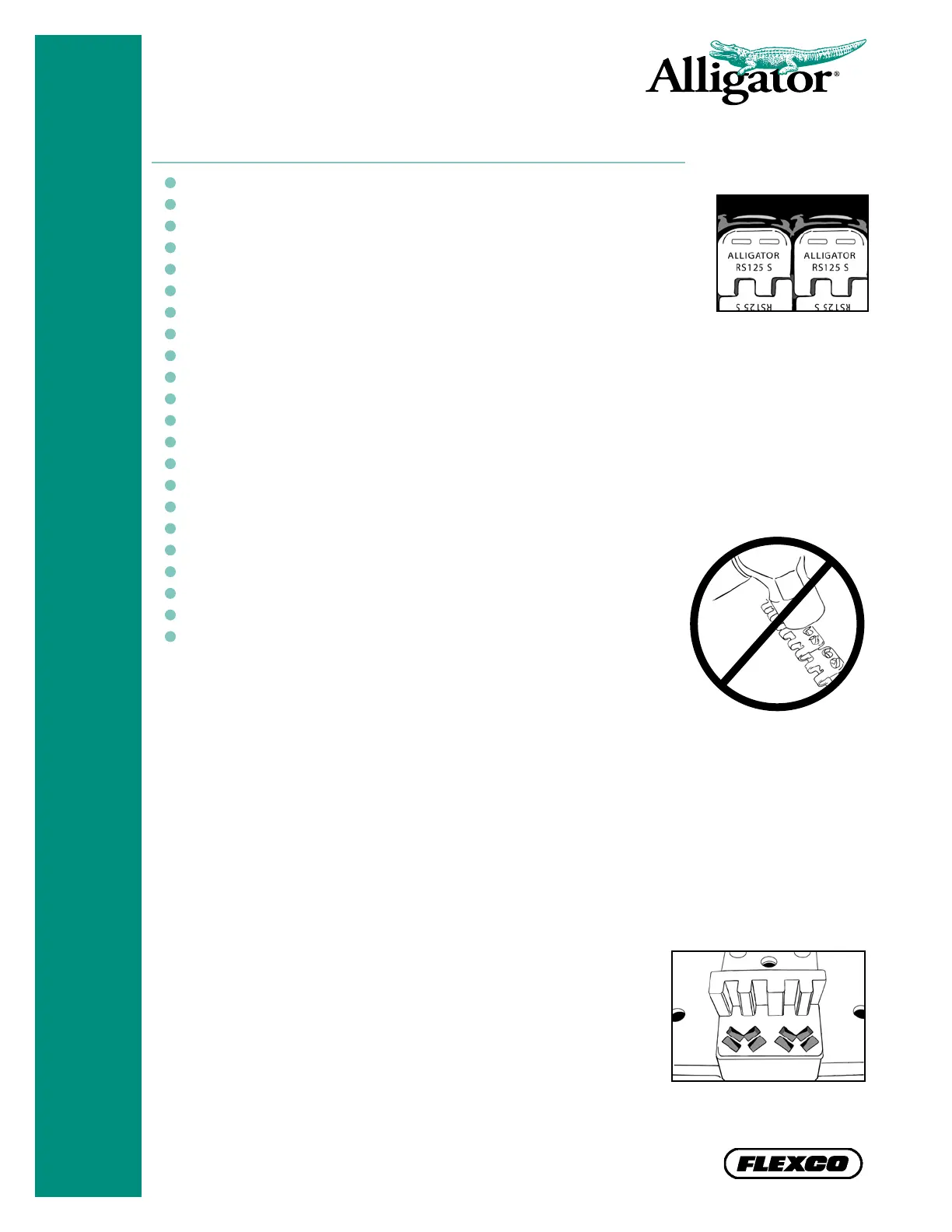
‘Final Set’ procedure was performed from bottom side of the
fastener, causing staples to back out or to buckle inside of
the belt.
• Final setting of staples should always be performed
from top side of fastener on a hardened steel plate.
The Staples Misre During Installation:
• A 1-lb. hammer is recommended with the standard Staple Driver.
• A 2-lb. hammer is recommended with the Quad Staple Driver
™
.
• A dead blow, soft steel or rubber hammer should not be used.
Either too heavy a hammer or the wrong type of hammer was used.
• Starting with a moderate blow, hit driver with three to ve consecutive
blows, each blow harder than the previous one.
Initial hit with the hammer was too hard.
• Inspect for deep/worn pockets and chipped/worn
walls in angled areas of the anvils.
• Check alignment of guide block posts.
Anvils in the Alligator
®
RSC187 Tool are worn or broken.
• Use only a hardened steel plate, such as the Flexco
ST-28, when performing the ‘Final Set’ procedure of
the Ready Set fasteners.
A mild steel plate was used for ‘Final Set’ procedure.
ALLIGATOR
®
STAPLE
• Fasteners should be rmly set, creating a slight puckering
of belt around front edge of top plate. This may not be
possible on hard belts or belts with little top cover.
• You should not be able to catch a ngernail under plates.
• Belt is either too thin or too thick for size of Alligator
®
Staple fastener selected.
Conrm proper size has been selected.
• Rough top belt was either not skived or the belt was skived too thin for the size
of Alligator Staple fastener being used.


 To Next Page