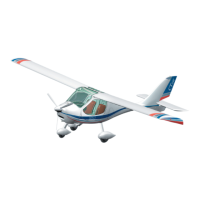
Aircraft Type: CTSW
FLIGHT DESIGN
Aircraft Operating Instructions
Page: 7-1
AU 010 01000
Rev. No: 7
Original Issue Date: 28-Feb-2005
Revision Date: 29-Apr-2008
7 Emergency Procedures
Engine failure
The first action in case of engine failure is to lower the nose and to establish best glide
speed: 115 km/h / 63 kts. If the failure occurs during takeoff, it is often best to attempt a
landing straight ahead and under control rather than try to turn and return to the runway.
The next action should be to identify a field for landing, taking in to consideration
obstacles, field length, and wind direction.
Maintain a minimum speed of 115 km/h / 63 kts at 15° flaps until final approach.
Before touchdown, select flaps 40°.
If there is sufficient time and the failure can be identified, an engine restart while in safe
flight altitude may be attempted.
If the restart is successful it may be possible to proceed to a suitable landing area and
perform a precautionary landing.
In case of fire shut off the engine:
• Shut off the fuel valve;
• Turn off the ignition;
• Slip away from the fire if possible;
• Land as soon as possible.
The Emergency Parachute System (BRS)
The BRS system may be used at a variety of altitudes and airspeeds. Situations that
might warrant its use may include:
• A loss of control in Instrument Meteorological Conditions
• A structural failure
• A collision in flight
• An irrecoverable spin
• Pilot incapacitation
• Jammed flight controls
• Engine failure over hostile terrain
If possible, before activating the BRS shut off the engine and tighten the seatbelts.
To activate the system, pull the T handle all the way to the stop.
CAUTION!
The operator of a CTSW must be thoroughly familiar with the contents of
the BRS Manual and abide by all instructions and limitations within.
Overturn on land
• Carefully unfasten the seat belts and lower yourself first, then your passenger.
• Be careful of any spilled fuel – there may be a fire hazard!
• Leave the airplane immediately.


 To Next Page