This document serves as a comprehensive Use & Care Manual for a Frigidaire Room Air Conditioner, providing detailed instructions for its operation, maintenance, and troubleshooting. It emphasizes safety, proper usage, and energy-saving practices to ensure optimal performance and longevity of the appliance.
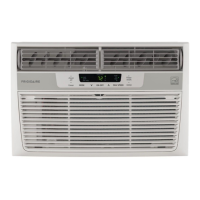
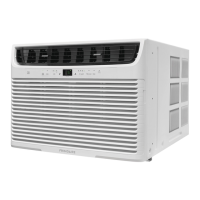
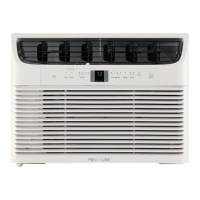
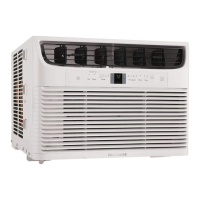
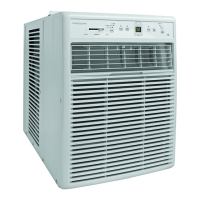
The air conditioner is designed to provide cooling and air circulation for indoor spaces. Its primary function is to regulate room temperature, offering various modes to suit different user preferences and environmental conditions. The unit features an electronic control panel, which can also be operated via a standard remote control, allowing for convenient adjustments from a distance.
Usage Features:
The air conditioner offers several operational modes and settings to enhance user comfort and energy efficiency:
- On/Off Functionality: The unit can be easily turned on or off using a dedicated button on both the control panel and the remote.
- Temperature Setting: Users can adjust the desired room temperature within a range of 60°F (16°C) to 90°F (32°C). The display shows the set temperature, or the actual room temperature when in "Fan Only" mode.
- Fan Speed Adjustment: The air conditioner provides multiple fan speed options, including "Auto," "High," "Medium," and "Low." In "Auto Fan" mode, the fan speed automatically adjusts based on the room temperature, increasing when the room is warmer and decreasing as it cools down. This feature helps maintain consistent comfort while optimizing energy consumption.
- Cool Mode: This is the primary cooling function, where the compressor cycles on and off to maintain the set temperature. The fan remains on continuously in this mode.
- Fan Only Mode: When cooling is not desired, this mode allows the unit to circulate room air or exhaust stale air (on models with this feature). In this mode, the display shows the actual room temperature. Users can select their preferred fan speed, excluding "Auto Fan." It is recommended to open the vent for exhausting stale air and close it for maximum cooling efficiency.
- Energy Saver Mode: This mode is activated by default when the unit is first turned on. In Energy Saver mode, the fan runs for one minute after the compressor shuts off, then cycles on for 20 seconds at 10-minute intervals to check the room temperature. If the room temperature rises above the set temperature, the compressor will turn back on. This intelligent cycling helps conserve energy.
- Sleep Mode: Designed for nighttime comfort and energy savings, Sleep Mode gradually increases the set temperature. The selected temperature will increase by 2°F 30 minutes after activation, and then by another 2°F after an additional 30 minutes. This new temperature is maintained for 7 hours before reverting to the originally selected temperature. The Sleep mode can be canceled at any time by pressing the "Sleep" button again.
- Timer Function (Delay Stop / Start): This feature allows users to program the unit to turn on or off after a specified delay. The timer can be set in 0.5-hour increments up to 10 hours, and then in 1-hour increments up to 24 hours. For "Delay Stop," the unit must be in the "On" position, while for "Delay Start," it must be in the "Off" position. The control counts down the remaining time, and the "Delay Start" operation automatically selects cooling with maximum fan speed (if "Cool," "Energy Saver," or "Fan Only" was the last mode selected). The set temperature will be maintained, but can be adjusted if needed. Pressing the On/Off button at any time will cancel the timer function.
- 4-Way Louvers: The air conditioner is equipped with 4-way air directional louvers, enabling users to direct the airflow up, down, left, or right, ensuring even distribution of conditioned air throughout the room.
- Exhaust Control: This feature, available on some models, allows the air conditioner to either recirculate inside air (CLOSED position) or exhaust stale air to the outside (OPEN position). The CLOSED position is ideal for maximum cooling, while the OPEN position helps remove stale air and draw in fresh air.
Maintenance Features:
Regular maintenance is crucial for the air conditioner's efficiency and longevity. The manual provides clear instructions for routine care:
- Air Filter Cleaning: The air filter should be checked at least once a month. A "Check Filter" reminder feature, indicated by an LED light, illuminates after 250 hours of operation to prompt cleaning. The filter can be grasped by the center, pulled up and out, and then washed with liquid dishwashing detergent and warm water. After rinsing thoroughly and gently shaking off excess water, the filter must be completely dry before being replaced. Alternatively, the filter can be vacuumed clean. After cleaning, the "Filter Reset" button should be pressed to turn off the reminder light.
- Cabinet Cleaning: To clean the cabinet and front, the unit must first be unplugged. The surfaces can be dusted with an oil-free cloth or wiped with a cloth dampened in a solution of warm water and mild liquid dishwashing detergent. Harsh cleaners, wax, or polish should not be used. Care must be taken to wring excess water from the cloth when wiping around the controls to prevent damage.
- Winter Storage: If the air conditioner is to be stored during winter, it should be carefully removed from the window according to the installation instructions. It should then be covered with plastic or returned to its original carton. Storing the unit in an upright position is recommended to prevent rust or damage to electrical connections.
The manual emphasizes several safety precautions:
- Electrical Safety: The power supply cord includes a current detection device. Users are instructed to plug in the air conditioner, press the "TEST" button (which should cause the "RESET" button to pop out), and then press the "RESET" button (which should engage the button and light up the plug head). This ensures the power supply cord is functioning correctly. The device should not be used to turn the unit on or off. If the power supply cord fails to reset or is damaged, it must be replaced by one obtained from the product manufacturer and cannot be repaired. Users are warned against using extension cords or adapter plugs and against removing any prong from the power cord. The air conditioner must be used with a properly grounded wall receptacle.
- General Safety: Users are advised not to insert fingers or objects into the air discharge area, not to start or stop the unit by unplugging it or turning off power at the electrical box, and not to cut or damage the power cord. In case of malfunction (sparks, burning smell), operation should be stopped immediately, the power cord disconnected, and an authorized servicer called. The unit should not be operated with wet hands, and the power cord should not be pulled. Drinking water drained from the air conditioner is also prohibited.
- Installation Safety: The air conditioner must be securely and correctly installed according to the provided instructions. When handling the unit, care should be taken to avoid cuts from sharp metal fins on the coils.
- Environmental Safety: Users are advised not to store or use flammable vapors or liquids near the appliance. Occasional ventilation during use is recommended. Directing airflow at fireplaces or heat-related sources should be avoided. Objects should not be climbed on, placed on, or hung off the outdoor part of the unit. Containers with liquids should not be placed on the unit.
- Operational Safety: The air conditioner should be turned off at the power source when not in use for extended periods. Installation accessories should be checked periodically for damage. Heavy pressure should not be applied to the radiator fins. The unit should always be operated with the air filter in place. The intake grille, discharge area, and outlet ports should not be blocked or covered. Electrical/electronic equipment should be kept at least one yard away from the unit. Flammable gases should not be used or stored near the unit. Metal parts of the unit should not be touched when removing the filter. Water should not be used to clean inside the air conditioner, as it can damage insulation and cause electric shock. The power and circuit breaker should be turned off before cleaning.
Energy Saving Ideas:
The manual provides practical tips for maximizing energy efficiency:
- Airflow Optimization: Do not block internal airflow with blinds, curtains, or furniture, or external airflow with shrubs, enclosures, or other buildings.
- Proper Sizing: Ensure the air conditioner's capacity matches the room size for efficient operation.
- Shady Installation: Install the unit on the shady side of the home, preferably a north-facing window, which is shaded most of the day.
- Seal Openings: Close fireplace dampers, floor, and wall registers to prevent cool air escape.
- Window Management: Keep blinds and drapes closed on other windows during the sunniest parts of the day.
- Regular Filter Cleaning: Clean the air filter as recommended in the "Care and Cleaning" section.
- Home Insulation: Proper insulation and weather stripping help keep warm air out and cool air in.
- External Shading: Trees, plants, or awnings can help reduce the air conditioner's workload.
- Appliance Scheduling: Operate heat-producing appliances (ranges, washers, dryers, dishwashers) during the coolest parts of the day.
Troubleshooting:
A "Before You Call" section lists common occurrences that are not due to defects and provides solutions, such as checking for disconnected plugs, tripped current devices, blown fuses, incorrect control settings, dirty air filters, or improper installation. It also addresses issues like ice formation on coils, insufficient cooling, rapid cycling, noise, and water dripping. Fault codes "AS" and "ES" indicate sensor failures, requiring service.
This manual ensures users have all the necessary information to safely and effectively operate and maintain their Frigidaire Room Air Conditioner, promoting comfort, efficiency, and product longevity.

 Need help?
 General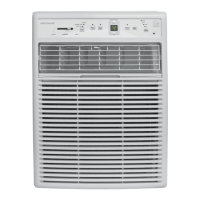


 To Next Page