EasyManua.ls Logo

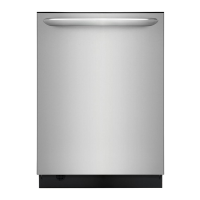
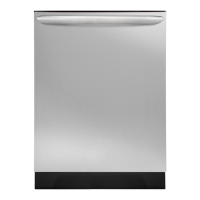
Frigidaire FGID2466QF6A - User Manual

Frigidaire FGID2466QF6A
20 pages
Print Icon
To Next Page IconTo Next Page
Loading...
TA B L E O F C O N T E N T S
www.frigidaire.com USA 1-800-944-9044 www.frigidaire.ca Canada 1-800-265-8352
All about the
Use & Care
of your Dishwasher
Important Safety Instructions ......................2
Product Registration ...................................3
Features at a Glance ...................................4
Operating Instructions .............................5-7
Preparing and Loading Dishes ................8-11
P/N:A05788501RevD Artwork:A05788501Rev004 (August 2018)
Dishwasher Dispenser and Detergents .......12
Factors Affecting Performance ...................13
Care and Cleaning ............................... 14-15
Before you Call .................................... 16-18
Major Appliance Warranty .........................19
Question and Answer IconNeed help?

Do you have a question about the Frigidaire FGID2466QF6A and is the answer not in the manual?

Summary

Important Safety Instructions

General Safety Precautions for Use

Essential safety guidelines for operating and maintaining the dishwasher, covering electrical, child safety, and proper use.

Understanding Warning Symbols and Hazards

Explanation of key warning symbols and specific hazards such as fire, electrical shock, and burns.

Product Registration

Registering Your Appliance Online or By Mail

Instructions and benefits for registering your Frigidaire dishwasher through online portals or postal mail.

Getting Started: Initial Setup Steps

A step-by-step guide for initial setup, including loading dishes, adding detergent, and starting the first cycle.

Dishwasher Features Overview

Key Dishwasher Components Identified

Diagram and identification of the main parts of the Frigidaire dishwasher, such as spray arms and racks.

Operating Your Dishwasher

Wash Cycle Selections and Options

Guidance on choosing wash cycles and utilizing options like Hi-Temp Wash for effective cleaning.

Drying Options: Heat Dry and Sahara Dry

Details on using Heat Dry and Sahara Dry options to enhance dish drying performance and manage energy use.

Specialized Cycles: Sanitize and Favorite

Instructions for using the Sanitize option for hygiene and programming a Favorite Cycle for convenience.

Advanced Features: Delay Start and Child Lock

How to utilize the Delay Start feature for timed operation and secure the dishwasher with Child Lock controls.

Operating Your Dishwasher

Status Indicators and Window Messages

Understanding the meaning of console lights and status window displays during dishwasher operation.

Controlling Console Light Behavior

Instructions on how to turn console lights off during cycle operation and restore the default setting.

Comprehensive Cycle and Option Chart

A detailed chart outlining available wash cycles, options, water consumption, and approximate cycle durations.

Preparing and Loading Dishes

Pre-Wash Dish Preparation Steps

Guidelines for preparing dishes by scraping food, loosening residues, and emptying liquids before loading.

Top Rack Loading Recommendations

Advice on loading various items into the top rack, including cups, glasses, and plastic items for optimal cleaning.

General Loading Patterns and Tips

Recommended loading patterns and tips for best cleaning, drainage, and preventing damage to items in the dishwasher.

Adjusting the Upper Rack Height

Instructions on how to adjust the height of the upper rack for flexible loading of different dishware sizes.

Preparing and Loading Dishes

Bottom Rack Loading Guidelines

Guidance for loading plates, cookware, and large items in the bottom rack for optimal cleaning and drainage.

Using Fold-down Tines for Large Items

How to use fold-down tines in the lower rack for loading large pots, pans, and hard-to-fit items efficiently.

Silverware Basket Loading Best Practices

Best practices for loading silverware, including placement of sharp items and mixing utensil orientations to prevent nesting.

Adding Dishes During a Cycle

Procedure for safely adding or removing dishes after a wash cycle has started, ensuring proper resumption.

Dishwasher Dispenser and Detergents

Filling the Detergent Dispenser Correctly

Instructions on how to fill detergent cups, including usage of tablets and packets.

Determining Correct Detergent Dosage

Guidance on the correct amount of detergent to use based on water hardness and cycle selection.

Detergent Usage Chart Explained

A chart detailing recommended detergent amounts for different water hardness levels and wash cycles.

Factors Affecting Performance

Rinse Aid: Use and Adjustment

How to use the rinse aid dispenser to improve drying and reduce water spots, including adjustment settings.

Water Pressure for Optimal Washing

Information on the required water pressure range (20-120 psi) for optimal dishwasher performance.

Importance of Water Temperature

The necessity of hot water (at least 120°F/49°C) for effective dishwashing and drying results.

Enhancing Drying with Heat Dry

How the Heat Dry option, combined with rinse aid, improves drying efficiency.

Care and Cleaning

Burn Hazard Warning for Interior

Cautionary note regarding the heating element's temperature before cleaning the interior of the dishwasher.

Cleaning Interior and Exterior Surfaces

Instructions for cleaning the outer door, interior tub, and tub gasket area using appropriate cleaners.

Glass Trap and Overfill Protector Maintenance

Procedures for emptying the glass trap and cleaning the overfill protector to ensure proper dishwasher operation.

Care and Cleaning

Drain Air Gap Maintenance and Care

Guidance on checking and cleaning the drain air gap, which is external to the dishwasher unit.

Winterizing Your Dishwasher

Steps for disconnecting and protecting the dishwasher from freezing in unheated places.

Troubleshooting: Before You Call for Service

Addressing Food Soils and Drying Issues

Troubleshooting common problems like food soils left on dishes and dishes not drying properly.

Resolving Spotting and Chipping Problems

Solutions for glassware spotting, cloudiness, and dishware chipping, including care for delicate items.

Vapor, Stains, and Water in Tub Issues

Addressing issues like vapor at vent, dishware stains, and water remaining in the tub bottom after cycles.

Troubleshooting: Before You Call for Service

Cycle Time, Detergent, and Leak Issues

Troubleshooting long wash cycles, detergent left in cups, and potential dishwasher leaks.

Understanding Normal Operating Sounds

Description of normal sounds the dishwasher makes during various stages of operation.

Dishwasher Not Starting, Filling, or Draining

Steps to troubleshoot if the dishwasher won't start, won't fill, or doesn't drain properly.

Troubleshooting: Before You Call for Service

Resolving Odors and Interior Stains

Solutions for dishwasher odors and discoloration on the tub interior, including using vinegar for cleaning.

Managing Door Opening During Cycles

Procedure for safely opening and closing the door during an active cycle to ensure proper resumption.

Major Appliance Warranty Information

Warranty Coverage and Exclusions Explained

Details of the one-year limited warranty, including what is covered and common exclusions.

Service and Support Contact Details

Contact information and procedures for obtaining warranty service or support for your Frigidaire appliance.

Summary

Important Safety Instructions

General Safety Precautions for Use

Essential safety guidelines for operating and maintaining the dishwasher, covering electrical, child safety, and proper use.

Understanding Warning Symbols and Hazards

Explanation of key warning symbols and specific hazards such as fire, electrical shock, and burns.

Product Registration

Registering Your Appliance Online or By Mail

Instructions and benefits for registering your Frigidaire dishwasher through online portals or postal mail.

Getting Started: Initial Setup Steps

A step-by-step guide for initial setup, including loading dishes, adding detergent, and starting the first cycle.

Dishwasher Features Overview

Key Dishwasher Components Identified

Diagram and identification of the main parts of the Frigidaire dishwasher, such as spray arms and racks.

Operating Your Dishwasher

Wash Cycle Selections and Options

Guidance on choosing wash cycles and utilizing options like Hi-Temp Wash for effective cleaning.

Drying Options: Heat Dry and Sahara Dry

Details on using Heat Dry and Sahara Dry options to enhance dish drying performance and manage energy use.

Specialized Cycles: Sanitize and Favorite

Instructions for using the Sanitize option for hygiene and programming a Favorite Cycle for convenience.

Advanced Features: Delay Start and Child Lock

How to utilize the Delay Start feature for timed operation and secure the dishwasher with Child Lock controls.

Operating Your Dishwasher

Status Indicators and Window Messages

Understanding the meaning of console lights and status window displays during dishwasher operation.

Controlling Console Light Behavior

Instructions on how to turn console lights off during cycle operation and restore the default setting.

Comprehensive Cycle and Option Chart

A detailed chart outlining available wash cycles, options, water consumption, and approximate cycle durations.

Preparing and Loading Dishes

Pre-Wash Dish Preparation Steps

Guidelines for preparing dishes by scraping food, loosening residues, and emptying liquids before loading.

Top Rack Loading Recommendations

Advice on loading various items into the top rack, including cups, glasses, and plastic items for optimal cleaning.

General Loading Patterns and Tips

Recommended loading patterns and tips for best cleaning, drainage, and preventing damage to items in the dishwasher.

Adjusting the Upper Rack Height

Instructions on how to adjust the height of the upper rack for flexible loading of different dishware sizes.

Preparing and Loading Dishes

Bottom Rack Loading Guidelines

Guidance for loading plates, cookware, and large items in the bottom rack for optimal cleaning and drainage.

Using Fold-down Tines for Large Items

How to use fold-down tines in the lower rack for loading large pots, pans, and hard-to-fit items efficiently.

Silverware Basket Loading Best Practices

Best practices for loading silverware, including placement of sharp items and mixing utensil orientations to prevent nesting.

Adding Dishes During a Cycle

Procedure for safely adding or removing dishes after a wash cycle has started, ensuring proper resumption.

Dishwasher Dispenser and Detergents

Filling the Detergent Dispenser Correctly

Instructions on how to fill detergent cups, including usage of tablets and packets.

Determining Correct Detergent Dosage

Guidance on the correct amount of detergent to use based on water hardness and cycle selection.

Detergent Usage Chart Explained

A chart detailing recommended detergent amounts for different water hardness levels and wash cycles.

Factors Affecting Performance

Rinse Aid: Use and Adjustment

How to use the rinse aid dispenser to improve drying and reduce water spots, including adjustment settings.

Water Pressure for Optimal Washing

Information on the required water pressure range (20-120 psi) for optimal dishwasher performance.

Importance of Water Temperature

The necessity of hot water (at least 120°F/49°C) for effective dishwashing and drying results.

Enhancing Drying with Heat Dry

How the Heat Dry option, combined with rinse aid, improves drying efficiency.

Care and Cleaning

Burn Hazard Warning for Interior

Cautionary note regarding the heating element's temperature before cleaning the interior of the dishwasher.

Cleaning Interior and Exterior Surfaces

Instructions for cleaning the outer door, interior tub, and tub gasket area using appropriate cleaners.

Glass Trap and Overfill Protector Maintenance

Procedures for emptying the glass trap and cleaning the overfill protector to ensure proper dishwasher operation.

Care and Cleaning

Drain Air Gap Maintenance and Care

Guidance on checking and cleaning the drain air gap, which is external to the dishwasher unit.

Winterizing Your Dishwasher

Steps for disconnecting and protecting the dishwasher from freezing in unheated places.

Troubleshooting: Before You Call for Service

Addressing Food Soils and Drying Issues

Troubleshooting common problems like food soils left on dishes and dishes not drying properly.

Resolving Spotting and Chipping Problems

Solutions for glassware spotting, cloudiness, and dishware chipping, including care for delicate items.

Vapor, Stains, and Water in Tub Issues

Addressing issues like vapor at vent, dishware stains, and water remaining in the tub bottom after cycles.

Troubleshooting: Before You Call for Service

Cycle Time, Detergent, and Leak Issues

Troubleshooting long wash cycles, detergent left in cups, and potential dishwasher leaks.

Understanding Normal Operating Sounds

Description of normal sounds the dishwasher makes during various stages of operation.

Dishwasher Not Starting, Filling, or Draining

Steps to troubleshoot if the dishwasher won't start, won't fill, or doesn't drain properly.

Troubleshooting: Before You Call for Service

Resolving Odors and Interior Stains

Solutions for dishwasher odors and discoloration on the tub interior, including using vinegar for cleaning.

Managing Door Opening During Cycles

Procedure for safely opening and closing the door during an active cycle to ensure proper resumption.

Major Appliance Warranty Information

Warranty Coverage and Exclusions Explained

Details of the one-year limited warranty, including what is covered and common exclusions.

Service and Support Contact Details

Contact information and procedures for obtaining warranty service or support for your Frigidaire appliance.

Overview

This document is a Use & Care Manual for a Frigidaire dishwasher, providing comprehensive instructions for its operation, maintenance, and troubleshooting. The dishwasher is designed to clean dishes by spraying a mixture of hot water and detergent against soiled surfaces. It employs a direct feed wash system with energy-efficient motors for both wash and drain cycles, which may result in quieter operation compared to older models. The cleaning process involves multiple water fills and drains, with soil particles filtered and pumped out.

Function Description

The dishwasher offers various wash cycles tailored to different soil levels and item types. These include:

  • Power Plus: Recommended for heavily soiled pots, pans, casseroles, and dinnerware.
  • Normal Wash: Suitable for lightly to heavily soiled loads.
  • Quick Wash: Designed for lightly soiled loads only.
  • China Crystal: For lightly soiled China, Crystal, or other delicate items.
  • Top Rack: For small, lightly to heavily soiled loads in the upper rack only.
  • Energy Saver: Recommended for lightly soiled loads.
  • Rinse Only: For rinsing dishware that will be washed later.

The DishSense™ Technology, available on certain cycles (Power Plus, Normal Wash, Top Rack, and Energy Saver), automatically adjusts cycle time based on the soil level of the dishes, ensuring optimal cleaning performance.

Usage Features

The dishwasher incorporates several features to enhance cleaning and drying performance, as well as user convenience:

  • Option Selections: Users can customize wash cycles with options like Scour, Surge, Spray, Sanitize, Hi-Temp, Normal, Sahara, Heat, and Air. Not all options are available on all models or cycles.
  • Hi-Temp Wash Option: This option heats water in the main wash to approximately 140°F (60°C), aiding in the removal of food grease and soil and improving drying. It is automatically provided with the Power Plus cycle.
  • Heat Dry/Air Dry: The Heat Dry option, especially when combined with rinse aid, enhances drying. The Air Dry option deactivates the heater during the drying phase, slightly lowering energy use but potentially leaving dishes less dry.
  • Sahara Dry™: This option extends drying time by about 20 minutes for improved drying performance. It is recommended to combine it with Hi-Temp Wash or Sanitize for best results.
  • Sanitize Option: To sanitize dishes and glassware, this option raises the final rinse water temperature to 156°F (69°C), meeting NSF requirements. The cycle time extends until the proper temperature is reached.
  • Favorite Cycle: Users can program their preferred cycle and options into a single button for quick selection.
  • Delay Start: This feature allows users to delay the start of a wash cycle for 1-24 hours.
  • Child Lock Controls: To prevent accidental changes or starts, the controls can be locked by pressing and holding the Delay Start button for 3 seconds.
  • Status Indicator Lights: Console lights provide information on cycle selection and current status, remaining on during operation and indicating "Clean" and "Sanitized" (if applicable) at cycle completion.
  • Status Window: Available on some models, this window displays delay start hours, remaining cycle minutes, and prompts to "CLOSE DOOR."
  • Console Lights Control: Users can choose to have the console lights turn off during cycle operation by performing a specific button sequence.

Loading Features:

The dishwasher is designed for flexible loading with adjustable racks and specialized compartments:

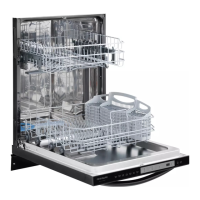
  • Top Rack: Ideal for cups, glasses, stemware, small plates, and bowls. Plastic items and delicate items should be placed here. Some models include fold-down cup shelves or stemware holders for loading two levels of items.
  • Adjustable Upper Rack: The upper rack can be raised or lowered to accommodate different item heights.
  • Bowl Tines: These flexible tines can be closed for saucers or small dishes, opened halfway for small casseroles, or fully opened for hard-to-fit items.
  • Bottom Rack: Best for plates, saucers, bowls, and cookware. Large items should be placed along the edge to avoid blocking the spray arm. Bowls, casseroles, and saucepans should face down and toward the center for better cleaning and drainage.
  • Fold-down Tines (Lower Rack): These tines can be folded down to create more space for large pots and pans.
  • Silverware Basket: Can be loaded in the bottom rack or on a counter/table. It may include lids for securing small items like baby bottle caps or jar lids. Sharp items should be loaded pointing down to prevent injury. Silver and stainless items should not be mixed to avoid damaging the silver finish.

Detergent and Rinse Aid Dispensing:

  • Detergent Dispenser: Features two cups: a smaller one for pre-wash and a larger one for the main wash. Only fresh automatic dishwashing detergent should be used. For tablets or packets, one should be placed in the main wash cup.
  • Rinse Aid Dispenser: Automatically releases a measured amount of rinse aid during the last rinse to improve drying and reduce water spots. The amount dispensed can be adjusted.

Maintenance Features

Regular maintenance ensures optimal performance and longevity of the dishwasher:

  • Dish Preparation: Scrape away large food pieces before loading. Pre-rinsing or using the Rinse Only cycle is recommended for heavily soiled dishes, especially if the dishwasher won't be operated immediately.
  • Glass Trap: Located in the center of the filter, this trap collects broken glass, straws, bones, and pits. It needs to be emptied periodically by rotating and lifting the spray arm assembly, then tipping the trap or sliding it out.
  • Outer Door Cleaning: Clean with warm soapy water and a soft cloth; avoid harsh cleaners.
  • Interior Cleaning: The inside of the dishwasher and filter are self-cleaning with normal use. The tub gasket area should be cleaned with a damp cloth.
  • Overfill Protector: Located in the left front corner of the tub, it prevents overfilling. It should move freely and be cleaned occasionally with vinegar or bleach to dissolve buildup.
  • Drain Air Gap: If installed, ensure it is clean for proper drainage. This is not part of the dishwasher and is not covered by warranty.
  • Winterizing: For dishwashers in unheated areas, specific steps are provided to disconnect and restore service to protect against freezing, involving turning off power and water supply, and draining water lines.
  • Removing Spots and Film: Instructions are provided for cleaning lime deposit buildup, spots, and film using white vinegar with a Normal Wash cycle.
  • Troubleshooting: The manual includes a "Before You Call" section with common issues and solutions, such as food soils left on dishes, dishes not drying, spotted glassware, chipped dishware, vapor at vent, stained dishware, water in tub bottom, long cycle times, etching, detergent left in cups, leaks, and normal operating sounds. It also provides guidance on what to do if the dishwasher won't run or fill, or doesn't drain properly.

Frigidaire FGID2466QF6A Specifications

General IconGeneral
BrandFrigidaire
ModelFGID2466QF6A
TypeBuilt-In Dishwasher
ColorBlack
Capacity14 Place Settings
Wash Cycles6
Control TypeElectronic
Width24 inches
Depth25 inches
Height35 inches
Energy Star CertifiedYes
Soil SensorYes
Delay StartYes
Third RackYes
Stainless Steel InteriorYes

Related product manuals