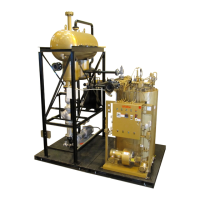
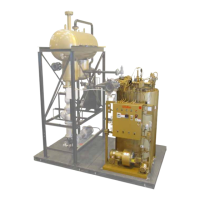
FT-C Vertical Electric Thermal Fluid Heater Manual 12 2013 ISSUE 1
a) The call for heat circuit is the circuit that enables burner operation. Fulton Ltd has used a
variety of Temperature Controllers to act as the Call for Heat.
b) Generally these controls work in combination with a control relay. When the
Temperature Controller calls for heat, a signal is sent to the coil of a control relay that closes
a normally open set of contacts in series with the burner circuit.
c) When the call for heat is met, the signal is removed and the contacts return to their open
state. Situations that may interfere with the Call for Heat circuit include the following:
1.
a) If the temperature controller is calling for heat but is not putting power on the output to
the control relay, the relay will not close the normally open contacts and the heater will
remain disabled. If this is the case, some controllers have separate sets of contacts
that may be utilised in replacement of the damaged contacts. Some rewiring and/or
reprogramming will be needed. Contact Fulton service department if necessary.
2.
a) Different temperature controllers use different types of temperature sensors. These
may be Type J thermocouples, mercury bulbs, RTDs or another type of sensor. It is
possible for these sensors to malfunction. To verify proper sensor operation, use an
alternate source of temperature detection such as an infra-red temperature sensor to
sense temperature at the same point.
3.
a) Many temperature controllers energise a relay with a call for heat that in turn closes a
normally open set of contacts to energise the burner circuit.
b) If your temperature controller is sending an output signal to the control relay but the
burner is not initiated, check resistance across coil of the relay. An open reading
indicates that the relay needs to be replaced. If the coil shows resistance, energise
coil and check contacts. With coil energised, normally open contacts should close
resulting in a reading of control voltage on both the common and normally open
contact.
c) If voltage exists on common but not on normally open contact either switch contacts if
another set of normally open contacts are available or replace relay.



 To Next Page