98
Problem Possible Reason Solution
Food is not cooking
or is taking too long
Burner has gone out Check that the gas bottle is not empty and
re-ignite the burner
Cooking surface was not given enough time
to warm up before the food was applied
Remove the food and give the burner time
to warm the cooking surface (5-10 minutes)
There is too much food on the cooking
surface
Cook smaller portions
Burner operation
OPERATING PROCEDURE
Burn-off
The cooking surface does not need any burn-off time
after rst use.
Preheating
It is necessary to preheat the barbecue for at least 5
minutes before cooking certain foods, depending on the
type of food and the cooking temperature. Food that
requires a low cooking temperature, needs only a period
of 2-3 minutes preheating.
Cooking Temperatures
‘HIGH’ setting - Use this setting only for fast warm up, for
searing steaks and chops, and for burning food residue
from the grill plates after cooking is over. Rarely, if ever,
do you use the ‘HIGH’ setting for extended cooking.
‘MEDIUM’ setting (mid-way between ‘HIGH’ and ‘LOW’).
Use this setting for most grilling, and for cooking
hamburgers and vegetables.
‘LOW’ setting - Use this setting when cooking very lean
cuts such as sh.
These temperatures vary with outside temperature and
the amount of wind.
Roasting
For best results when roasting remove the hotplate and
centre the grill. The outer two burners should be used on
the low to medium setting.
Adjust the control knob to maintain the temperature
around the medium mark.
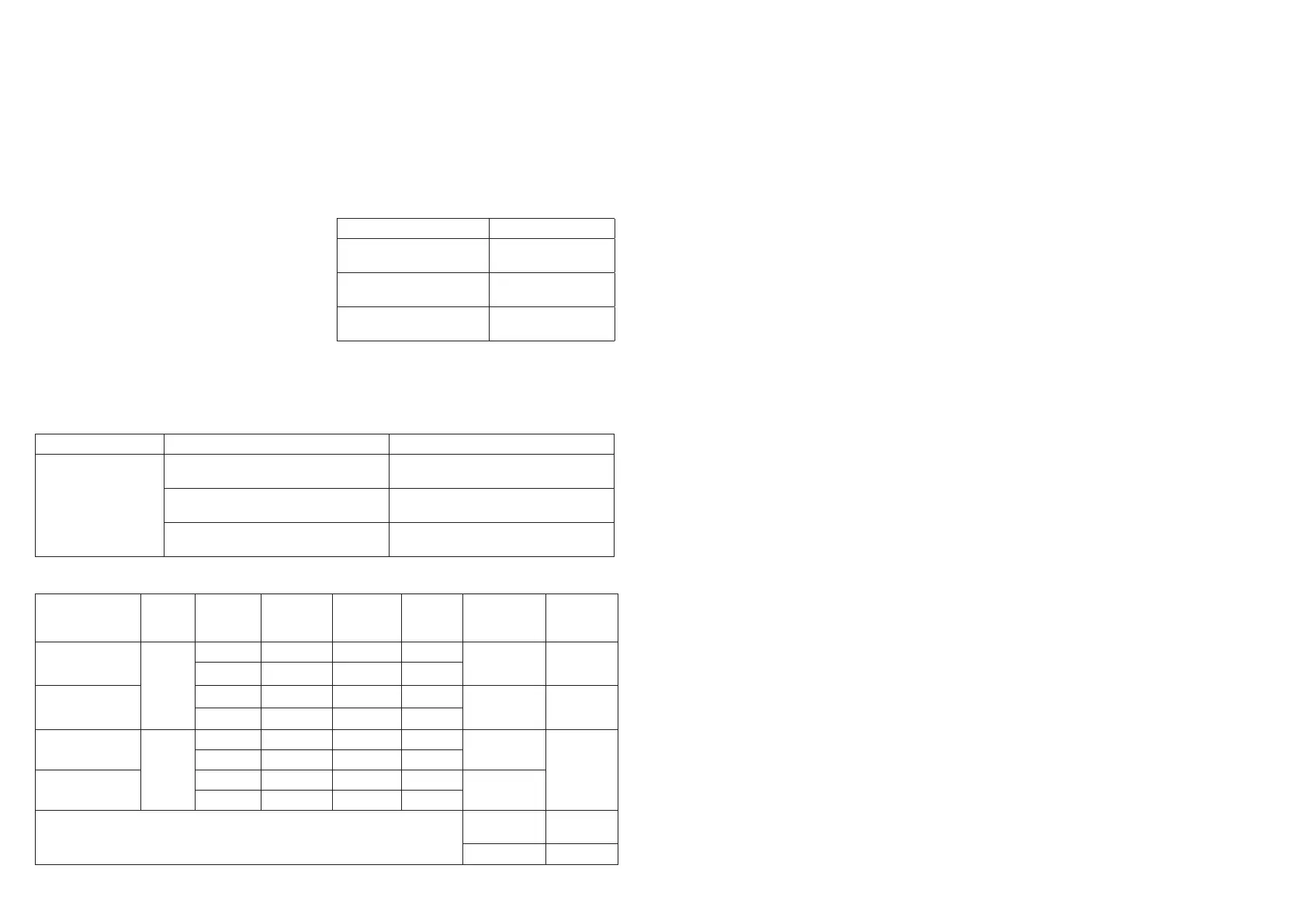
Approximate Cooking Time
The table below shows approximate cooking times with
the control set to ‘MEDIUM’ temperature.
Barbecue Roasts Minutes
Chicken & Rare Beef
(approx.)
45 minutes per Kg
Beef & Medium Lamb
(approx.)
60 minutes per Kg
Pork & Well Done Beef/
Lamb (approx.)
75 minutes per Kg
If the appliance has excessively yellow ames or cannot
be adjusted to perform correctly call 1300 174 876.
Nominal Hourly Gas Consumption
BBQ
Model No
Gas
Type
Number
of Main
Burners
Injector
Size Main
Burners
Injector
Size Side
Burner
Injector
Size Rear
Burner
Total Gas
Consumption
MJ/h
Gas
Pressure
kPa
BQ19F
BQ19BF
Propane
6 Ø1.05 Ø1.15 Ø1.05
114 MJ/h
2.75
kPa
MJ/h 14 MJ/h 17 MJ/h 13 MJ/h
BQ193BF
6 Ø1.05 NA Ø1.05
97 MJ/h
1.0
kPa
MJ/h 14 MJ/h NA 13 MJ/h
BQ19NGF
BQ19BNGF
Natural
Gas
6 Ø1.80 Ø1.80 Ø1.85
110.2 MJ/h
10 kPa
M/Jh 13.7 MJ/h 14 MJ/h 14 MJ/h
BQ193BNGF
6 Ø1.80 N/A Ø1.85
96.2 MJ/h
MJ/h 13.7 MJ/h N/A 14 MJ/h
S.G.A Pty Ltd. 33-35 Lionel Road, Mount Waverley, Victoria 3149, Australia
FOR CORRECT OPERATION REFER TO INSTRUCTIONS PROVIDED
AGA
Approval No
AGA8457 G
D.O.M
Location of your Barbecue
DO NOT use your barbecue in garages, porches, sheds,
breezeways, or other enclosed areas. Your barbecue is to
be used OUTDOORS. The barbecue is not intended to be
installed in or on recreational vehicles and/or boats and
should not be placed under any surface that will burn. Do
not obstruct the ow of combustion and ventilation air
around the barbecue housing.
Protect Children
Keep children away from barbecue during use and until
barbecue has cooled after you have nished. Do not
allow children to operate barbecue.
Always ensure that no sporting or physical activities are
carried out in close proximity to the barbecue during use
and while still hot.
Tools You Will Need
Adjustable spanner, Phillips head screwdriver.
Check Barbecue for any Damage
Inspect barbecue parts as you proceed. Contact your
supplier for assistance regarding replacement of any
damaged or missing parts. Do not assemble or operate a
barbecue that appears damaged. Barbecues for use with
gas cylinders are labelled ‘Propane Gas’ or ‘Universal
L.P.G’. Check labelling at the gas connection on your
barbecue.
As with all appliances, proper care and maintenance
will keep them in top operating condition and prolong
their life. Your new gas barbecue is no exception. By
following these cleaning procedures on a timely basis,
your barbecue will be kept clean and working properly
with minimum effort.
Cleaning the Cooking Surface
After cooking, turn burner control to ‘OFF’ and let
barbecue cool before attempting to clean the cooking
surface. Before rst use and periodically, it is suggested
that you wash the cooking surface in a mild soap and
warm water solution.
Care of Cooking Surface
Use and care of the cooking surface is important. Do not
use pans on the cooking surface. Do not overheat the
cooking surface with the hood down or no food on the
cooking surface.
Cleaning the Drip Tray
To avoid fat or grease dripping from the barbecue remove
and empty the drip tray after each use. Wait until the drip
tray is cool to touch before disposing of contents.
The drip tray should be washed periodically in a mild
detergent and warm water solution.
General Cleaning of Painted Surface
When cleaning your BBQ use a mild dish soap combined
with warm water and a microber cloth to clean the
surface. Then rinse your BBQ with clean water.
Note: Never use steel wool or any hard cleaning pad on
any painted and stainless steel surface, as it can cause
surface damage.
CARE & MAINTENANCE
If not in use, turn off the gas from the source. After
cleaning and when it is dry, spray some canola oil over
the whole BBQ surface and wipe off the excess with
microber cloth to enhance the surface protection. Then
cover the BBQ with a BBQ cover and store it in a dry
place.
CARE AND CLEANING OF
STAINLESS STEEL
Stainless steel parts of this appliance are made from 304
& 430 grade stainless steel. To preserve the appearance
and corrosion resistance of the stainless steel material
regular cleaning is required. Although stainless steel
does not rust in the same manner as steel it can still
exhibit ‘corrosion’ blemishes that look similar to rust and
detract from the appliances appearance. Unlike steel,
the corrosion of stainless steel is mostly conned to the
surface and in most cases can be removed by cleaning,
returning the surface to almost like new.
The most common form of corrosion that affects
stainless steel is what is known as ‘Tea Staining”. This
shows up as brown spots on the surface, hence the
confusion with rusting. This is most common in coastal
areas but depending on the environment can also
occur in inland areas. If the ‘Tea Staining’ marks are not
regularly cleaned from the material surface they can
penetration into the material and become very difcult to
remove, the application of a metal polish would then be
required.
If the appliance is located near swimming pools careful
attention to cleaning is required. Pool chemicals contain
chlorides which can affect the stainless steel. This also
applies to salt water pools as they contain salt, namely
sodium chloride.
The use of bleaches containing chlorine should not be
used to clean the stainless steel surfaces. If the residues
are not completed rinsed away they can cause heavy
pitting of the material. Pitting corrosion eats deep into
the surface and is not easily removed. Heavy polishing is
required.
Routine Care
After each use allow the appliance to cool then wipe
over with a soft, damp, soapy cloth. (DO NOT USE
CLEANERS CONTAINING CHLORIDE). Finally wipe
over with soft, damp cloth. Be sure to wipe off food
particles and cooking residues, some marinates and
oils can be acid and therefore attack the metal surface.
Also, cooking residues that are not removed after each
use bake into the surfaces during subsequent uses and
become more difcult to remove.
There are a number of propriety stainless steel cleaners
available that can be safely used on this appliance. Read
the directions carefully before using
DO NOT USE STEEL WOOL as particles can become
embedded in the surface and then rust resulting in small
brown specs on the surface. If scouring is required to
remove stubborn cooking residues use a soft nylon pad
(non-abrasive).
DO NOT USE ABRASIVE CLEANING COMPOUNDS, use
cream type.


 To Next Page
 Loading...