FHSD700C Series Product Guide
GE Security
3.3 Connection of Sampling Tubes
There are several common guidelines that should be followed when attaching the pipe network to the
FHSD700C detector:
Pipes must NEVER be glued to the inlets of the detector
Pipe network itself MUST be glued together
Use removable unions where necessary
Unused inputs on FHSD7215DC detectors should be looped to one another using short lengths of
microbore. For example, if an FHSD7215DC has unused inputs 9 to 15, one way of connecting the
unused inputs would be to use short pieces of microbore to connect inputs 9 to 12, 10 to 13, 11 to 14
and have input 15 capped off. Ensure that these short lengths of microbore do not kink.
Do not insert ANY object into the inlet ports other than the correct size of piping. This is
to avoid damage to delicate electronic flow sensor components mounted just inside
each port opening.
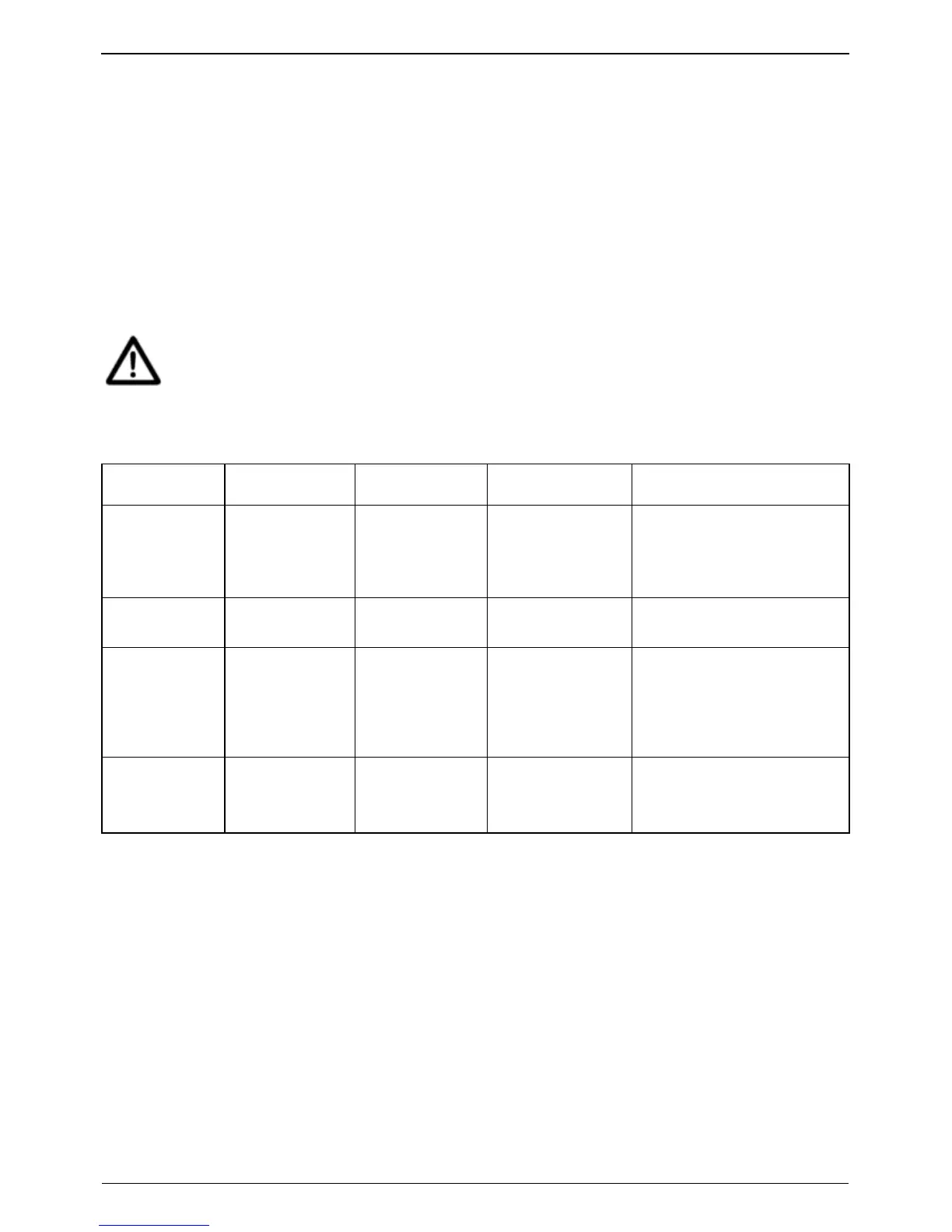
Other pipe and inlet specifications are addressed in the following table.
Table 3-6: Detector Inlet to Pipe Network Termination Specifications
Detector Inlet Port Acceptable Pipe
or Adapter
Maximum Pipe
Length
Other Considerations
FHSD720C 25mm outer-
diameter UPVC
tubes
25mm; or
26.7mm (0.75in.)
with 25 to 26.7mm
(0.75in.) adaptors
2 x 100m -
FHSD721C /
FHSD721DC
Tapered push-fit 26.7mm (0.75 in.)
to 25mm
4 x 100m -
FHSD724DC &
FHSD726DC
Tapered push-fit
25mm; or
26.7mm (0.75in.)
with 25mm to
26.7mm (0.75in.)
adaptors
4 x 100m
or 6 x 100m
-
FHSD7215DC - 6mm outer-
diameter, 4mm
inner-diameter
flexible nylon tube
50m
Note: Tube lengths
should be equal
Other materials may be used
e.g. FEP/ Stainless Steel with
suitable adaptors for harsh
environments
14
www.gesecurity.net



 To Next Page