
 Need help?
Do you have a question about the GEA Hilge HYGIA K and is the answer not in the manual?
Explains manual purpose, structure, design elements (lists, numbered steps), and references to other documents.
Provides GEA Hilge's address and contact information for spare parts and technical service.
Presents the EC and UKCA Declarations of Conformity for machinery, including directives and standards.
Specifies clean liquid use, pipeline requirements, pump types, starting frequency, and modification restrictions.
Explains preceding/integrated notices and signal words (DANGER, WARNING, CAUTION, IMPORTANT) for hazard communication.
Lists personnel qualifications and details general hazards (mechanical, electrical, thermal, etc.) and PPE recommendations.
Covers residual hazards, safety devices, and the meaning of safety signs used on the pump and in the manual.
Outlines actions for fire and personal injury emergencies, emphasizing adherence to company regulations.
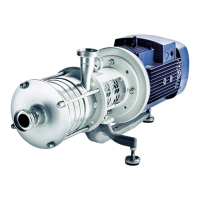
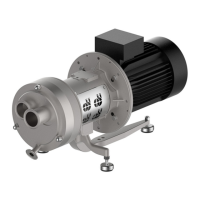
Describes component overview, structure, quality, applications, and pump denomination.
Details criteria for safety signs and labels, showing their overview and position on the pump.
Lists protective devices and key specifications like type plate, weights, torques, serial number, performance, noise, and temperatures.
Details sealing material resistance to various media and lists minimum flow rates based on pump type and speed.
Provides conditions for storage and outlines procedures for transporting the pump with and without packaging.
Lists conditions for the installation site, including ground, temperature, and operator-side measures for piping and electrical connections.
Recommends vibration absorbers and proper foundation for noise and vibration reduction in pump installations.
Covers unpacking, checking delivery, ensuring smooth impeller running, and setting up/aligning the pump unit.
Explains installation in piping, connecting flushing, and conditions for quench seal versions.
Covers connecting to power supply, safety precautions, and grounding the motor and support.
Outlines checking motor rotation, correcting it, and connecting frequency inverters.
Lists checks and conditions before start-up, including documentation review and intended use verification.
Provides detailed steps for initial pump start-up, including flushing and checking mechanical seal function.
Covers restarting after maintenance, safe operation monitoring, and proper shutdown procedures.
Emphasizes immediate cleaning, compatibility, and explains Cleaning in Place (CIP) with approved agents.
Details manual exterior cleaning procedures, precautions against high-pressure water, and dust removal.
Warns about uncontrolled restart and lists measures for safe maintenance, securing devices, and preventing unintentional restart.
Describes tasks: replacing O-rings, mechanical seals, and tightening clamp shaft connections.
Explains disassembly in reverse order and lists prerequisites and tools for removing the shaft sleeve.
Introduces the GEA Hilge assembly tool kit, listing contents and uses for safe mechanical seal assembly.
Shows parts overviews for casing variants, K motor stool, drive parts, and motor shroud.
Provides general installation instructions and hygiene precautions for contaminated components.
Details installing the shaft sleeve and assembling the motor, motor stool, and pump shaft.
Explains gap size determination and procedures for installing single mechanical seals and encapsulated seals.
Describes installing the impeller and pump casings (KLM and HPM variants).
Lists common malfunctions, their possible causes, and recommended measures for troubleshooting.
Explains procedures for longer-term decommissioning, including draining, cleaning, and safe dismantling.
Guides environmentally friendly disposal of the pump and its constituent materials according to regulations.
Provides a template for a clearance certificate for pump inspection or repair, including handling precautions.
 General
| Type | Centrifugal Pump |
|---|---|
| Material | Stainless Steel |
| Frequency | 50/60 Hz |
| Protection Class | IP55 |
| Application | Hygienic applications in the pharmaceutical, food, and beverage industries |
| Speed | 2900 rpm |
| Power | 0.37 kW to 11 kW |
| Temperature Range | -10°C to +140°C |






 To Next Page

