13
Geberit Drainage Systems
Geberit Silent db20 systems – acoustics
Basic principles of minimising sound transmission
from noise source.
• Airbornesoundrapidlyattenuateswithdistanceand
transfers through multiple layers (barriers).
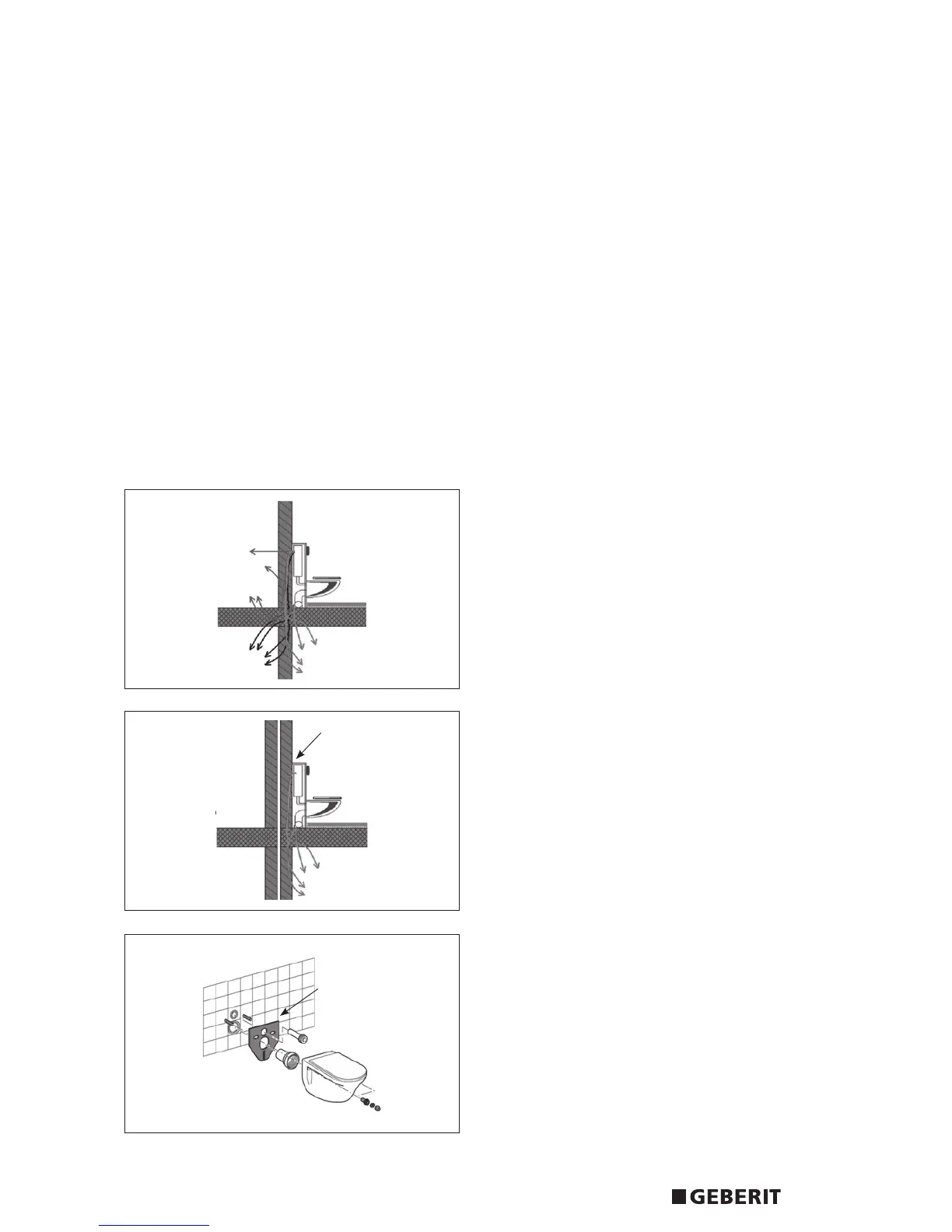
• Structure-borne sound travels faster and further (Fig 1).
• Thebestwaytominimisenoiseisthroughthe
construction of the building.
- Plan bathrooms so they are not next to living rooms.
- Decouple walls from one another (Fig 2)
- Use pre-wall installation and wall-hung WC’s
to decouple the flushing noise from the building
structure (Fig 3).
To minimise noise transfer from drainage pipes:
Isolate pipe from structure using acoustic brackets and
foam barrier when passing through structure. Contain pipes
inductworkpreferablywithanacousticmaterialeither:
• Wrapped around the pipe (Geberit Isol).
• On two surfaces of the duct inner face.
Additional co
nsiderations:
• When pipes pass through concrete floor slabs and walls
the pipe must be isolated with Geberit Insulation Hose.
• All vertical offsets must be made using 2 x 45° bends
to minimise noise emissions. No offsets are preferred to
minimise noise.
15° minimum angled bends preferred to minimise noise
generation. However, for practical reasons 45° should
be the maximum.
For increased structure-borne noise reduction, install
Geberit Duofix installation systems and associated
components together with the Geberit Silent-db20
acoustic drainage system.
*standard Geberit HDPE
Fig 1
Fig 2
Fig 3
Pre-wall
construction
Acoustic pan
isolator
3 Geberit Silent-db20 systems – acoustics
3.1 Best practice for acoustics


 To Next Page