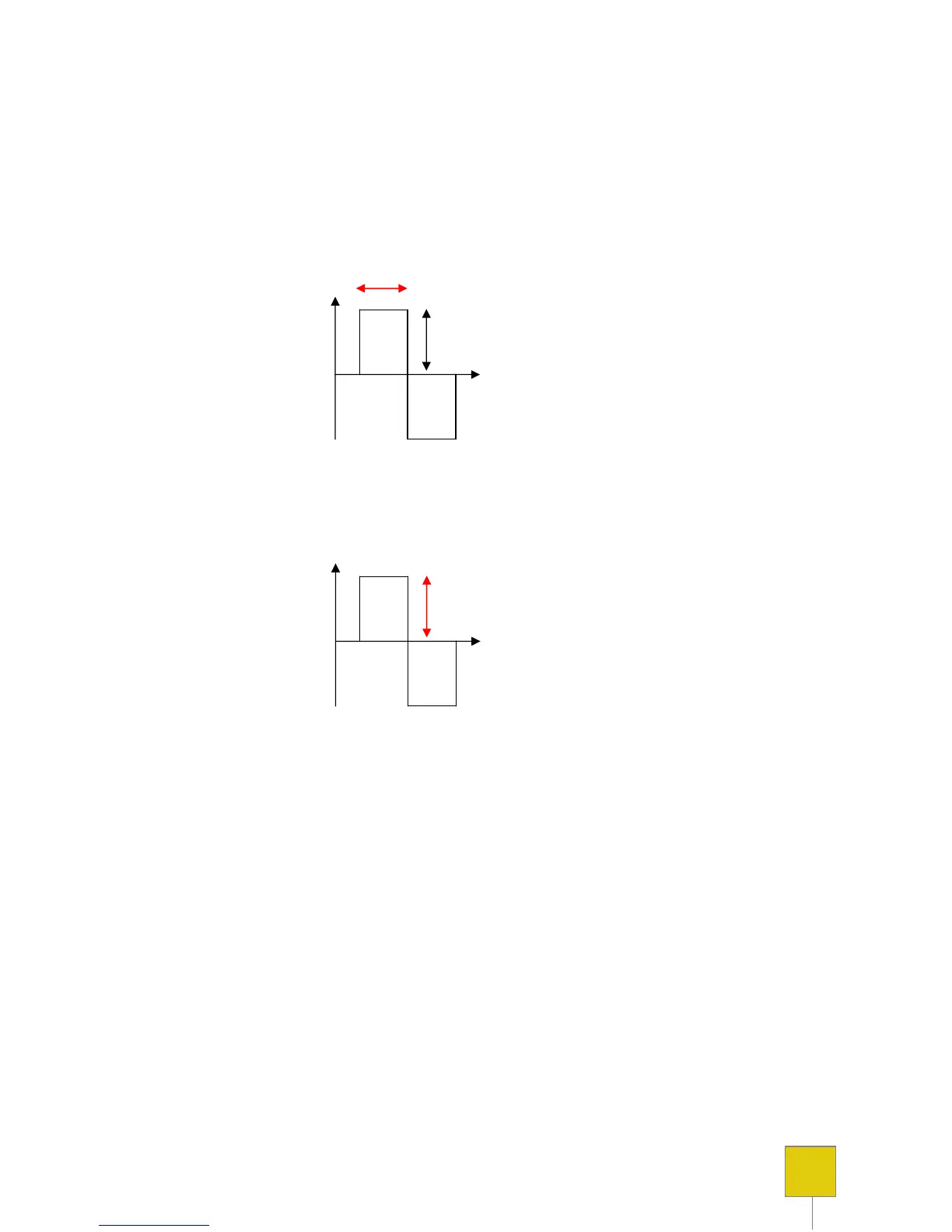
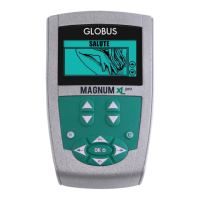
The amplitude is the duration value of the impulse. It is measured in microseconds and represents
the chronaxy value of the motor nerve that innervates the muscle to be treated.
EXAMPLE:
150-250 ms Upper limbs
350-450 ms Lower limbs
250-350 ms Trunk
The intensity is the value of the electrical current that can be set by the user and it is measured in
mA (microampere). Higher the intensity, greater the number of the fibers recruited.
Stimulation intensity
The intensity of current necessary to obtain muscular contraction is personal and depends on the
position of the electrodes, the underlying adipose tissue, sweating, the presence of hair on the area
to be treated, etc.. For these reasons, the same intensity of current can generate different feelings
from person to person, from day to day, and from the right side to the left side of the body. During
the same working session, it will be necessary to regulate the intensity in order to obtain the same
level of contraction because of the accommodation phenomena. The intensities of current
recommended in the different phases are proposed as indicative values, and each person should
modify these levels according to his/her personal needs.
- Moderate intensity. The muscle does not tire, not even during prolonged treatments. The
contraction induced is tolerable and pleasant. This is the first level on the graphic representation of
intensity.
- Intermediate intensity. The muscle is visibly contracted but the stimulation does not cause the
joints to move. This is the second level on the graphic representation of intensity.
- Elevated intensity. The muscle is contracted substantially. The muscular contraction will cause the
extension or bending of the limb if this is not blocked. This is the third level on the graphic
representation of intensity.
- Maximum intensity. The muscle is contracted maximally. This is an intense treatment that should
be performed only after having executed different applications at lower intensity.


 To Next Page