The muscle contracts in the following way: when a person decides to make a movement, his/her
brain automatically elaborates the information needed and it creates a signal that, through the
nervous system, transmits an electric impulse to the muscle that has to move.
After the reception of the impulse, the anatomic structures of the muscle contract causing the
desired movement.
The energy demanded for the contraction is provided by the supply of sugars and fats stored in the
human body. In other words, the electrical stimulation is not a direct energy resource but it works as
an instrument that triggers the muscle contraction.
The same type of mechanism is activated when the muscle contraction is produced by the
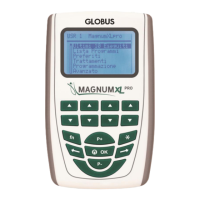
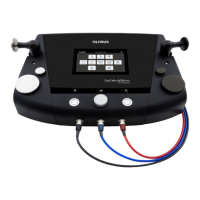
electrostimulator. EMS (the electrostimulation produced by the electrostimulator) assume, in other
words, the same role of a natural impulse transmitted by the motor nervous system. Normally the
muscle relaxes and returns to its original state at the end of the contraction.
Isotonic and isometric contractions
The isotonic contraction occurs when the interested muscles produce a state of constant tension
producing the displacement of the joint heads and therefore the movement. Instead, when the
musculature produces a tension and the joint heads of a physical segment are blocked (without
moving), we talk about an isometric contraction.
In the event of the electrostimulation, an isometric contraction is preferred because it fosters to
obtain an even maximum contraction without creating sudden and uncontrolled movements of the
joint heads. Despite this, for specific applications, especially in sport field, the electrostimulation
can be used together with an isotonic contraction (with overloads, too).
CLASSIFICATION OF THE DIFFERENT TYPES OF MUSCLE FIBERS
The skeletal muscles are composed by a combination of muscle fibers that have different shapes
according to the mechanical functions they have to carry out.
I type FIBERS
This type of fibers are also called ST fibers (slow contraction fibers) or SO fibers (oxidative
metabolism slow fibers).
The motoneuron that innervates them is tonic and with slow conduction speed.
They are red fibers (the color is due to the presence of the myoglobin molecule) that have a slow
contraction speed and a mainly oxidative energetic metabolism (oxygen consumption).
I type muscle fiber is very resistant to fatigue as it is responsible for every kind of activity with a
tonic, slow nature, that is connected to the maintenance of the posture.
These fibers are surrounded by a thick capillary net that enables the optimal execution of the
aerobic metabolism in a prolonged activity that has moderate strength expressions.
I type fibers are very important in all endurance sports: running, cycling, swimming, cross-country
skiing, etc.
IIa type FIBERS
They are also called FTa fibers (rapid contraction fibers) o FOG fibers (oxidative-glycolytic
metabolism rapid fibers).



 To Next Page