EasyManua.ls Logo

Goodman PC - User Manual

Goodman PC
24 pages
Print Icon
To Next Page IconTo Next Page
Loading...
RECOGNIZE THIS SYMBOL AS A SAFETY PRECAUTION.
ATTENTION INSTALLING PERSONNEL
Prior to installation, thoroughly familiarize yourself with this Installation Manual. Observe all safety warnings. During
installation or repair, caution is to be observed.
It is your responsibility to install the product safely and to educate the customer on its safe use.
Goodman Manufacturing Company, L.P.
5151 San Felipe, Suite 500, Houston, TX 77056
www.goodmanmfg.com www.amana-hac.com
© 2010 Goodman Manufacturing Company, L.P.
I
NSTALLATION
I
NSTRUCTIONS
F
OR
S
ELF
-C
ONTAINED
P
ACKAGE
H
EAT
P
UMP
U
NITS
*PC/*PH15 “M” SERIES
IO-394
8/10
*NOTE: Please contact your distributor or our
website for the applicable
Specification Sheets referred to in this manual.
These installation instructions cover the outdoor
installation of self contained package air conditioners
and heating units. See the Specification Sheets
applicable to your model for information regarding
accessories.
Affix this manual and Users Information Manual adjacent to the unit.

Table of Contents

Questions and Answers

Summary

Attention Installing Personnel

Shipping Inspection

Replacement Parts

Safety Instructions

General Safety Warnings

Important warnings regarding uncertified devices, high voltage, and proper ventilation.

Codes and Regulations

EPA and National Codes

Compliance with EPA regulations and national/local codes is mandatory for installation.

Major Components

Pre-Installation Checks

Location, Clearance, and Foundation

Guidance on unit placement, clearances, and proper foundation setup.

Rooftop Installation and Curbing

Roof Structural Integrity

Verifying the roof's capacity to support the unit and associated loads.

Rigging Details

Rigging Safety Precautions

Essential safety measures for rigging operations to prevent injury or damage.

Airflow and Filters

Air Flow Conversion

Instructions for converting airflow from horizontal to down discharge, including blower speed adjustment.

Filter Installation and Maintenance

Guidelines for selecting, installing, and maintaining air filters for optimal unit operation.

Duct Work Requirements

Requirements for designing and installing duct systems, including weatherproofing exposed sections.

Piping and Condensate Drain

Condensate Drain Requirements

Specifies the requirements for the condensate drain connection, including trap and slope.

Wiring Instructions

Low Voltage and Internal Wiring

Covers thermostat wiring and internal wiring replacement procedures.

Startup Procedures and Key Components

Startup and Checks

Detailed steps for cooling and heating startup, plus final system verification.

Unit Components Overview

Descriptions of essential components like contactor, crankcase heater, and condenser motor.

Heat Pump Operation

Cooling Cycle

Describes the operational process when the unit is set to cool the indoor environment.

Heating Cycle

Details how the unit functions to provide heat, including refrigerant flow and defrosting.

Defrost Control

Field Testing and Troubleshooting

Provides guidance on how to test and diagnose issues with the defrost control system.

Airflow Measurement and Adjustment

Indoor Blower Motor Adjustments

Specific procedures for modifying blower motor speed on X-13 and ECM motors.

APH Dip Switch Functions and Settings

CFM Control and Thermostat Settings

Details dip switch settings for CFM, fan-only mode, humidity control, and thermostat wiring.

Expansion Valve (TXV) System

TXV System Adjustments

Procedures for checking and adjusting TXV systems, including refrigerant charge checks.

Electrical Adjustments

Electric Heat Kit Installation

Information on selecting and installing electric heat kits and their kW ratings.

Maintenance and Troubleshooting

Common Issues and Valve Malfunctions

Addresses problems like outdoor air intake, undercharge, sensor contact, and reversing valve issues.

Appendix

Troubleshooting Chart

GPH15 Blower Performance Data

GPH15 Blower Performance Data

GPC15 Blower Performance Data

APH15 Blower Performance Data

APH15 CFM Output and Dip Switch Settings

Dip Switch Settings for Thermostats

Explains how to set dip switches for single and two-stage thermostat compatibility.

Adjustments via Dip Switch Combinations 7-8

Describes how to fine-tune CFM output using specific dip switch combinations.

Summary

Attention Installing Personnel

Shipping Inspection

Replacement Parts

Safety Instructions

General Safety Warnings

Important warnings regarding uncertified devices, high voltage, and proper ventilation.

Codes and Regulations

EPA and National Codes

Compliance with EPA regulations and national/local codes is mandatory for installation.

Major Components

Pre-Installation Checks

Location, Clearance, and Foundation

Guidance on unit placement, clearances, and proper foundation setup.

Rooftop Installation and Curbing

Roof Structural Integrity

Verifying the roof's capacity to support the unit and associated loads.

Rigging Details

Rigging Safety Precautions

Essential safety measures for rigging operations to prevent injury or damage.

Airflow and Filters

Air Flow Conversion

Instructions for converting airflow from horizontal to down discharge, including blower speed adjustment.

Filter Installation and Maintenance

Guidelines for selecting, installing, and maintaining air filters for optimal unit operation.

Duct Work Requirements

Requirements for designing and installing duct systems, including weatherproofing exposed sections.

Piping and Condensate Drain

Condensate Drain Requirements

Specifies the requirements for the condensate drain connection, including trap and slope.

Wiring Instructions

Low Voltage and Internal Wiring

Covers thermostat wiring and internal wiring replacement procedures.

Startup Procedures and Key Components

Startup and Checks

Detailed steps for cooling and heating startup, plus final system verification.

Unit Components Overview

Descriptions of essential components like contactor, crankcase heater, and condenser motor.

Heat Pump Operation

Cooling Cycle

Describes the operational process when the unit is set to cool the indoor environment.

Heating Cycle

Details how the unit functions to provide heat, including refrigerant flow and defrosting.

Defrost Control

Field Testing and Troubleshooting

Provides guidance on how to test and diagnose issues with the defrost control system.

Airflow Measurement and Adjustment

Indoor Blower Motor Adjustments

Specific procedures for modifying blower motor speed on X-13 and ECM motors.

APH Dip Switch Functions and Settings

CFM Control and Thermostat Settings

Details dip switch settings for CFM, fan-only mode, humidity control, and thermostat wiring.

Expansion Valve (TXV) System

TXV System Adjustments

Procedures for checking and adjusting TXV systems, including refrigerant charge checks.

Electrical Adjustments

Electric Heat Kit Installation

Information on selecting and installing electric heat kits and their kW ratings.

Maintenance and Troubleshooting

Common Issues and Valve Malfunctions

Addresses problems like outdoor air intake, undercharge, sensor contact, and reversing valve issues.

Appendix

Troubleshooting Chart

GPH15 Blower Performance Data

GPH15 Blower Performance Data

GPC15 Blower Performance Data

APH15 Blower Performance Data

APH15 CFM Output and Dip Switch Settings

Dip Switch Settings for Thermostats

Explains how to set dip switches for single and two-stage thermostat compatibility.

Adjustments via Dip Switch Combinations 7-8

Describes how to fine-tune CFM output using specific dip switch combinations.

Overview

This document provides installation instructions for Goodman Manufacturing Company's self-contained package heat pump units, specifically the *PC/*PH15 "M" Series. These units are designed for outdoor use only and are available in various cooling capacities and with optional field-installed heat kits. The manual emphasizes safety precautions, proper installation procedures, and maintenance guidelines to ensure optimal performance and longevity of the equipment.

Function Description

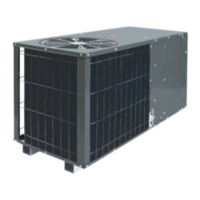
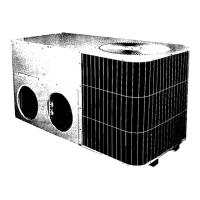
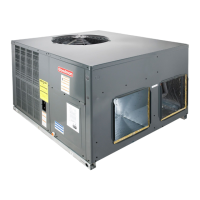
The *PC/*PH15 "M" Series units are self-contained package heat pumps that provide both heating and cooling functions. They include a hermetically sealed refrigerating system comprising a compressor, condenser coil, evaporator coil with flowrator, an indoor blower, a condenser fan, and all necessary internal electrical wiring. Heat pump models also feature a reversing valve, solenoid, defrost thermostat, and loss of charge protection. The system is factory-evacuated, charged, and performance-tested. The units are designed to be easily installed in manufactured or modular homes with existing high-static ductwork and can be converted to accommodate plenums for normal or low-static applications.

Important Technical Specifications

  • Cooling Capacities:
    • *PH M-Series: 2, 2.5, 3, 4, and 5 nominal tons.
    • GPC: 2 to 4 tons.
  • Optional Heat Kits: 5, 8, 10, 15, and 20 kW.
  • Electrical Characteristics: Refer to the unit's rating plate for specific voltage, frequency, and phase requirements. Transformer is wired for 230 volts on 208/230 models.
  • Refrigerant: Type and amount are indicated on the rating plate. The units are charged using the superheat method at the compressor suction line for fixed orifice devices. TXV systems have specific subcooling and superheat requirements (10 ± 2°F subcooling and 15 to 18°F superheat for single-speed; 5 to 7°F subcooling and 15 to 18°F superheat for two-speed on low stage).
  • Condensate Drain: ¾" N.P.T. half coupling. A trap must be provided for proper drainage.
  • Minimum Filter Size: Various nominal sizes (inches) and corresponding nominal areas (sq. ft.) are provided, ranging from 1.4 sq. ft. (10x20) to 4.3 sq. ft. (25x25). Throwaway filters must be sized for a maximum face velocity of 300 feet per minute.
  • Blower Performance Data: Detailed CFM, Watts, and E.S.P. (In. of H₂O) tables are provided for different models and speeds (T1, T2/T3, T4/T5, T4/T5 (HS), T4 (YHS), T5 (W2HS)). Data is for dry coil, with wet coil pressure drop approximately 0.1" H₂O for two-row, 0.2" H₂O for three-row, and 0.3" H₂O for four-row indoor coils. Filter pressure drop (approx. 0.08" H₂O) is not included. All models should run no less than 350 CFM/TON. Airflow is reduced by 2% for 208-volt operation.
  • ECM Motor Dip Switch Functions: Eight 2-position dip switches control Electric Heat, Indoor Thermostat, Cooling & Heat Pump CFM, and CFM Trim Adjust.
  • AHRI Certification: Certified to AHRI Standard 210/240 for Unitary Small AC and Unitary Small HP.

Usage Features

  • Outdoor Installation: Designed for outdoor use with unobstructed condenser air inlet and discharge.
  • Air Flow Conversion: Units can be easily converted from horizontal to down discharge airflow delivery.
  • Duct Work: Duct systems and register sizes must be properly designed for the unit's CFM and external static pressure rating. Ductwork exposed to the outdoors must include a weatherproof barrier and adequate insulation.
  • Thermostat Control: The unit is controlled by a room thermostat. For heat pumps, the reversing valve is energized in cooling mode. Optional outdoor thermostats prevent full electric heater operation at varying outdoor ambient temperatures.
  • Defrost Control: Provides time/temperature initiation and termination of the defrost cycle. Defrost timing periods (30, 60, 90 minutes) can be selected via a circuit board jumper. The control also provides a 3-minute off-cycle compressor delay.
  • ECM Motor: Features improved efficiency, constant CFM, soft start and stop, and improved humidity control. CFM levels can be adjusted through dip switches.
  • Humidity Control: When using a humidistat, cutting jumper PJ6 on the control board adjusts airflow to 85% for both low and high stage cooling.
  • Two-Stage Heating: For staged electric heat, jumper PJ4 on the control board must be cut.

Maintenance Features

  • Shipping Inspection: Upon receiving the unit, inspect for damage. Incorrect units must not be installed.
  • Filter Installation: Filters are not provided with the unit and must be supplied and externally installed in the return duct system. A field-installed filter grille is recommended for easy access. Filters should be clean, and airflow arrows must point toward the circulator blower.
  • Crankcase Heater: If used, the unit should be energized 24 hours prior to compressor start-up to ensure the crankcase heater has sufficiently warmed the compressor.
  • Seasonal Start-up: Homeowners should inspect the unit before a seasonal start-up to ensure coils are free of debris, registers are unobstructed, and filters are clean or replaced.
  • Troubleshooting Chart: A detailed chart is provided to help identify and resolve common operational issues, including high/low head pressure, unit not running, compressor issues, and insufficient cooling.
  • Refrigerant Charge Check: After airflow measurements, the refrigerant charge must be checked and adjusted if necessary, especially for units with fixed orifice devices.
  • Servicing: All installation and servicing must be performed by qualified, experienced technicians. Disconnect all power before servicing.
  • Component Access: Allow 36" minimum for service access to the compressor compartment and controls. Refrigerant gauge connections are on the right side of the unit. Electrical connections can be made on the right, bottom, or duct panel side.

Goodman PC Specifications

General IconGeneral
BrandGoodman
ModelPC
CategoryHeat Pump
LanguageEnglish

Related product manuals