
 Need help?
Do you have a question about the Gree Versati II+ and is the answer not in the manual?
Troubleshooting flowchart for Compressor High-pressure Protection E1.
Troubleshooting flowchart for Compressor Low-pressure Protection E3.
Troubleshooting flowchart for Compressor Discharge Temperature Protection E4.
Troubleshooting flowchart for Compressor or Driver Overload Protection.
Flowcharts for diagnosing issues with single and three-phase unit operation.
Troubleshooting flowchart for IPM or PFC Over-temperature Protection P8.
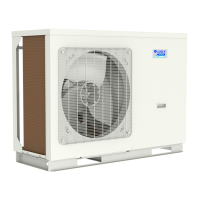
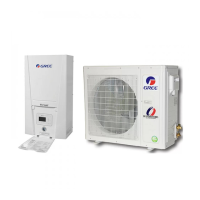
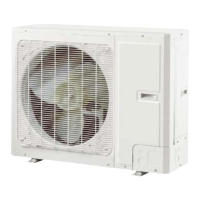
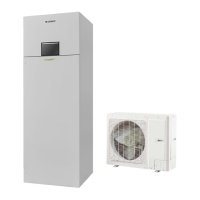
This document outlines the test operation, troubleshooting, and maintenance procedures for the GREE Air-to-water Heat Pump Monobloc Versati. The Versati unit is designed to provide efficient heating and cooling by transferring heat between air and water, making it suitable for various applications such as domestic hot water, space heating, and swimming pool heating.
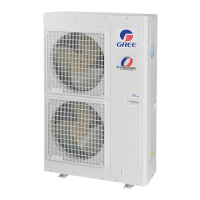
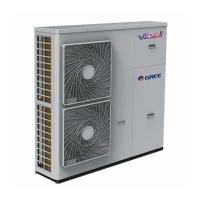
The GREE Air-to-water Heat Pump Monobloc Versati operates as a self-contained unit, integrating all necessary components for heat pump functionality into a single outdoor module. Its primary function is to extract heat from the ambient air and transfer it to a water system, or vice versa, depending on the desired mode (heating or cooling). This is achieved through a refrigeration cycle involving a compressor, plate heat exchanger, electrostatic expansion valve, and a 4-way valve.
The compressor is the "heart" of the cooling system. It is a two-stage enthalpy-adding compressor that converts low-temperature, low-pressure refrigerant vapor into high-temperature, high-pressure vapor, which is then discharged to the evaporator. This design significantly enhances the unit's heating performance.
The electrostatic expansion valve is one of the four main components of the refrigeration cycle. It reduces the high-pressure liquid refrigerant to a low-temperature, low-pressure vapor-liquid mixture and precisely regulates the refrigerant flow rate entering the evaporator.
A vapor liquid separator is installed on the suction line to prevent liquid refrigerant from entering the compressor. This is crucial to avoid "wet compression" or "liquid slugging," which can damage the compressor.
The 4-way valve is responsible for switching the direction of refrigerant flow. This allows the unit to alternate between cooling and heating modes. It also facilitates defrosting by reversing the flow, using counterflow to melt ice buildup on the outdoor coil.
The plate heat exchanger is a water-refrigerant type heat exchanger. In heating mode, it liquefies the high-temperature, high-pressure vapor refrigerant, transferring heat to the circulating water. In cooling mode, it evaporates the low-temperature, low-pressure liquid refrigerant, extracting heat from the circulating water.
A water pump is integrated into the system to circulate water through the heat exchanger and the external water system, ensuring efficient heat transfer.
An expansion tank maintains stable pressure within the water system. It contains a gasbag charged with nitrogen, separated from the water side. If water pressure exceeds the nitrogen pressure, the gasbag expands, allowing water to enter the tank and reduce system pressure. Conversely, if water pressure drops, the nitrogen expels water back into the system, maintaining equilibrium.
A flow switch is a critical safety component that prevents the heat exchanger from freezing due to reduced water flow. If the water flow rate drops below a set point, the switch trips, triggering an alarm and shutting down the unit to prevent damage.
A three-pipe liquid receiver is connected to two electrostatic expansion valves and the compressor's enthalpy-adding port. Its main function is to further reduce the pressure of the refrigerant that has undergone initial throttling and to vaporize some of it. This vaporized refrigerant is then drawn back into the compressor, which improves the system's heating performance.
A safety valve is included to prevent unusually high circulation water pressure. If the pressure exceeds 0.6 MPa, the valve opens to relieve the excess pressure.
An exhaust valve is installed at the highest point of the water system to expel trapped air, ensuring normal and efficient operation of the system.
The Versati unit is designed for user-friendly operation, with a wired controller providing feedback on system status and potential errors. Communication between the main board, AP1, AP2, and the wired controller is essential for proper functioning. The unit incorporates various protective elements to ensure safe and reliable operation, which are factory-set and should not be adjusted by users.
During initial startup or after a prolonged shutdown (more than one day) with power disconnected, it is recommended to electrify the unit for at least 8 hours to preheat it before operation. This helps ensure optimal performance and longevity of components.
Users should ensure that the water system's inlet and outlet directions are correct, that the piping is clean and free of foreign matter, and that the water quality is satisfactory. Proper insulation of water pipes is also important for efficiency. The exhaust valve of the water system should be checked to ensure it functions correctly.
The unit's operation involves monitoring for error codes displayed on the wired controller, which indicate specific malfunctions. Troubleshooting flowcharts are provided to guide users in diagnosing and resolving common issues, such as high or low pressure, discharge temperature errors, fan errors, and sensor malfunctions.
For instance, if a high-pressure protection error (E1) occurs, the user is guided to check the high-pressure switch, wiring, water level in the tank, installation of the tank temperature sensor, and the state of gas and liquid valves. Similarly, for low-pressure protection (E3), checks include the low-pressure switch, fan operation, and potential system leaks.
The unit is equipped with a DC fan, and if an EF error is displayed, users should check the motor wire phase sequence, fan wire terminal connections, and consider replacing the mainboard or outdoor fan if necessary.
Communication errors (E6) require checking the communication lines, their connections, and ensuring the monobloc unit is electrically powered.
Regular maintenance is crucial for the GREE Versati unit to ensure its long-term performance and prevent damage. Users should avoid placing sundries on the unit and its accessories, and keep the unit dry, clean, and well-ventilated.
Dust Removal: Timely removal of dust accumulated on the condenser fins is essential to maintain the unit's performance and prevent protective shutdowns.
Water System Care: To prevent blockages and damage, the water system filter should be cleaned periodically. The water replenishing device should also be checked frequently.
Anti-Freezing Protection: In winter, if the ambient temperature drops below zero, the power should never be cut off to ensure the anti-freezing protection system remains active. If the unit and pipeline system are not used for a long period, water should be drained to prevent frost cracks. The end cap of the water tank should also be opened for drainage.
Operational Practices: Users should avoid frequently turning the unit on/off or closing manual valves in the water system while the unit is operating.
Leakage Checks: Regular checks for oil stains at pipeline joints and the charge valve are recommended to detect and prevent refrigerant leakage.
Water Pressure Management: A water pressure gauge is installed in the returning water line of the indoor unit. Users should adjust the hydraulics system pressure according to the following guidelines:
Refrigerant Charging/Discharging: The unit is pre-charged with refrigerant from the factory. Overcharging or undercharging can impair compressor operation or cause damage. If refrigerant needs to be charged or discharged for installation or maintenance, specific procedures must be followed:
If any malfunction is beyond the user's control or troubleshooting capabilities, it is advised to contact an authorized GREE service center.
 General
| Refrigerant | R410A |
|---|---|
| Operating Temperature Range (Cooling) | 10°C to 48°C |
| Type | Air to Water Heat Pump |
| Power Supply | 220-240V/50Hz |
| Noise Level | 58 dB(A) |



 To Next Page

