9
SAVE THESE SAFETY RULES
Electrical Information
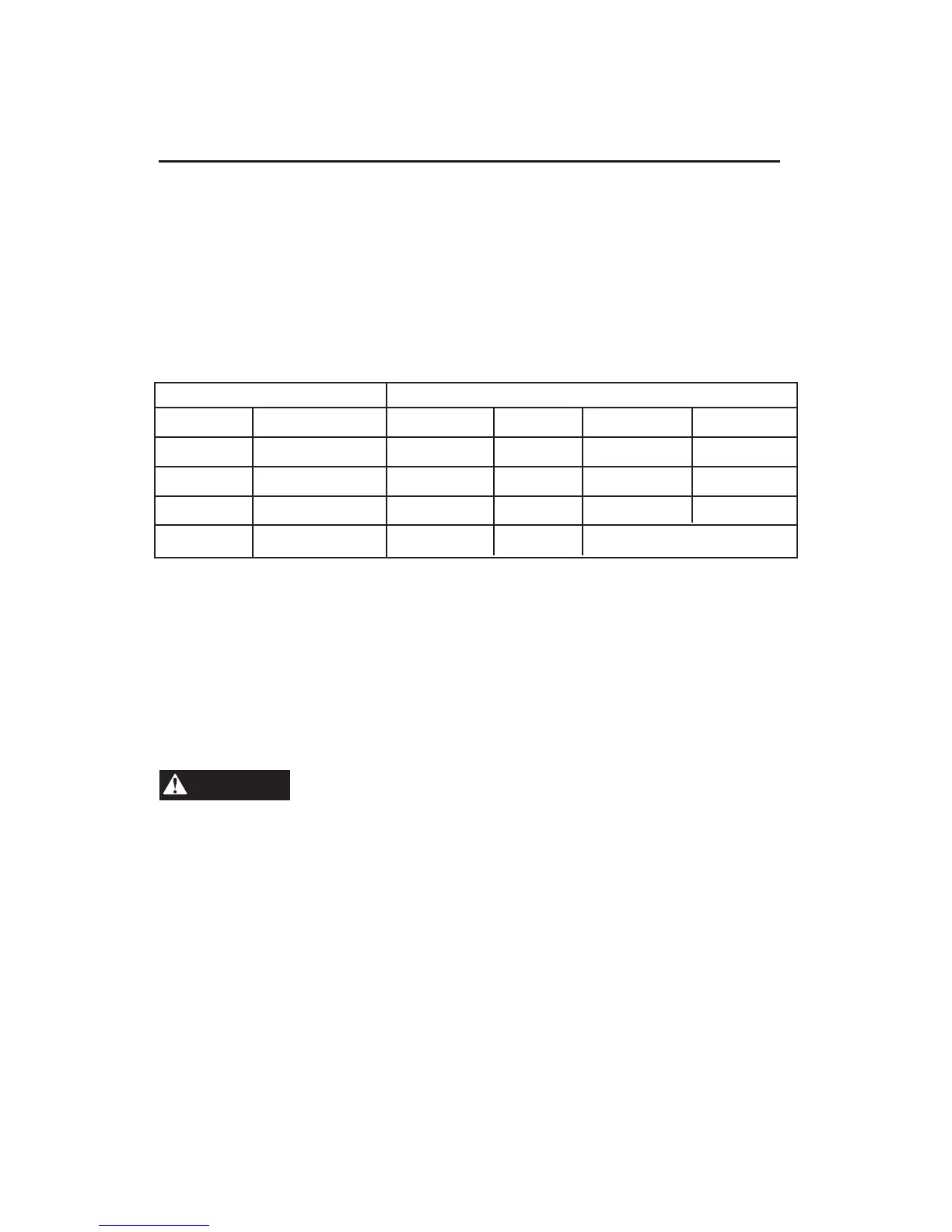
GUIDELINES FOR USING EXTENSION CORDS
USE THE PROPER EXTENSION CORD. Make sure your extension cord is in good
condition. When using an extension cord, be sure to use one heavy enough to carry
the current your product will draw. An undersized cord will cause overheating. The
table below shows the correct size to use depending on cord length and nameplate
ampere rating. If in doubt, use the next heavier gauge. The smaller the gauge
number, the heavier the cord.
Make sure your extension cord is properly wired and in good electrical condition.
Always replace a damaged extension cord or have it repaired by a qualified person
before using it. Protect your extension cords from sharp objects, excessive heat and
damp or wet areas.
Use a separate electrical circuit for your tools. This circuit should not be less than #14
wire and should be protected with a 15 A time-delay fuse. Before connecting the
motor to the power line, make sure the switch is in the OFF position and the electric
current is rated the same as the current stamped on the motor nameplate. Running at
a lower voltage will damage the motor.
Minimum Gauge for Extension Cords (AWG)
(when using 120 V only)
Ampere Rating Total Length of Cord in Feet (metres)
More Than Not More Than 25' (7.6 m) 50' (15 m) 100' (30.4 m) 150' (45.7 m)
0 6 18 16 16 14
6 10 18 16 14 12
10 12 16 16 14 12
12 16 14 12 Not Recommended
ALTHOUGH THIS TOOL IS DOUBLE INSULATED, THE
EXTENSION CORD AND RECEPTACLE MUST STILL BE GROUNDED WHILE IN
USE TO PROTECT THE OPERATOR FROM ELECTRICAL SHOCK.
WARNING



 To Next Page