EasyManua.ls Logo

Grizzly G0555 - User Manual

Grizzly G0555
68 pages
Print Icon
To Next Page IconTo Next Page
Loading...
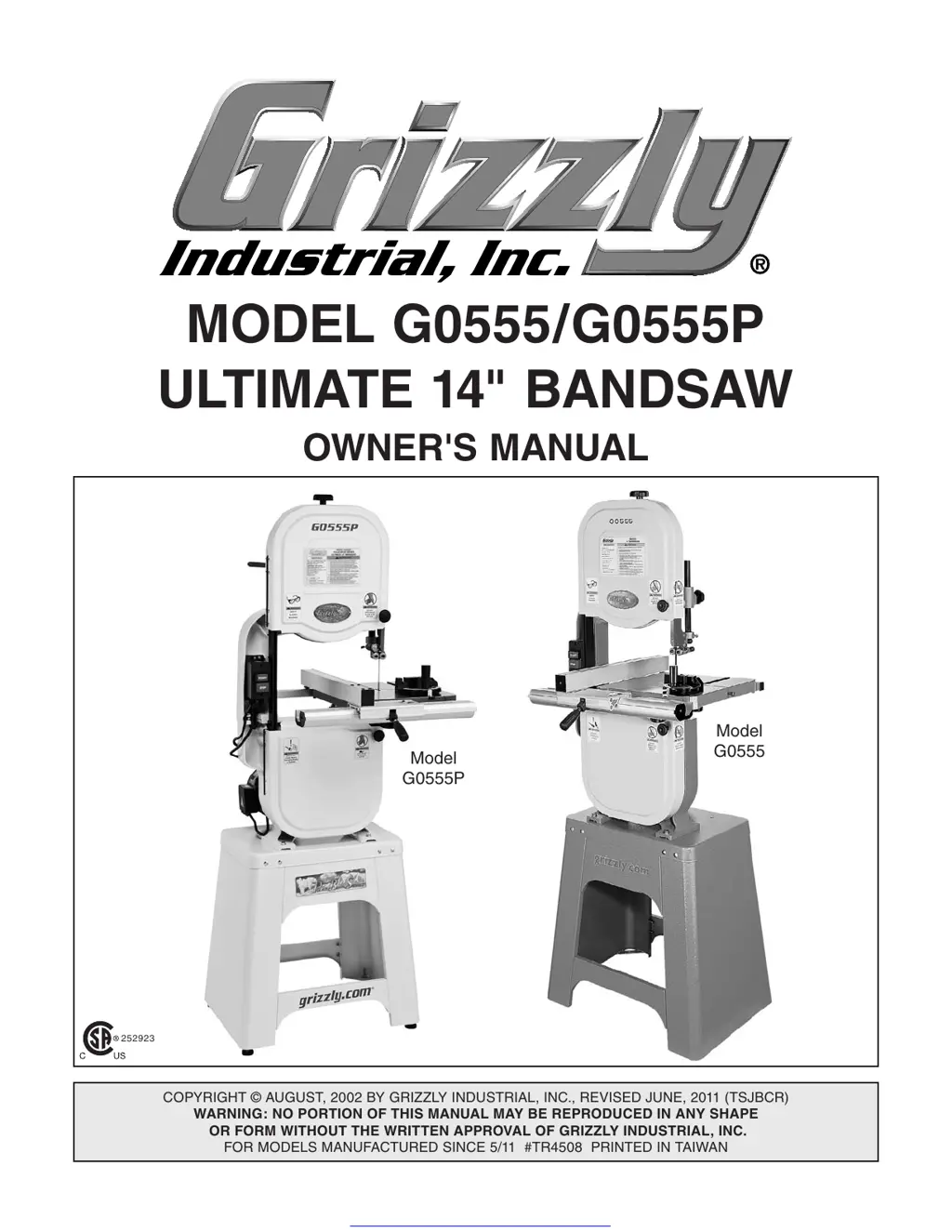
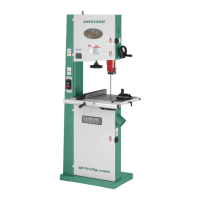
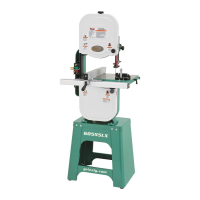
MODEL G0555/G0555P
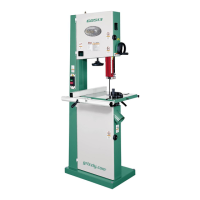
ULTIMATE 14" BANDSAW
OWNER'S MANUAL
8DENG><=I6J<JHI!'%%'7N<G>OOAN>C9JHIG>6A!>C8#!G:K>H:9?JC:!'%&&IH?78G
WARNING: NO PORTION OF THIS MANUAL MAY BE REPRODUCED IN ANY SHAPE
OR FORM WITHOUT THE WRITTEN APPROVAL OF GRIZZLY INDUSTRIAL, INC.
;DGBD9:AHB6CJ;68IJG:9H>C8:*$&&IG)*%-EG>CI:9>CI6>L6C
'*'.'(
BdYZa
<%***
BdYZa
<%***E
Get other manuals https://www.bkmanuals.com

Other manuals for Grizzly G0555

Questions and Answers

  • J
    Jonathan Wiggins DDSSep 8, 2025
    What to do if my Grizzly Saw machine does not start?
    • D
      Diane MccoySep 8, 2025
      If your Grizzly Saw doesn't start, there are several potential causes: * The power supply might be faulty or switched OFF. Ensure the hotlines have the correct voltage and the main power supply is ON. * The plug or receptacle could be faulty or wired incorrectly. Test for good contacts and correct the wiring if needed. * There might be an open or high resistance in the wiring. Check for broken wires or disconnected/corroded connections, and repair or replace them. * The motor connection could be wired incorrectly. * The start capacitor might be faulty (110V only). Test or replace it. * The motor ON/OFF switch might be faulty. Replace it. * The centrifugal switch could be at fault. Adjust or replace it.
  • A
    Alexandria MillerAug 23, 2025
    Why does my Grizzly Saw motor not start and blow fuses?
    • T
      Taylor CooperAug 23, 2025
      If the motor will not start and fuses or circuit breakers blow, the issue could stem from a few potential problems. Start by inspecting the cord or plug for damaged insulation and shorted wires. Also, check all connections on the motor for loose or shorted terminals or worn insulation. It's also possible that the circuit is overloaded, so try to reduce the load on the circuit.
  • M
    Mary CastilloAug 25, 2025
    Why does my Grizzly G0555 Saw motor overheat?
    • C
      Cassandra JohnsonAug 25, 2025
      If your Grizzly Saw motor is overheating, it could be due to a couple of reasons. First, the motor might be overloaded, so try reducing the load on it. Another cause could be restricted air circulation through the motor. Clean out the motor to ensure normal air circulation.
  • P
    Paul ReynoldsAug 26, 2025
    How to troubleshoot a Grizzly G0555 Saw motor that will not start?
    • E
      Evan GibsonAug 27, 2025
      If the Grizzly Saw motor won't start, it could be due to low voltage. Check the power line to ensure it is providing the proper voltage. Alternatively, there might be an open circuit in the motor or loose connections. Inspect all lead connections on the motor to ensure they are secure and not open.
  • P
    pberryAug 27, 2025
    Why is my Grizzly Saw experiencing excessive vibration?
    • A
      Andrew HaynesAug 27, 2025
      If your Grizzly Saw experiences excessive vibration, several factors could be responsible. Ensure that rubber pads are installed under the stand. Check that the wheels are coplanar and adjust the wheel alignment if necessary. Verify that the tires are correctly installed. A worn-out belt or a bent/worn-out blade can also cause vibration, so replace them if needed. Finally, the wheels might be out of balance, requiring replacement.
  • L
    lbellAug 29, 2025
    Why Grizzly Saw motor fails to develop full power?
    • C
      Corey FrazierAug 29, 2025
      If the motor fails to develop full power, and the power output decreases rapidly with a decrease in voltage at the motor terminals, it could be due to several reasons. The power line might be overloaded with lights, appliances, and other motors, so reduce the load on the power line. Undersized wires or circuits that are too long could also be the cause; increase the wire sizes or reduce the length of the wire. It's also possible that there is general overloading of the power company facilities, in which case you should request a power check from the power company.
  • C
    Christina OliverSep 18, 2025
    Why is the blade tension scale grossly inaccurate on my Grizzly Saw?
    • A
      Amanda MorganSep 18, 2025
      If the blade tension scale on your Grizzly Saw is grossly inaccurate: * The spring in the blade tension mechanism has lost its 'spring.' This is caused by not releasing the blade tension when not in use or frequently over-tensioning the bandsaw. Replace the spring in the blade tension mechanism, then take better care of the bandsaw by releasing tension when not in use and not over-tensioning the blade.
  • K
    kevinwhiteSep 23, 2025
    Why is the wheel noisy on my Grizzly Saw?
    • G
      georgemyersSep 23, 2025
      If the wheel on your Grizzly Saw is noisy, it could be due to: * A worn-out wheel bearing. Replace the wheel bearing. * The V-belt being too tight (lower wheel). Check and loosen the belt tension.
  • B
    blopezSep 6, 2025
    How to fix a ticking sound on a Grizzly G0555 Saw?
    • A
      ashley13Sep 6, 2025
      To address the ticking sound when the saw is running, it might be caused by the weld contacting the thrust bearing. Use the G2516 Stone to smooth and round the back of the blade.
  • M
    Mr. Nathan BushSep 3, 2025
    What to do if the blade does not run evenly on Grizzly G0555?
    • T
      Tonya HillSep 3, 2025
      If the blade does not run evenly on the wheels or runs off, it could be because the tracking is not adjusted properly. In this case, adjust the tracking. It is also possible that the wheels are not coplanar, so adjust the wheel alignment.

Summary

INTRODUCTION

Manual Accuracy

Details on manual accuracy and potential discrepancies.

Contact Information

How to contact Grizzly Industrial for support and feedback.

Machine Description

Overview of the bandsaw's features and purpose.

SECTION 1: SAFETY

Safety Instructions for Machinery

Critical safety precautions for operating machinery.

Additional Safety for Bandsaws

Specific safety guidelines for bandsaw operation.

SECTION 2: POWER SUPPLY

Availability

Details on electrical requirements, voltage, and circuit needs.

Circuit Information

Information regarding power supply circuits and dedicated circuits.

Grounding Requirements

Proper grounding and shock hazard prevention.

Extension Cords and Voltage Conversion

Guidelines for extension cord use and voltage conversion.

SECTION 3: SETUP

Needed for Setup

Items needed for setup and unpacking procedures.

Hardware Recognition Chart

Chart to match hardware during assembly.

Inventory and Cleanup

Checking contents and removing rust preventative.

Site Considerations

Factors for machine placement and physical environment.

Assembly

Step-by-step instructions for assembling the bandsaw.

Blade Center Tracking

Adjusting the blade for proper tracking on wheel crown.

Dust Collection

Connecting a dust collection system to the bandsaw.

Power Connection and Test Run

Connecting power and performing initial machine test.

Tensioning Blade

Fine-tuning blade tension for accurate cuts.

Adjusting Blade Support Bearings

Setting blade support bearings for optimal cutting.

Adjusting Blade Guide Bearings

Setting blade guide bearings for optimal cutting.

Table Tilt Calibration

Calibrating the table to be perpendicular to the blade.

Aligning Table

Ensuring table is parallel to the blade.

Aligning Fence

Ensuring fence is parallel to the miter slot.

SECTION 4: OPERATIONS

Operation Overview

Basic understanding of bandsaw operation and controls.

Disabling & Locking Switch

Securing the switch and preventing unauthorized use.

Workpiece Inspection

Checking workpieces for safety before cutting.

Guide Post Adjustment

Adjusting the height of the guide post assembly.

Table Tilt Adjustment

Tilting the table for angle or bevel cuts.

Blade Speed Selection

Choosing appropriate blade speed for different cutting tasks.

Blade Information

Understanding blade dimensions, width, and tooth types.

Blade Change Procedure

Step-by-step guide for removing and installing bandsaw blades.

Cutting Techniques

Basic tips, cutting options, ripping, and crosscutting.

Resawing and Curve Cutting

Advanced cutting methods and techniques.

Stacked Cuts

Cutting multiple workpieces stacked together.

SECTION 5: ACCESSORIES

Bandsaw Blades

Information on available bandsaw blades and their specifications.

Extension Block Kit and Handbook

Details on optional accessories for the bandsaw.

SECTION 6: MAINTENANCE

Maintenance Schedule

Recommended daily and monthly checks for optimal performance.

Cleaning and Protecting

Procedures for cleaning the bandsaw and preventing rust.

Lubrication and Tire Redressing

Bearing lubrication and redressing wheel tires.

SECTION 7: SERVICE

Troubleshooting

Solutions for common motor, electrical, and operational issues.

SECTION 8: WIRING

Wiring Safety Instructions

Precautions for working with the machine's electrical system.

Wiring Diagram

Visual guide for the machine's electrical connections.

SECTION 9: PARTS

Main Parts

Detailed list of main components and their part numbers.

Stand Parts

Exploded view and part numbers for the stand assembly.

Fence Parts

Exploded view and part numbers for the fence assembly.

Labels

Identification and placement of various machine labels.

WARRANTY AND RETURNS

Grizzly G0555 Specifications

General IconGeneral
Cutting Capacity Width13-1/2 in.
Cutting Capacity Height6 in.
Table Size14 in. x 14 in.
Table Tilt45° right, 10° left
Dust Port Size4 in.
Motor1 HP, 110V/220V, single-phase, TEFC

Related product manuals