EasyManua.ls Logo

Grizzly G0640X - User Manual

Grizzly G0640X
68 pages
Print Icon
To Next Page IconTo Next Page
Loading...
MODEL G0640X
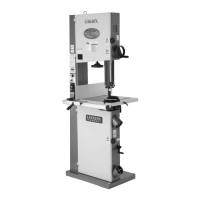
17" WOOD/METAL BANDSAW
OWNER'S MANUAL
(For models manufactured since 1/09)
8DENG><=I?6CJ6GN!'%%-7N<G>OOAN>C9JHIG>6A!>C8#!G:K>H:99:8:B7:G!'%&'IH
WARNING: NO PORTION OF THIS MANUAL MAY BE REPRODUCED IN ANY SHAPE
OR FORM WITHOUT THE WRITTEN APPROVAL OF GRIZZLY INDUSTRIAL, INC.
IG.**+EG>CI:9>CI6>L6C

Other manuals for Grizzly G0640X

Questions and Answers

  • A
    Angela WatkinsAug 16, 2025
    Why is my Grizzly G0640X Saw vibrating when cutting?
    • M
      Margaret MartinAug 16, 2025
      If your Grizzly Saw is vibrating when cutting, it could be due to a loose or damaged blade. Try tightening or replacing the blade. Another possible cause is sawdust buildup on the wheels. Make sure to clean all sawdust from the rubber tires on the wheels.
  • K
    Kimberly MartinezAug 19, 2025
    How to improve cut quality on my Grizzly G0640X?
    • E
      Elizabeth GardnerAug 19, 2025
      If you're experiencing rough or poor quality cuts with your Grizzly Saw, it might be because you are feeding the workpiece too fast. Try reducing the feed rate. Also, check if the blade guides are adjusted incorrectly and readjust all blade guides and support bearings, if needed.
  • M
    mackleonAug 22, 2025
    Why does my Grizzly G0640X Saw leave burn marks?
    • C
      Connor ValenzuelaAug 22, 2025
      If you notice burn marks on the edge of the cut when using your Grizzly Saw, it might be because there is too much side pressure when feeding the workpiece, causing the blade to bind. Try feeding the workpiece straight into the blade. Also, the blade could be too wide for the size of radius being cut. Consider installing a smaller width blade or increasing blade tension.
  • A
    aoliverAug 25, 2025
    Why does my Grizzly Saw slow down when cutting?
    • K
      Karen SummersAug 26, 2025
      If your Grizzly Saw machine slows down during operation, it could be because you are feeding the workpiece too fast. Try reducing the feed rate. Another possibility is that the blade is dull, in which case you should replace the blade.
  • S
    swilsonAug 27, 2025
    How to prevent sawdust buildup in my Grizzly Saw?
    • K
      Kristi AllenAug 27, 2025
      If you're experiencing sawdust buildup inside the cabinet of your Grizzly Saw, it could be due to a clogged dust port. Try cleaning out the dust port. Another possible cause is low CFM (airflow) from the shop vacuum. Check dust hoses for leaks or clogs, or connect the saw to a more powerful shop vacuum.
  • M
    Mark DanielsAug 30, 2025
    Why is my Grizzly Saw making a ticking sound?
    • M
      Mrs. Vanessa GarciaAug 30, 2025
      If your Grizzly Saw is making a ticking sound when running, it could be because the blade weld is contacting guide/support bearings. Use a file or stone to smooth and round the back of the blade and slightly loosen the blade guides. The blade weld may also be failing, so inspect and replace the blade if necessary.
  • M
    michael62Sep 2, 2025
    How to fix non-square cuts on my Grizzly G0640X Saw?
    • R
      robinalvarezSep 2, 2025
      If your Grizzly Saw cuts are not square (vertically), it could be because the table tilt is not adjusted to 0° or the positive stop has moved out of adjustment. Adjust the table tilt to 0° and readjust the positive stop if necessary. Another possible cause is that the table tilt scale pointer is not calibrated. Calibrate the table tilt scale pointer to 0°. It's also possible that the table is not square to the blade, so try shimming the table.
  • A
    angela94Sep 5, 2025
    What to do if the blade contacts the table insert on my Grizzly Saw?
    • R
      Robert MillerSep 5, 2025
      If the blade is contacting the table insert on your Grizzly Saw, it could be because the insert is installed upside down or backwards. Re-install the insert a different way. Another possible cause is that the table is improperly mounted or aligned, so align the table.
  • T
    taylorcrosbySep 7, 2025
    Why is the wheel on my Grizzly Saw noisy?
    • K
      katherinebullockSep 7, 2025
      If the wheel on your Grizzly Saw is noisy, it could be because the wheel bearing is worn out. Replace the wheel bearing. Another possible cause is that the belt is too tight (lower wheel). Check and loosen the belt tension.
  • J
    Jenny BarnesSep 10, 2025
    Why is the blade tension scale inaccurate on my Grizzly Saw?
    • A
      Amy BarkerSep 10, 2025
      If the blade tension scale on your Grizzly Saw is grossly inaccurate, it's likely because the spring in the blade tension mechanism has lost its "spring." This is caused by not releasing the blade tension when not in use or frequently over-tensioning the bandsaw. Replace the spring in the blade tension mechanism, then take better care of the bandsaw by releasing tension when not in use and not over-tensioning the blade.

Summary

INTRODUCTION

Foreword

Provides an overview of the bandsaw and the manufacturer's commitment to customer satisfaction.

Contact Info

Lists Grizzly Industrial's contact details for manual feedback and service inquiries.

Functional Overview

Explains the basic principles and capabilities of the bandsaw in performing various cuts.

IDENTIFICATION

MACHINE DATA SHEET

Construction

Details the materials and components used in the bandsaw's construction.

Table Info

Provides specific measurements and specifications related to the bandsaw's table.

Other Specifications

Lists additional technical details including country of origin, warranty, and setup time.

SECTION 1: SAFETY

Safety Instructions for Machinery

Covers general safety warnings, protective gear, and operational precautions for using machinery.

Additional Safety for Bandsaws

Offers specific safety guidelines and warnings tailored for bandsaw operation and handling.

SECTION 2: POWER SUPPLY

Availability

Discusses the importance of having the correct power supply circuit available for the machine.

Full-Load Current Rating

Explains the amperage drawn by the machine and its relation to circuit sizing.

Circuit Requirements for 220 V

Details the specific electrical circuit requirements for operating the bandsaw on 220V.

Grounding Instructions

Provides essential information on correctly grounding the machine to prevent electric shock.

Extension Cords

Offers guidelines and recommendations for using extension cords with the bandsaw.

SECTION 3: SETUP

Items Needed for Setup

Lists all the necessary tools and components required for assembling the bandsaw.

Unpacking

Guides the user through the process of unpacking the machine and checking for damage.

Inventory

Provides a detailed list of main components and fasteners shipped with the bandsaw.

Cleanup

Explains how to remove the rust preventative coating from the machine's surfaces.

Site Considerations

Discusses important factors for choosing a suitable placement location and ensuring floor load capacity.

Moving & Placing Bandsaw

Offers instructions and safety warnings for safely moving and positioning the heavy bandsaw.

Mounting

Recommends mounting the machine securely to the floor or a mobile base for stability.

Assembly

Provides step-by-step instructions for assembling various parts of the bandsaw.

Blade Tracking

Details the procedure for aligning the bandsaw blade on the wheels for optimal performance.

Test Run

Outlines the steps for performing a test run to ensure the machine operates correctly after assembly.

Blade Tensioning

Explains how to properly tension the bandsaw blade for accurate cutting and blade longevity.

Adjusting Blade Guides

Guides the user on adjusting the blade guide bearings for proper side-to-side support.

Adjusting Support Bearings

Describes how to adjust the support bearings located behind the blade for correct cutting support.

Adjusting Positive Stop

Details how to set the positive stop to ensure the table returns accurately to 90 degrees.

Aligning Table

Explains how to align the table so the miter slot is parallel to the bandsaw blade for accurate cuts.

Aligning Fence

Provides instructions for aligning the fence parallel to the miter slot for accurate ripping.

Miter Gauge

Covers the calibration of the miter gauge to ensure accurate angle cuts.

SECTION 4: OPERATIONS

Guide Post

Explains the function of the guide post and how to adjust the upper blade guide assembly.

Quick-Release Blade Tension

Describes the quick-release lever for adjusting blade tension and its proper use.

Table Tilt

Details how to tilt the bandsaw table to achieve various cutting angles.

Blade Terminology

Defines key terms and characteristics related to bandsaw blades.

Blade Selection

Offers guidance on choosing the appropriate blade width and type for different cutting tasks.

Tooth Style

Explains different bandsaw blade tooth styles and their applications.

Tooth Set

Describes common tooth set patterns (alternate, wavy, raker) and their uses.

Tooth Pitch

Explains the concept of tooth pitch (TPI) and its effect on cutting speed and smoothness.

Blade Breakage

Identifies common causes of bandsaw blade breakage and how to avoid them.

Blade Care & Break-In

Provides instructions for cleaning blades and breaking in new blades to ensure longevity.

Blade Changes

Guides the user through the safe and correct procedure for removing and replacing bandsaw blades.

Blade Speed

Explains how to adjust the variable blade speed and change speed ranges for different materials.

SECTION 5: WOOD CUTTING

Workpiece Inspection

Details how to inspect wood workpieces for safety hazards before cutting.

Cutting Tips

Offers essential tips for achieving accurate and safe wood cuts using the bandsaw.

Ripping

Explains the process of ripping wood along the grain and how to perform the cut.

Crosscutting

Describes how to perform a 90° crosscut across the grain of wood.

Resawing

Covers the process of resawing lumber into thinner boards and blade selection for this task.

Stacked Cuts

Guides on cutting multiple workpieces simultaneously by stacking them.

Cutting Curves

Provides techniques for cutting smooth curves and handling abrupt turns.

Cutting Circles

Explains how to cut circles using a jig with the bandsaw.

SECTION 6: METAL CUTTING

Workpiece Inspection

Details how to inspect metal workpieces for safety hazards before cutting.

Cutting Tips

Offers essential tips for achieving accurate and safe metal cuts using the bandsaw.

Choosing Blades and Speeds

Guides on selecting the correct blade TPI and speed for various metal cutting applications.

Metal Chip Inspection Chart

Provides a chart for evaluating metal cutting performance based on chip appearance.

SECTION 7: ACCESSORIES

Replacement Blades

Lists available replacement bandsaw blades with specifications for wood and metal cutting.

Contractor Shop•Vac Wet;Dry Vacuums

Recommends specific shop vacuum models for dust collection with the bandsaw.

Basic Eye Protection

Lists various types of safety glasses and face shields for eye protection during operation.

Mobile Base and Respirator

Recommends mobile bases for stability and respirators for dust protection.

Recommended Products

Suggests products for protecting unpainted cast iron and steel parts on the machine.

SECTION 8: MAINTENANCE

Cleaning

Details procedures for cleaning the bandsaw, including wheel tires and general surfaces.

Wheel Brush

Explains the function and adjustment of the wheel brush for sweeping away sawdust.

Lubrication

Guides on lubricating key components like tables, fence, and trunnions.

Guide Post Gears

Provides instructions for cleaning and greasing the guide post gears.

Blade and Belt Tension Leadscrews

Details the maintenance and lubrication of blade and belt tension leadscrews.

Table Trunnions

Explains how to clean and lubricate the table trunnions for smooth tilting action.

Redressing Rubber Tires

Describes how to redress worn rubber tires on the wheels to improve blade tracking.

Replacing V-Belts

Guides the user through the process of replacing the bandsaw's V-belts.

Adjusting Wheel Brush

Provides instructions for adjusting the wheel brush to ensure proper contact with the wheel.

Wheel Alignment

Details how to check and adjust wheel alignment for optimal bandsaw performance.

Shimming Table

Explains how to shim the table to ensure it is 90° to the blade for accurate stacked cuts.

Blade Lead

Discusses blade lead and provides methods to correct it by adjusting fence or table.

Adjusting Tension Lever

Details how to adjust the tension lever's engagement screw for proper blade tension release.

SECTION 8: WIRING

Wiring Safety Instructions

Covers critical safety precautions and hazards related to working with electrical wiring.

Wiring Diagram

Presents the electrical wiring diagram for the bandsaw's components and connections.

SECTION 9: PARTS

Main

Introduces the main assembly and provides an overview of its components.

Main Parts List

Lists all parts associated with the main assembly of the bandsaw, with reference numbers.

Fence & Blade Guides

Illustrates the fence and blade guide assemblies with component diagrams.

Fence & Blade Guides Parts List

Lists all parts related to the fence and blade guide assemblies with reference numbers.

Labels

Shows the location and identification of various warning and instructional labels on the bandsaw.

GRIZZLY WARRANTY CARD

WARRANTY & RETURNS

Grizzly G0640X Specifications

General IconGeneral
Blade Diameter10 inches
Table Size27 inches x 40 inches
Max Cutting Depth at 90°3-1/8 inches
Max Cutting Height at 45°2-1/4 inches
Dust Port Size4 inches

Related product manuals