EasyManua.ls Logo

Grizzly G0771Z - User Manual

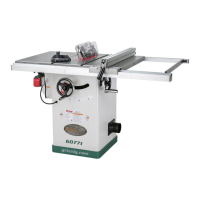
Grizzly G0771Z
89 pages
Print Icon
To Next Page IconTo Next Page
Loading...
For questions or help with this product contact Tech Support at (570) 546-9663 or techsupport@grizzly.com
READ THIS FIRST
COPYRIGHT © JULY, 2021 BY GRIZZLY INDUSTRIAL, INC.
WARNING: NO PORTION OF THIS MANUAL MAY BE REPRODUCED IN ANY SHAPE
OR FORM WITHOUT THE WRITTEN APPROVAL OF GRIZZLY INDUSTRIAL, INC.
#KS22029 PRINTED IN TAIWAN
405V2
407V2
406
406
410V2
409V2
409V2
407V2
410V2
REF PART # DESCRIPTION
405V2 P0771Z405V2 BLADE GUARD BODY V2.07.21
407V2 P0771Z407V2 BARRIER CONNECTING BAR V2.07.21
409V2 P0771Z409V2 SHOULDER SCREW M5-.8 X 10, 7 X 5 V2.07.21
410V2 P0771Z410V2 SHOULDER SCREW M6-1 X 10, 8 X 4 V2.07.21
The following changes were recently made since the owner's manual was printed:
Blade guard parts have been changed.
Aside from this information, all other content in the owner's manual applies and MUST be read and under-
stood for your own safety. IMPORTANT: Keep this update with the owner's manual for future reference.
For questions or help, contact our Tech Support at (570) 546-9663 or techsupport@grizzly.com.
Model G0771Z
***IMPORTANT UPDATE***
For Machines Mfd. Since 07/21
and Owner's Manual Revised 05/21
Revised Blade Guard Parts

Table of Contents

Questions and Answers

  • S
    Sharon FarrellAug 20, 2025
    What to do if my Grizzly G0771Z Saw machine does not start or a breaker trips?
    • C
      Cynthia MarksAug 20, 2025
      If your Grizzly Saw machine doesn't start or a breaker trips, there are several potential causes and solutions: * Ensure the switch disabling key is inserted into the ON/OFF switch. * Replace the fuse if it's blown, and check for any shorts. * If the wall circuit breaker tripped, verify the circuit size is correct or replace a weak breaker. * Confirm the power supply is on and has the correct voltage. * Test the plug/receptacle for good contacts and correct the wiring if necessary. * Correct any miswired motor connections. * Check for and fix broken, disconnected, or corroded wires. * Replace the motor ON/OFF switch if it's faulty. * Test and replace the start capacitor if it's faulty. * Test, repair, or replace the motor if it's at fault.
  • A
    achambersAug 25, 2025
    How to reduce sawdust blown back toward the operator on my Grizzly G0771Z?
    • J
      Jennifer WatkinsAug 25, 2025
      If too much sawdust is blown back toward the operator when using the Grizzly Saw, here are some potential solutions: * Re-install the blade guard for maximum safety and dust control. * Seal leaks in the cabinet or around the dust chute to improve dust collection. * Remove any clogs from the dust collection system, revise the ducting layout for improved suction, or use a different dust collector. * Adjust the fence to be parallel with the blade. * Adjust the table so the miter slot is parallel with the blade at 90 degrees.
  • P
    patrickclementsAug 28, 2025
    What to do if a board binds or burns when feeding through my Grizzly Saw table saw?
    • J
      Joshua JonesAug 28, 2025
      If the board binds or burns when feeding it through your Grizzly Saw table saw, consider these potential causes: * Replace the blade if it's dull. * Replace the blade if it is warped. * Make sure the fence is parallel to the blade. * Make sure the table top is parallel to the blade.
  • S
    Sarah GarnerAug 30, 2025
    What to do if the blade hits the insert at 45 degrees on my Grizzly Saw?
    • J
      jeffreymarshAug 30, 2025
      If the blade hits the insert at 45° on your Grizzly Saw, here's what you can do: * Adjust the 45° limiting block. * Clean any sawdust or debris stuck in the trunnion slides. * File or mill the slot in the insert if it is inadequate. * Align the blade to the table if the table is out of alignment. * Adjust the blade position if it is incorrect.
  • M
    mcfarlandangelaSep 1, 2025
    Why does the rip fence on my Grizzly Saw not move smoothly?
    • P
      pevansSep 1, 2025
      If the rip fence on your Grizzly Saw does not move smoothly, here are a few things to check: * Remount the rip fence if it is mounted incorrectly. * Clean and wax the rails if they are dirty or sticky. * Adjust the clamp screw if it is out of adjustment.
  • K
    Kathleen PonceSep 3, 2025
    What causes the blade to not be aligned with the miter slot or fence on my Grizzly G0771Z?
    • W
      William JimenezSep 3, 2025
      If the blade on your Grizzly Saw is not aligned with the miter slot or fence, consider the following: * Replace the blade if it is warped. * Make the table parallel to the blade if the table top is not parallel to the blade. * Make the fence parallel to the blade if the fence is not parallel to the blade.
  • S
    Samuel HuntSep 5, 2025
    Why does material move away from the fence when ripping on my Grizzly Saw?
    • J
      jennifer75Sep 5, 2025
      If the material moves away from the fence when ripping on your Grizzly Saw, it might be because the rip fence is misaligned. Check and adjust the rip fence.
  • C
    Colin RobinsonSep 7, 2025
    What to do if the blade on my Grizzly Saw does not reach 90 degrees?
    • O
      oparkerSep 7, 2025
      If the blade on your Grizzly Saw does not reach 90°, here are some possible solutions: * Adjust the 90° stop nuts. * Clean any sawdust or debris out of the trunnion slides.
  • W
    Wendy PierceSep 9, 2025
    Why does the handwheel bind or is difficult to move on my Grizzly G0771Z Saw?
    • K
      Katherine DouglasSep 9, 2025
      If the handwheel on your Grizzly Saw binds or is difficult to move: * Loosen the lock knob if it is engaged. * Remove the handwheel and adjust the shaft pins if they are wedged.
  • J
    Jonathan LeeSep 12, 2025
    What causes the blade to be too close to the insert on my Grizzly Saw?
    • E
      Eric YoungSep 12, 2025
      If the blade is too close to the insert on your Grizzly Saw, verify that the blade arbor washers are correct and in the required position.

Summary

READ THIS FIRST

Revised Blade Guard Parts

Details changes to the blade guard assembly and its components.

INTRODUCTION

Machine Description

Overview of the table saw's features and build.

Contact Info

Contact details for technical support and documentation feedback.

Manual Accuracy

Information on manual accuracy and potential machine differences.

Identification

Controls & Components

ON;OFF Switch

Location and function of the machine's main power switch.

Blade Height Handwheel

Control for adjusting the saw blade's vertical position.

Blade Tilt Handwheel

Control for adjusting the saw blade's tilt angle.

Fence Lock

Control for securing the rip fence in its position.

Glossary of Terms

MACHINE DATA SHEET

Main Specifications

Main Information

Core specifications like table saw type, arbor size, and cut depths.

Additional Blade Information

Details on included blade, spreader/riving knife thickness.

Table Information

Dimensions and features of the table and extension wings.

Fence Information

Specifications related to the fence type, size, and rails.

SECTION 1: SAFETY

Safety Instructions for Machinery

General safety guidelines and hazard warnings for operating machinery.

Additional Safety for Table Saws

Preventing Kickback

Methods and precautions to avoid workpiece kickback during cuts.

Protecting Yourself From Kickback

Steps to take to minimize injury if kickback occurs.

SECTION 2: POWER SUPPLY

Availability

Considerations for the required power supply circuit before installation.

Circuit Information

Details on power supply circuits and fuse requirements.

Circuit Requirements for 120 V

Electrical specifications for operating the machine on 120V.

Circuit Requirements for 240 V

Electrical specifications for operating the machine on 240V.

Grounding Requirements

Extension Cords

Converting Voltage to 240 V

SECTION 3: SETUP

Needed for Setup

List of items required but not included for machine setup.

Unpacking

Instructions for unpacking the machine and inspecting for damage.

Hardware Recognition Chart

Inventory

Cleanup

Site Considerations

Space Allocation

Determining adequate space for operation and maintenance.

Electrical Installation

Guidelines for safe placement and connection to power.

Assembly

Test Run

Recommended Adjustments

SECTION 4: OPERATIONS

Operation Overview

Basic understanding of how to operate the machine.

Workpiece Inspection

Non-Through & Through Cuts

Blade Selection

Ripping Blade Features

Characteristics of blades suitable for ripping operations.

Crosscut blade features

Characteristics of blades suitable for crosscutting operations.

Blade Requirements

Thin Kerf Blade

Dado Blades

Blade Installation

Blade Guard Assembly

Guard

Function and safety aspects of the blade guard.

Spreader;Riving Knife

Role of the spreader/riving knife in preventing kickback.

Installing Blade Guard & Spreader; Riving Knife

Procedure for correctly installing the blade guard assembly.

Anti-Kickback Pawls

When to Use the Blade Guard

Riving Knife

Ripping

Crosscutting

Miter Cuts

Blade Tilt;Bevel Cuts

Dado Cutting

Rabbet Cutting

Resawing

Making Resaw Barrier

Making Auxiliary Fence

Resawing Operations

SECTION 5: SHOP-MADE SAFETY ACCESSORIES

Featherboards

Benefits and types of shop-made featherboards.

Making a Featherboard

Step-by-step guide to creating featherboards.

Mounting Featherboards w;Clamps

Mounting Featherboard in Miter Slot

Push Sticks

Using a Push Stick

Techniques for safely feeding workpieces with push sticks.

Making a Push Stick

Template and instructions for creating a push stick.

Push Blocks

Using a Push Block

Methods for using push blocks for better workpiece control.

Making a Push Block

Template and instructions for creating a push block.

Narrow-Rip Auxiliary Fence & Push Block

Making a Narrow-Rip Push Block for an Auxiliary Fence

Construction guide for a combined fence and push block jig.

Using the Auxiliary Fence & Push Block

Outfeed & Support Tables

Crosscut Sled

SECTION 6: ACCESSORIES

SECTION 7: MAINTENANCE

Schedule

Recommended maintenance checks and intervals for optimal performance.

Cleaning & Protecting

Procedures for cleaning and protecting the machine's surfaces.

Lubrication

SECTION 8: SERVICE

Troubleshooting

Solutions for common machine problems and symptoms.

Blade Tilt Calibration

Setting 90° Stop

Adjusting the blade's 90-degree tilt limit.

Setting 45° Stop

Adjusting the blade's 45-degree tilt limit.

Miter Slot to Blade Parallelism

Spreader or Riving Knife Alignment

Checking Alignment

How to verify the alignment of the spreader/riving knife with the blade.

Adjusting Alignment

Steps to adjust the spreader/riving knife position for proper alignment.

Adjusting Bent Spreader;Riving Knife

Procedure to straighten or replace a bent spreader/riving knife.

Adjusting Fence

Calibrating Fence to Blade

Offsetting Fence

Optional adjustment to offset the fence for kickback prevention.

Fence Scale Calibration

Table;Dado Insert Adjustment

SECTION 9: WIRING

Wiring Safety Instructions

Critical safety precautions for working with electrical wiring.

Wiring Diagram

Electrical Components

SECTION 10: PARTS

Main

Exploded view and parts list for the main saw unit.

Cabinet

Fence & Rails

Blade Guard

Miter Gauge

Labels & Cosmetics

WARRANTY & RETURNS

Grizzly G0771Z Specifications

General IconGeneral
TypeHybrid Table Saw
Blade Diameter10 inches
Max. depth of cut at 90 degrees3-1/8 inches
Max. depth of cut at 45 degrees2-1/4 inches
Distance from front of table to blade at max cut12 inches
Distance from right of blade to rip fence30 inches
Table Size27 inches x 40 inches
Arbor Size5/8 inches
Max. width of dado13/16 inches
Amps13 Amps

Related product manuals