EasyManua.ls Logo

Grizzly G0503 - User Manual

Grizzly G0503
76 pages
Print Icon
To Next Page IconTo Next Page
Loading...
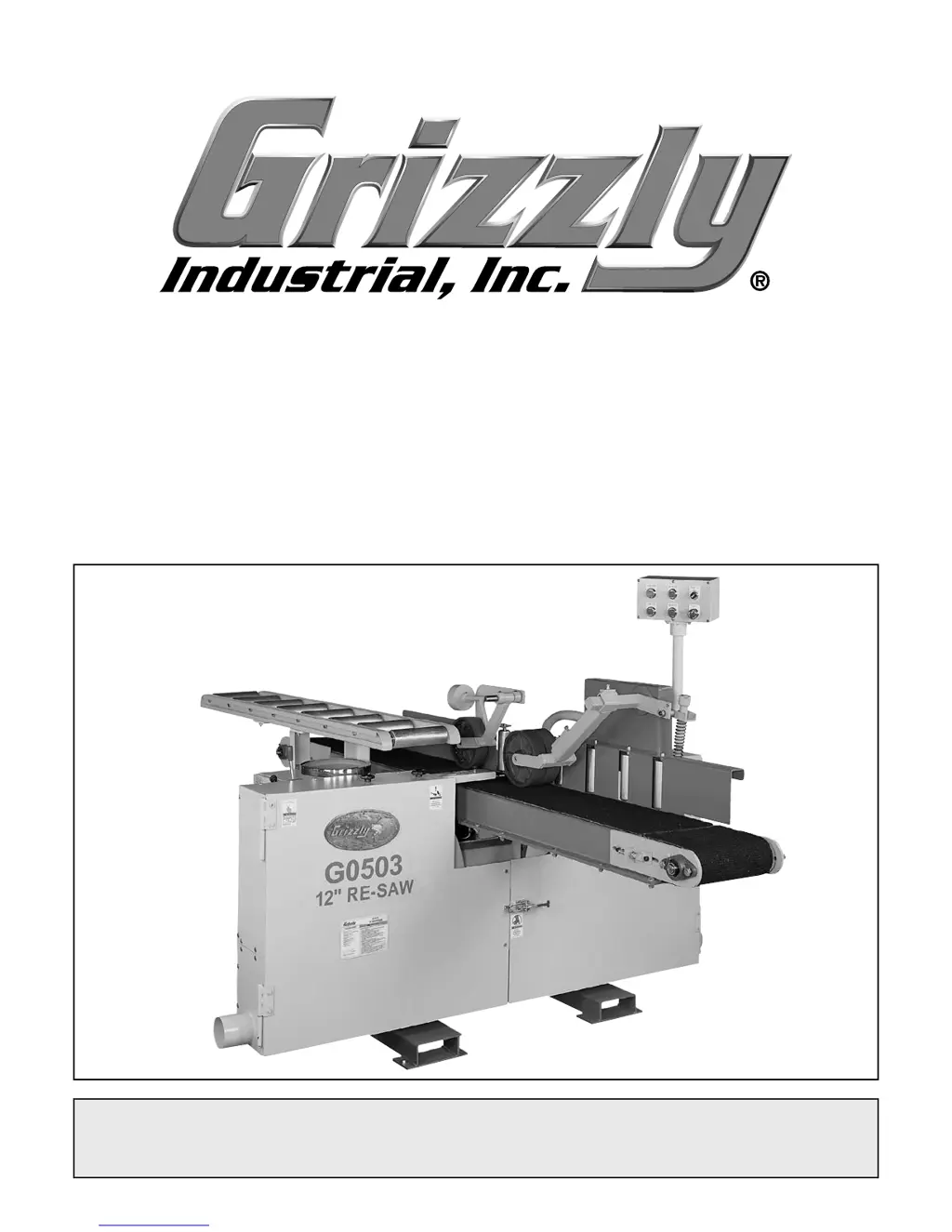
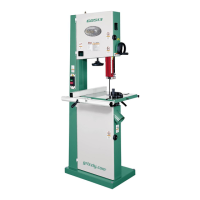
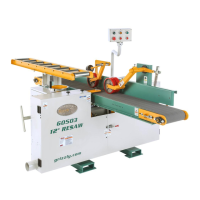
12" HORIZONTAL
RESAW BANDSAW
MODEL G0503
INSTRUCTION MANUAL

WARNING: NO PORTION OF THIS MANUAL MAY BE REPRODUCED IN ANY SHAPE
OR FORM WITHOUT THE WRITTEN APPROVAL OF GRIZZLY INDUSTRIAL, INC.


Table of Contents

Questions and Answers

  • N
    Nancy Fleming MDSep 9, 2025
    Why is the hydraulic fluid in my Grizzly G0503 Saw dark brown?
    • J
      Jamie WellsSep 9, 2025
      If the hydraulic fluid in your Grizzly Saw is dark brown or opaque, it could be due to overheating and thermal breakdown. Repair the cause of overheating. It could also be contaminated. Perform a hydraulic system major service.
  • R
    reevesrachelAug 23, 2025
    Why does my Grizzly Saw motor overheat?
    • S
      stephanie60Aug 23, 2025
      If the Grizzly Saw motor overheats, it could be due to the motor being overloaded. Try reducing the load on the motor. Another cause could be restricted air circulation. Clean out the motor to ensure normal air circulation.
  • R
    Robin DavidsonAug 25, 2025
    What to do if my Grizzly G0503 motor won't start and the fuses blow?
    • D
      Dorothy MitchellAug 25, 2025
      If your Grizzly Saw motor won't start and the fuses or circuit breakers are blowing, it could be due to a short circuit in the power wires. Inspect the wiring for damaged insulation and shorted wires. Another cause could be a short circuit in the motor or loose connections; repair or replace any loose, shorted, or wires with worn insulation. The circuit or motor might also be overloaded, so reduce the amperage load.
  • M
    Matthew SmallAug 27, 2025
    Why does my Grizzly G0503 Saw motor stall and blow fuses?
    • J
      jamesosborneAug 27, 2025
      If the Grizzly Saw motor stalls, causing blown fuses or circuit breakers, it could be due to a short circuit in the motor or loose connections. Repair or replace any loose, shorted, or wires with worn insulation on the motor. Low voltage can also cause this, so correct any low voltage conditions. Make sure you have the correct fuses or circuit breakers installed. Finally, the motor may be overloaded, so reduce the load on the motor.
  • M
    Marvin CarterAug 27, 2025
    What causes excessive vibration in my Grizzly Saw?
    • X
      xrobersonAug 27, 2025
      Excessive vibration in your Grizzly Saw can be caused by several factors. It could be a worn-out V-belt, which you should replace. A bent or worn-out blade can also cause vibration, so replace the blade. Additionally, worn-out wheel bearings or wheels can be the source of the problem, so consider replacing them.
  • G
    Gregory RichardsonAug 29, 2025
    Why does my Grizzly Saw blade slow down when cutting?
    • A
      Andrea JohnsonAug 29, 2025
      If the blade on your Grizzly Saw slows down during operation, it's likely that you're applying too much pressure to the workpiece. Try slowing down the feed rate.
  • R
    Ruben ButlerSep 17, 2025
    Why does the workpiece hang up on the pressure rollers on my Grizzly G0503?
    • E
      Erica ThomasSep 18, 2025
      If the workpiece hangs up on the pressure rollers of your Grizzly Saw, it means the pressure rollers are out of adjustment. Adjust the pressure rollers.
  • G
    Gerald RossSep 18, 2025
    Why is the workpiece thicker on one side after cutting with my Grizzly G0503 Saw?
    • M
      Mark WoodsSep 19, 2025
      If the workpiece is thicker on one side than the other when using your Grizzly Saw, it indicates that the conveyor is not level. Level the conveyor.
  • S
    Shelia DickersonSep 8, 2025
    Why is the blade on my Grizzly G0503 Saw running backwards?
    • J
      jsmithSep 8, 2025
      If the blade on your Grizzly Saw runs backwards, it's likely that two of the power wires are reversed. Switch two of the power wires at the terminal strip.
  • D
    Dominique SmithSep 4, 2025
    What to do if the conveyor on my Grizzly Saw won't run?
    • V
      Victoria MarshSep 5, 2025
      If the conveyor on your Grizzly Saw won't run, it could be due to the hydraulic motor not running. Refer to the motor troubleshooting steps. It might also be low on hydraulic fluid, so check for leaks and add fluid. Finally, the hydraulic lines could be attached backward, so switch them.

Summary

Safety Information

General Safety Instructions

Critical safety warnings and general operating precautions for machinery.

Resaw Specific Safety

Specific safety precautions for operating the resaw.

Hydraulic System Safety

Safety guidelines related to the hydraulic system.

Circuit Requirements

220 V 3-Phase Power

Electrical requirements for 220V 3-phase power.

440 V 3-Phase Power

Electrical requirements for 440V 3-phase power.

Grounding and Phase Converters

Grounding procedures, phase converter use, and extension cord recommendations.

Setup Procedures

Unpacking and Inventory

Steps for unpacking the machine and checking included parts.

Hardware Identification

Guide to identify and match hardware during assembly.

Tools and Site Preparation

Required tools, materials, and site considerations for setup.

Component Assembly

Instructions for removing from crate, floor mounting, and conveyor belt installation.

System Connections

Steps for attaching hydraulics, control panel, and rollers.

Blade and Power Installation

Connecting dust collector, installing blade, and connecting power.

Test Run and Blade Tensioning

Performing test run and adjusting blade tension.

Machine Identification and Features

Key Machine Components

Identification of main parts like rollers, conveyor, dust port, and control panel.

Motor and Hydraulic Systems

Description of motor, hydraulic system components, and controls.

Control Panel Operation

Button Functions

Explanation of the function of each button on the control panel.

Machine Specifications Data Sheet

Machine Accessories

Maintenance Procedures

Cleaning and General Checks

Instructions for cleaning and routine maintenance checks.

V-Belts and Bearings

Information on V-belt condition, tension, and machine bearings.

Lubrication Schedule

Schedule and procedure for greasing machine components.

Hydraulic System Service

Steps for minor and major maintenance on the hydraulic system.

Wheel Scraper Maintenance

How to inspect and replace wheel scrapers.

Machine Service and Adjustments

Blade Tracking and Guide Alignment

Adjusting blade tracking and guide blocks for proper blade path.

Support Wheel and Elevation Gauge

Adjusting support wheel and calibrating blade elevation gauge.

Conveyor Table and Belt Tracking

Aligning conveyor table and tracking the conveyor belt.

Conveyor Belt Replacement

Instructions for replacing the conveyor belts.

V-Belt Adjustments

Procedures for V-belt tensioning and replacement.

440 V Conversion Procedure

Instructions for converting the machine to 440V power.

Machine Operations

Operation Safety

Safety precautions during machine operation.

Workpiece Preparation

How to prepare workpieces for precise cuts.

Blade Height and Conveyor Controls

Adjusting blade height and operating conveyor belt.

Pressure Rollers and Resawing

Adjusting pressure rollers and performing resawing operations.

Blade Information and Care

Details on blade types, care, and common breakage causes.

Troubleshooting Common Issues

Troubleshooting Guide

Solutions for common machine problems and symptoms.

Warranty and Returns Policy

Maintenance Record Keeping

Warranty Registration Card

Grizzly G0503 Specifications

General IconGeneral
Motor Power2 HP
Table Size20-1/4 x 27 in.
Weight242 lbs.
Motor2 HP, 110V/220V, Single-Phase, TEFC
Dust Port Size4"
Blade Diameter10"
Blade Size10"
Arbor Size5/8"
Max Cut at 90°3-1/8"
Maximum Cut Depth3-1/8" at 90°

Related product manuals