EasyManua.ls Logo

Heatilator I80 - User Manual

Heatilator I80
52 pages
Print Icon
To Next Page IconTo Next Page
Loading...
Heatilator • I80 • 4013-023 Rev R • 10/06
1
Owners Manual
Installation and Operation
Models:
I80
Woodburning Fireplace
DO NOT DISCARD THIS MANUAL
CAUTION
Important operating
and maintenance
instructions included.
Leave this manual with
party responsible for
use and operation.
Read, understand
and follow these
instructions for safe
installation and
operation.
DO NOT
DISCARD
Installation and service of this replace should
be performed by quali ed personnel. Hearth
& Home Technologies suggests NFI certi ed
or factory-trained professionals, or technicians
supervised by an NFI certified
professional.
HOT! DO NOT TOUCH.
SEVERE BURNS MAY RESULT.
CLOTHING IGNITION MAY RESULT.
WARNING
Keep children away.
CAREFULLY SUPERVISE children in same room
as replace.
Alert children and adults to hazards of high
temperatures.
Keep clothing, furniture, draperies and other
combustibles away.
Glass and other surfaces are hot
during operation and cool down.
If the information in these instruc-
tions is not followed exactly, a
re may result causing property
damage, personal injury, or death.
Do not store or use gasoline or other am-
mable vapors and liquids in the vicinity of
this or any other appliance.
Do not over re. Over ring will void your war-
ranty.
Comply with all minimum clearances to
combustibles as speci ed. Failure to
comply may cause house re.
WARNING
Fire Risk
For use with solid wood fuel or decorative
gas appliance only.
Do not install unvented gas logs.
WARNING
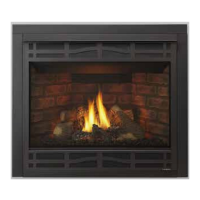
(Traditional refractory shown.)

Table of Contents

Questions and Answers

  • H
    hermanamandaJul 31, 2025
    How to get more heat from Heatilator Indoor Fireplace?
    • J
      jaclynwiseJul 31, 2025
      To get more heat from your Heatilator Indoor Fireplace, make larger fires if you're using insufficient fuel. Also, burn seasoned wood, which has been covered on top, split, and stacked for 9 months to 2 years. If you are turning the blower on too early or setting it too high, wait until the fire is established and leave it on a lower speed. If there is no blower, add one if available.
  • M
    Madison WhiteAug 6, 2025
    Why do I smell smoke in the house when using my Heatilator Indoor Fireplace?
    • T
      Todd LeeAug 6, 2025
      If you smell smoke in the house during operation of your Heatilator Indoor Fireplace, open the damper fully. If needed, check and clean the chimney. Use adequate kindling and fuel. Open glass doors or a window, and check if you need a balanced air make-up. Ensure the fire is built farther back and avoid using exhaust fans during startup. Also, check if a balanced air make-up system is needed.
  • S
    Sherry RaymondAug 18, 2025
    What to do if Heatilator Indoor Fireplace burns wood too fast?
    • J
      Jerry MaldonadoAug 18, 2025
      If your Heatilator Indoor Fireplace burns wood too fast, add glass doors to slow air intake. If the wood is extremely dry, mix in less seasoned wood after the fire is established.
  • M
    Mr. Richard MccoyAug 25, 2025
    Why does my Heatilator Indoor Fireplace smell like smoke after a fire?
    • S
      Stephanie AlvarezAug 25, 2025
      If you smell smoke in the house after you’ve had a fire in your Heatilator Indoor Fireplace, close the damper at the end of the burn if there is a down draft or negative pressure. Check if you need glass doors, a balanced air make-up system, or to raise the chimney. If there is no creosote odor, but the damper was closed too early, wait until the fire is completely out before closing the damper.
  • M
    Miranda RojasNov 10, 2025
    How to start a Heatilator Indoor Fireplace properly?
    • J
      John AlexanderNov 10, 2025
      To get a good fire going in your Heatilator Indoor Fireplace, first, open the damper to ensure there is a draft. Use more paper/starter if there is insufficient heat to ignite the kindling, and use more dry kindling if there is insufficient heat to ignite the fuel. Use small split wood that is well seasoned (split, covered on top at least 6 months, preferably a year) if there is insufficient heat to establish a draft, insufficient air passage, insufficient surface area, or if the ignition temperature is high due to moisture. Arrange kindling and wood for air movement to ensure sufficient combustion air and exposed surface area. Use a lighted rolled newspaper at the throat or flue opening to start upward movement if there is an exposed, cold chimney down drafting. Check the damper and have ...

Summary

Listing and Code Approvals

Appliance Certification

Details the fireplace system's certification by Underwriters Laboratories Inc. for US installation.

Getting Started

Design and Installation Considerations

Covers building codes, location planning, vent system, gas, electrical, and accessories.

Negative Pressure

Explains negative pressure causes and how to minimize its effects on fireplace operation.

Typical Fireplace System

Illustrates and lists the main components of the Heatilator fireplace system.

Tools and Supplies Needed

Lists essential tools and building supplies required for fireplace installation.

Inspect Fireplace and Components

Instructions for checking fireplace and components for damage before installation.

Framing and Clearances

Selecting Fireplace Location

Discusses options for fireplace placement and considerations for performance.

Clearances

Specifies minimum clearances to combustibles for safe installation around the fireplace.

Sidewalls;Surrounds

Details clearances for combustible side walls and decorative surrounds.

Frame the Fireplace

Provides a diagram and instructions for framing the fireplace using lumber.

Construct the Chase

Guidelines for building a chase structure to enclose the fireplace and vent system.

Chimney Requirements

Lists minimum and maximum heights and lengths for chimney components.

Installation of Fireplace

Install the Outside Air Kit

Instructions for installing the outside air kit to supply combustion air.

Secure the Fireplace

Guidance on positioning and securing the fireplace to a flat surface.

Install the Refractory

Step-by-step instructions for installing the refractory panels and hearth stone.

Place the Protective Metal Hearth Strips

Instructions for installing metal strips to protect the floor from sparks and heat.

Level the Fireplace

Steps to ensure the fireplace is level and square for proper door fit.

Chimney Assembly

Chimney Requirements

Details vertical distances and component selection for chimney height.

Using Offsets;Returns

Guide to determining chimney components for bypassing obstructions using offsets.

Assemble the Chimney Sections

Instructions for connecting chimney sections and ensuring proper engagement.

Install the Ceiling Firestops

Steps for cutting, framing, and installing ceiling firestops for safety.

Install the Attic Insulation Shield

Guidance on installing insulation shields where insulation contacts the chimney.

Double-check the Chimney Assembly

Procedure for verifying secure connections of chimney sections.

Secure the Chimney

Methods for locking chimney sections and securing them to framing.

Complete the Enclosure

Chimney Termination

Requirements for chimney termination caps, placement, and clearances above the roof.

Chase Top

Instructions for installing a metal chase top to seal the chase around the chimney.

Install the Termination Cap

Steps for installing various types of termination caps and their required overlaps.

Accessories

Gas Log;Lighter Provisions

Guidelines for installing certified gas log sets, including input limits and safety codes.

Finishing

Hearth Extension

Requirements for hearth extensions, including R-value, materials, and dimensions.

Finishing Material

Defines combustible and non-combustible materials and sealant requirements.

Mantel

Specifies clearances and limitations for combustible mantels above the fireplace.

Sidewalls;Surrounds

Details clearances for combustible side walls and decorative surrounds.

Glass Doors

Information on using approved glass doors and referring to their specific manuals.

Operating Instructions

General Information

Emphasizes safe operation, fire supervision, and annual inspections.

Outside Air

Explains the importance of outside air for combustion and its control.

Clear Space Near the Fireplace

Specifies minimum clearance for room furnishings and combustible materials.

Flue Damper

Instructions for operating the flue damper and its importance for draft.

Firescreen

Guidelines for using the firescreen to control sparks during operation.

Glass Doors

Best practices for operating glass doors for efficient fireplace use.

Grate

Requirement to use the factory-installed integral grate for proper fire management.

Wood Fuel

Guidance on selecting and using seasoned firewood for optimal performance.

Starting a Fire

Step-by-step instructions for safely starting and building a fire.

Troubleshooting

Understanding Vent Problems

Explains common venting issues like flue leakage and blockage affecting draft.

Diagnostics and Problem Solving

Provides diagnostic questions and solutions for fire starting and heating issues.

Maintenance and Servicing the Fireplace

Disposal of Ashes

Safe procedures for storing and disposing of fireplace ashes.

Chimney Inspection;Cleaning

Recommendations for regular chimney inspection and cleaning to prevent fires.

Firebox Refractory

Guidance on inspecting refractory panels for cracks and replacement needs.

Maintenance Task List

A comprehensive checklist for inspecting and maintaining fireplace components.

Chimney Fire

Actions to take in case of a chimney fire and necessary inspections afterward.

Reference Materials

Fireplace Dimensions

Diagrams and measurements of the fireplace unit for installation planning.

Fireplace Components

Lists catalog numbers and descriptions for various fireplace parts.

Chimney Components

Identifies and illustrates various chimney sections, caps, and accessories.

Service Parts

Exploded parts diagram and list for service and replacement of fireplace components.

Limited Warranty

Outlines the terms, conditions, exclusions, and duration of the product warranty.

Contact Information

Provides contact details for Hearth & Home Technologies and customer support.

Heatilator I80 Specifications

General IconGeneral
Fuel TypeNatural Gas or Propane
Vent TypeDirect Vent
Ignition TypeElectronic Ignition
Log Set MaterialCeramic Fiber
EfficiencyUp to 70%
Control TypeRemote Control

Related product manuals