9HeatMaster
SS
C Series Furnace Operating Manual
C
TRENCH
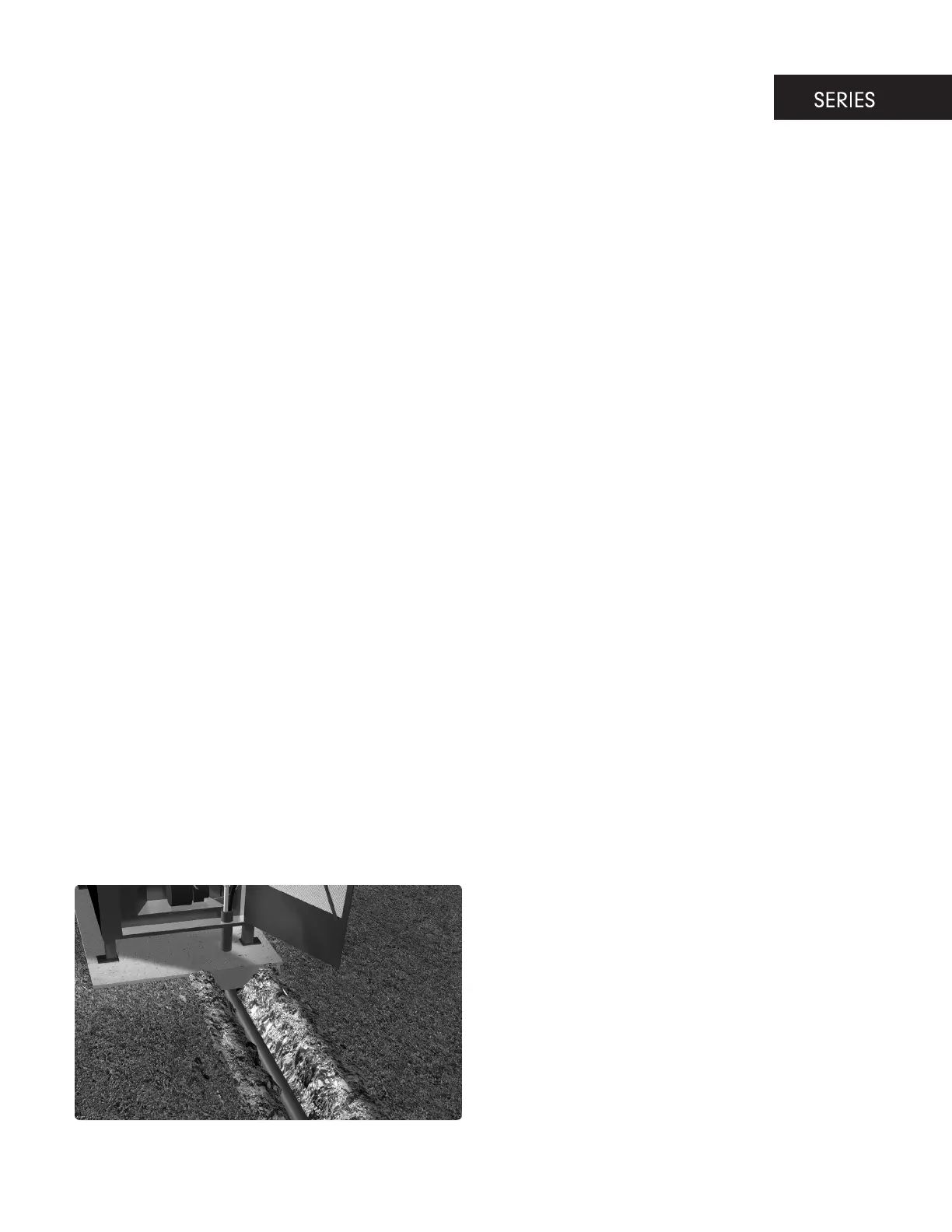
HeatMaster Furnaces Inc recommends the trench be 24” to
36” deep. Take into consideration soil conditions as rocky soil
conditions can cause the casing of the pipe to be damaged and
allow water to ll the pipe. If soil conditions require, ll the trench
with sand. If possible, have a gradual slope in your trench to allow
drainage away from your lines and out of the trench bottom. Most
insulated underground pipe has room for electrical wire in it. If it
does not, place electrical supply in the bottom of the trench and
cover it with 6 inches of dirt. A minimum R8 insulation value is
recommended and a water-tight vapor barrier such as PVC pipe or
drain tile to encase your insulation is a must.
NOTE: It’s recommended that only high-quality, well-insulated
lines are used, such as rhinoex available from HeatMaster
SS
, for
your best value and longest lasting underground pipe. Poor quality
casing or insulation can deteriorate over time causing heat loss in
the ground and loss of efciency in your system. Purchase your
insulated line from a reputable source. Your HeatMaster
SS
dealer
will carry high-quality insulated lines and can help you determine
the best line to purchase.
NOTE: If you are installing your water lines under an area where
vehicles will cross, you should increase the depth of the trench
and use a schedule pipe over your lines to reduce the pressure
generated on the lines.
WIRING
All wiring must conform to local codes. Use an electrical wire rated
and approved for underground installations. This wiring can be
placed in the same trench below the water lines. It’s recommended
that a qualied technician be present when installing the electrical
portion of the hook-up.
See pages 21-22 for the furnace wiring diagrams.
HYDRONIC LINES
Hydronic lines (hot water heating lines) whenever buried or
encased in cement should not be spliced. Take the necessary
steps to ensure they stay dry. This ensures that minimal heat
loss occurs. Supply and return lines should be a minimum of /
diameter, although 1” is most common, and have a rating of 100
PSI capacity at 180 degrees Fahrenheit. This pipe should be listed
for potable water.
Hint: Mark your feed and return lines prior to covering and allow
enough pipe above ground at both ends for a relaxed connection.
Red lines are generally “hot” while blue lines are usually “cold”.



 To Next Page