3
SOFT WATER BASICS
Water Hardness
Excess amounts of calcium and magnesium in water produce
hardness. A water softener removes the majority of calcium and
magnesium to produce softened water.
Hardness is measured in terms of grains. (This grain weight
is derived from the average weight of a dry grain of wheat.)
When your water is tested the grain hardness is calculated and
expressed as grains per gallon (gpg). This calculation, as well
as the number of people in your household will help determine
what type and size of water softener will most efciently soften
your water.
Your water softener contains an ion exchange
media (often called resin) which removes the hardness from
water as it ows through the softener tank. Eventually so much
hardness collects on the exchange media that the softener can
no longer soften water. At this point it is considered "exhausted".
Regeneration is now necessary.
Water Softener Regeneration
To regenerate the exchange media, it must be rinsed with a
brine (salt) solution. This removes the hardness from the exchange
media and replaces it with sodium. The exchange media is then
ready to remove hardness from water. The hardness minerals
and excess brine solution are rinsed down the drain.
During the regeneration cycle the softening media is also
backwashed. This reversing of the normal ow of water serves
to remove sediment which may have accumulated during the
softening process due to the ltering action of the exchange media.
Backwashing also loosens and uffs up the bed of exchange
media to insure that during regeneration the brine solution will
come into contact with all the media.
Prell Option
Your softener is factory programmed with the Prell option. The prell option puts water into the brine tank 2 hours prior to a sched-
uled regeneration and provides the best environment for maintenance and salt storage in your brine tank. When programmed as
Prell, you will typically not see water in the brine tank unless salt supply is low and needing to be replenished.
Maintaining Salt Level
Salt: Salt to a softener is what gasoline is to a car. Not only must a softener have salt, but it should be the proper type to insure
efcient recharging of the unit. Ask your dealer what type of salt may best suit your needs. Always have an adequate supply of salt on
hand. Check the salt level of your brine tank every couple of weeks initially to determine how much salt you use - this will depend on
how much water you use. As a rule of thumb, with 20 gpg hard water, about a 1/2 lb. of salt per person per day is used. In other words,
a family of four uses 60 lbs. of salt a month. Fill the tank approximately three-fourths full, with a minimum of 12” of salt. If your
household does not use much water, do not ll your brine tank over 1/2 full, salt bridging may occur in the brine tank. This may result in
hard water due to ineffective regeneration. DO NOT USE Block Salt when the E3 control is programmed with a brine tank prell. Block
salt does not dissolve quickly enough to provide a good regeneration.
Cleaning the Brine Tank: The brine tank may require periodic cleaning. Inspect the brine tank at least once a year for buildup
of insoluble materials. It is recommended to periodically clean the brine tank no matter what kind of salt you are using. See page 7,
Maintenance #2 for details on cleaning.
REMEMBER: Salt is the fuel to run your water softener. Buy the best clean salt available.
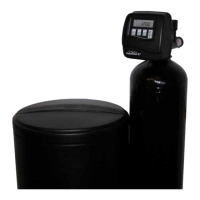
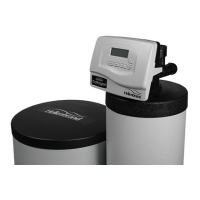
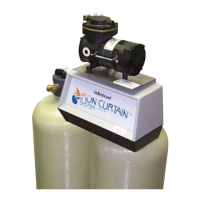
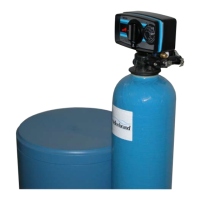
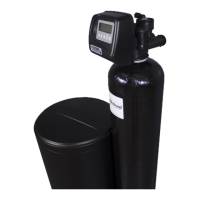
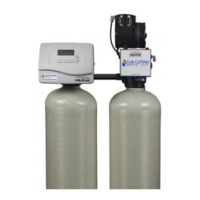
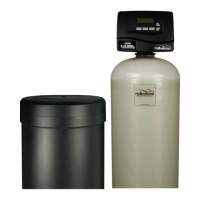
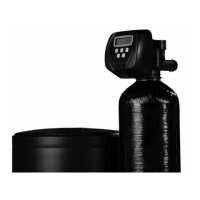
Figure 1



 To Next Page