EasyManua.ls Logo

Hilti TE 30-A36 - User Manual

Hilti TE 30-A36
22 pages
Print Icon
To Next Page IconTo Next Page
Loading...
*2033711*
2033711
TE 30-A36
Bedienungsanleitung de
Operating instructions en
Mode d’emploi fr
Istruzioni d’uso it
Manual de instrucciones es
Manual de instruções pt
Gebruiksaanwijzing nl
Οδηγιες χρησεως el
Használati utasítás hu
Instrukcja obsługi pl
Инструкция по зксплуатации ru
Návod k obsluze cs
Návod na obsluhu sk
Upute za uporabu hr
Navodila za uporabo sl
Kulllanma Talimatı tr
IНСТРУКЦIЯ З ЕКСПЛУАТАЦIЇ uk

Other manuals for Hilti TE 30-A36

Questions and Answers

Summary

General Information and Safety Pictograms

Safety Notices and Their Meaning

Explains the meaning of DANGER, WARNING, CAUTION, and NOTE safety indicators.

Pictogram and Information Explanation

Details the meaning of various warning signs and symbols used in the manual.

Product Description and Components

Intended Use of the Product

Defines the intended applications and limitations of the power tool.

Chuck Types and Features

Describes the different chuck types, including SDS plus and SDS top.

Control Switches and Functions

Details the function of various switches like speed control and forward/reverse.

Grip Designs

Explains the pivotable side grip and vibration-absorbing grip features.

Protective Features

Covers safety mechanisms such as the mechanical slip clutch.

Active Torque Control (ATC)

Explains the electronic quick switch-off feature for enhanced safety.

Lubrication Requirements

Specifies the oil lubrication needs for the tool.

Required Additional Items

Lists essential accessories like batteries and chargers for operation.

Standard Supplied Items

Lists the components included with the power tool upon purchase.

Li-ion Battery Charge Status Indicators

Describes how to read the LED display for battery charge levels.

Inserting Tools and Accessories

Technical Specifications

Comprehensive Safety Instructions

General Power Tool Safety Warnings

Provides fundamental safety advice applicable to all power tools.

Work Area Safety Precautions

Advises on maintaining a safe and clean work environment.

Electrical Safety Guidelines

Outlines crucial safety measures related to electrical connections and conditions.

Personal Safety Measures

Details how to protect oneself while operating the tool, including PPE.

Power Tool Use and Care

Covers proper usage, maintenance, and storage of the power tool.

Battery Tool Use and Care

Provides guidelines for safe and effective use and care of battery packs.

Tool Servicing Requirements

Emphasizes the importance of qualified personnel for tool servicing.

Hammer Safety Warnings

Specific safety advice related to hammer functions and noise.

Additional Safety Rules

Further safety recommendations beyond general power tool guidelines.

Additional Personal Safety Rules

Provides further personal safety advice during operation.

Careful Power Tool Usage

Guidance on securing workpieces and checking tools.

Careful Cordless Tool Usage

Specific instructions for cordless tool operation and battery handling.

Workplace Electrical Safety

Safety checks for electrical hazards in the work area.

Work Area Safety Considerations

Safety measures for ventilation and breaking through materials.

Personal Protective Equipment (PPE)

Specifies necessary PPE for the user and bystanders.

Preparation Before Operation

Battery Use and Care

Guidelines for optimal battery performance, storage, and disposal.

Battery Charging Procedures

Instructions for charging new and previously used batteries.

First-Time Battery Charging

Guidance on fully charging a new battery before initial use.

Charging Previously Used Batteries

Procedures for charging batteries that have been used.

Recharging Li-ion Batteries

Specific advice for recharging Li-ion battery types.

Fitting the Battery

Steps for securely attaching the battery to the power tool.

Removing the Battery

Instructions on how to safely detach the battery pack from the tool.

Battery Pack Transport and Storage

Guidelines for safe transportation and storage of battery packs.

Fitting the Side Grip

Steps for attaching and positioning the side handle with depth gauge.

Dust Removal System (TE DRS-S)

Information on fitting and using the optional dust removal system.

Operating Procedures and Modes

Preparing the Tool for Use

Steps to prepare the tool before commencing work.

Adjusting the Depth Gauge

How to set the depth gauge for precise drilling.

Fitting Insert Tools

Steps for correctly inserting drill bits or chisels into the chuck.

Removing Insert Tools

Procedures for safely removing hot or standard insert tools.

Removing the Chuck

Steps to detach the chuck assembly from the power tool.

Fitting the Chuck

Instructions for attaching a new chuck assembly to the tool.

General Operation Guidelines

Basic operational advice, including warm-up and safety.

Forward and Reverse Operation

How to select and use the forward and reverse rotation functions.

Drilling Without Hammering

Step-by-step guide for performing drilling operations without the hammer function.

Hammer Drilling Operation

Instructions for using the tool in hammer drilling mode.

Active Torque Control (ATC) Function

Explains the ATC system and how it reacts to sudden rotations.

Chiseling Operation

Information on using the tool for chiseling tasks.

Chisel Position Adjustment

How to adjust the chisel angle for optimal working position.

Locking the Chisel

Steps to secure the chisel in the chiseling position.

Performing Chiseling

Direct instructions for executing chiseling tasks.

Reading Li-ion Battery Charge Status

How to interpret the LED display for battery charge status.

Tool Care and Maintenance

Care of Insert Tools

Guidance on cleaning and protecting drill bits and chisels.

Care of the Power Tool

Instructions for cleaning the tool's exterior and ventilation slots.

Dust Shield Maintenance

Steps for cleaning or replacing the chuck's dust shield.

Li-ion Battery Care

Advice on battery care, charging, storage, and performance.

General Maintenance

Specifies that electrical repairs must be done by qualified specialists.

Troubleshooting Common Issues

Proper Disposal Guidelines

Manufacturers Warranty Information

EC Declaration of Conformity

Summary

General Information and Safety Pictograms

Safety Notices and Their Meaning

Explains the meaning of DANGER, WARNING, CAUTION, and NOTE safety indicators.

Pictogram and Information Explanation

Details the meaning of various warning signs and symbols used in the manual.

Product Description and Components

Intended Use of the Product

Defines the intended applications and limitations of the power tool.

Chuck Types and Features

Describes the different chuck types, including SDS plus and SDS top.

Control Switches and Functions

Details the function of various switches like speed control and forward/reverse.

Grip Designs

Explains the pivotable side grip and vibration-absorbing grip features.

Protective Features

Covers safety mechanisms such as the mechanical slip clutch.

Active Torque Control (ATC)

Explains the electronic quick switch-off feature for enhanced safety.

Lubrication Requirements

Specifies the oil lubrication needs for the tool.

Required Additional Items

Lists essential accessories like batteries and chargers for operation.

Standard Supplied Items

Lists the components included with the power tool upon purchase.

Li-ion Battery Charge Status Indicators

Describes how to read the LED display for battery charge levels.

Inserting Tools and Accessories

Technical Specifications

Comprehensive Safety Instructions

General Power Tool Safety Warnings

Provides fundamental safety advice applicable to all power tools.

Work Area Safety Precautions

Advises on maintaining a safe and clean work environment.

Electrical Safety Guidelines

Outlines crucial safety measures related to electrical connections and conditions.

Personal Safety Measures

Details how to protect oneself while operating the tool, including PPE.

Power Tool Use and Care

Covers proper usage, maintenance, and storage of the power tool.

Battery Tool Use and Care

Provides guidelines for safe and effective use and care of battery packs.

Tool Servicing Requirements

Emphasizes the importance of qualified personnel for tool servicing.

Hammer Safety Warnings

Specific safety advice related to hammer functions and noise.

Additional Safety Rules

Further safety recommendations beyond general power tool guidelines.

Additional Personal Safety Rules

Provides further personal safety advice during operation.

Careful Power Tool Usage

Guidance on securing workpieces and checking tools.

Careful Cordless Tool Usage

Specific instructions for cordless tool operation and battery handling.

Workplace Electrical Safety

Safety checks for electrical hazards in the work area.

Work Area Safety Considerations

Safety measures for ventilation and breaking through materials.

Personal Protective Equipment (PPE)

Specifies necessary PPE for the user and bystanders.

Preparation Before Operation

Battery Use and Care

Guidelines for optimal battery performance, storage, and disposal.

Battery Charging Procedures

Instructions for charging new and previously used batteries.

First-Time Battery Charging

Guidance on fully charging a new battery before initial use.

Charging Previously Used Batteries

Procedures for charging batteries that have been used.

Recharging Li-ion Batteries

Specific advice for recharging Li-ion battery types.

Fitting the Battery

Steps for securely attaching the battery to the power tool.

Removing the Battery

Instructions on how to safely detach the battery pack from the tool.

Battery Pack Transport and Storage

Guidelines for safe transportation and storage of battery packs.

Fitting the Side Grip

Steps for attaching and positioning the side handle with depth gauge.

Dust Removal System (TE DRS-S)

Information on fitting and using the optional dust removal system.

Operating Procedures and Modes

Preparing the Tool for Use

Steps to prepare the tool before commencing work.

Adjusting the Depth Gauge

How to set the depth gauge for precise drilling.

Fitting Insert Tools

Steps for correctly inserting drill bits or chisels into the chuck.

Removing Insert Tools

Procedures for safely removing hot or standard insert tools.

Removing the Chuck

Steps to detach the chuck assembly from the power tool.

Fitting the Chuck

Instructions for attaching a new chuck assembly to the tool.

General Operation Guidelines

Basic operational advice, including warm-up and safety.

Forward and Reverse Operation

How to select and use the forward and reverse rotation functions.

Drilling Without Hammering

Step-by-step guide for performing drilling operations without the hammer function.

Hammer Drilling Operation

Instructions for using the tool in hammer drilling mode.

Active Torque Control (ATC) Function

Explains the ATC system and how it reacts to sudden rotations.

Chiseling Operation

Information on using the tool for chiseling tasks.

Chisel Position Adjustment

How to adjust the chisel angle for optimal working position.

Locking the Chisel

Steps to secure the chisel in the chiseling position.

Performing Chiseling

Direct instructions for executing chiseling tasks.

Reading Li-ion Battery Charge Status

How to interpret the LED display for battery charge status.

Tool Care and Maintenance

Care of Insert Tools

Guidance on cleaning and protecting drill bits and chisels.

Care of the Power Tool

Instructions for cleaning the tool's exterior and ventilation slots.

Dust Shield Maintenance

Steps for cleaning or replacing the chuck's dust shield.

Li-ion Battery Care

Advice on battery care, charging, storage, and performance.

General Maintenance

Specifies that electrical repairs must be done by qualified specialists.

Troubleshooting Common Issues

Proper Disposal Guidelines

Manufacturers Warranty Information

EC Declaration of Conformity

Overview

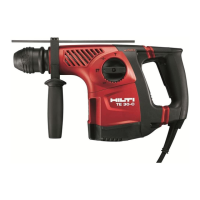
The Hilti TE 30-A36 is a cordless combihammer designed for professional use, offering versatility in drilling and chiseling applications. Its pneumatic hammering mechanism allows for efficient work in concrete, masonry, metal, and wood. The tool is specifically engineered for light to medium-duty chiseling tasks on masonry and for surface finishing on concrete, making it a robust solution for various construction environments.

Function Description

The TE 30-A36 operates with a powerful Li-ion battery, ensuring cordless freedom and portability. It features a TE-C (SDS plus) chuck, which allows for quick and secure insertion of various drill bits and chisels. The function selector switch provides multiple operating modes: drilling without hammering, hammer drilling, chisel adjustment (12 positions for optimal working angles), and chiseling. This range of functions makes the tool adaptable to different material types and task requirements.

A speed control switch enables smooth starting, giving the operator precise control over the tool's initial operation. The forward/reverse switch allows for easy selection of the drive spindle's rotation direction, which is interlocked to prevent accidental switching while the motor is running. For enhanced safety and control, the tool is equipped with a mechanical slip clutch and Active Torque Control (ATC). The ATC system provides additional comfort by rapidly shutting down the tool upon sudden rotation about the drill bit axis, such as when hitting rebar or tilting unintentionally. This feature helps prevent loss of control and potential injury.

The tool also incorporates a battery charge status LED display, which provides visual feedback on the remaining charge. This helps users monitor battery levels and plan for recharging, ensuring uninterrupted workflow.

Usage Features

The TE 30-A36 is designed with user comfort and safety in mind. It includes a pivotable side grip with a depth gauge, allowing for precise drilling depth adjustments and improved handling. The grip is vibration-absorbing, reducing operator fatigue during prolonged use. For optimal safety, it is crucial to always use the tool with the side handle fitted and hold it securely with both hands, especially during operations where the drill bit might stick, triggering the slip clutch.

When fitting insert tools, the chuck sleeve is pulled forward and held securely, allowing the tool to be pushed in and rotated until it engages. The connection end of the insert tool should be clean and lightly greased to ensure proper function and longevity. Similarly, the dust shield's sealing lip must be clean and in good condition to prevent dust ingress.

The chisel adjustment feature allows the operator to set flat and shaped chisels to 12 different positions (in 30° increments), ensuring the optimum working position for various chiseling tasks. This flexibility enhances efficiency and accuracy.

For dust removal, the TE DRS-S dust removal system can be fitted to the depth gauge of the side handle. This system, when connected to a vacuum cleaner, helps to remove drilling dust and fragments, contributing to a cleaner and safer working environment.

Maintenance Features

Regular care and maintenance are essential for the longevity and optimal performance of the TE 30-A36. Before any cleaning or maintenance, the battery must be removed to prevent unintentional starting.

Insert tools should be kept clean from dirt and dust deposits and protected from corrosion by wiping them with an oil-soaked rag periodically. The power tool itself, particularly its grip surfaces, should be kept clean and free from oil and grease. Silicone-containing cleaning agents should be avoided.

The outer casing, made of impact-resistant plastic, and synthetic rubber grip sections are designed for durability. The ventilation slots must be kept clear and cleaned with a dry brush to prevent overheating. Foreign objects should not enter the tool's interior. The exterior should be cleaned regularly with a slightly damp cloth, avoiding sprays, steam pressure cleaning equipment, or running water, which could compromise electrical safety.

The dust shield on the chuck requires regular cleaning with a dry, clean cloth. The sealing lip should be wiped carefully and re-greased with Hilti grease. If the sealing lip is damaged, the dust shield must be replaced to maintain effective dust protection.

Li-ion batteries should be charged fully before first use and stored in a cool, dry place, away from direct sunlight or heat sources. They should not be exposed to high temperatures, fire, or be disassembled, squashed, or incinerated. It is important to stop discharging the battery as soon as a significant drop in performance is noticed to maximize battery life. Only Hilti chargers approved for Li-ion batteries should be used. The charging process can be interrupted without negative effects on battery life, and Li-ion batteries do not suffer from a memory effect.

All external parts of the power tool should be checked for damage at regular intervals, and all controls should operate faultlessly. Any repairs to the electrical section must be carried out by trained electrical specialists.

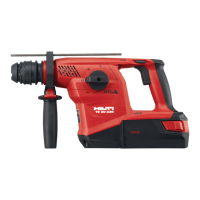
Hilti TE 30-A36 Specifications

General IconGeneral
Power sourceBattery
Battery voltage36 V
Impact rate4500 bpm
Rated speed (max)850 RPM
Impact energy (max)3.6 J
Vibration level (hammer drilling)11 m/s²
Drilling diameter in concrete (max)28 mm
Product colorBlack, Red
SDS systemYes

Related product manuals