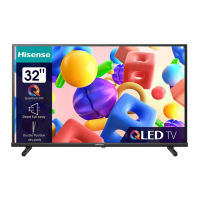
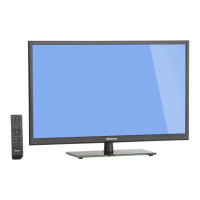
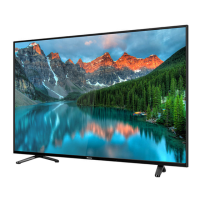
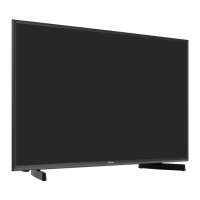
This document is a Quick Setup Guide for a Hisense TV, providing essential information for its safe and optimal use, installation, and initial setup. It emphasizes safety precautions, proper handling, and basic operational instructions to ensure a good user experience and prolong the device's lifespan.
Function Description
The Hisense TV is designed to render video and audio signals in a home or office environment, either on a table-top or wall-mounted. It serves as a display for various input sources, including antenna signals (DVB-T/T2/C, DVB-S/S2), HDMI devices, and AV equipment. The TV also features a USB port for media playback, allowing users to view content from external storage devices. It includes a Common Interface (CI+) slot for conditional access modules, enabling access to encrypted channels from service providers. The TV is equipped with an integrated sound system, providing audio output for all content.
Usage Features
Installation and Setup:
The guide details the process of installing the TV stand or a wall mount bracket. For stand installation, users are instructed to carefully place the TV face-down on a soft surface, insert the base stands into the bottom slots, and secure them with screws. For wall mounting, it advises removing the TV stand first and following the wall mount bracket's instructions, ensuring proper spacing and tilt angle. The initial power-on sequence guides users through selecting language, location, retail mode settings, and initiating channel tuning.
Remote Control Operation:
The TV comes with a remote control that allows users to perform various functions. Key buttons include:
- POWER: To switch the TV on or into standby mode.
- SOURCE: To select different input sources (e.g., HDMI, AV, Antenna).
- Number buttons: For direct channel selection or numerical input.
- TV/DTV, TV/Radio: To switch between TV/DTV and TV/Radio sources.
- MUTE: To mute or restore the TV sound.
- ZOOM: To select the screen aspect ratio.
- Recording button (•): To start recording (functionality may vary by model).
- MEDIA: To enter USB-Digital media player mode.
- SLEEP: To set a sleep timer for automatic power-off.
- I/II: To select Stereo or Mono in ATV mode.
- LANG.: To select audio language.
- SUBTITLE: To activate or deactivate subtitles.
- FAV/FAV-/FAV+: For quick access to favorite programs.
- MENU: To display the quick setup menu or return to the previous menu.
- EXIT: To exit the current menu.
- Navigation buttons (∧/v/</>) and OK: To navigate OSD menus, adjust settings, and confirm selections.
- INFO: To display current program information.
- EPG: To display the Electronic Program Guide (in DTV mode).
- CH +/-: To switch channels.
- PICTURE: For fast access to picture setting menus.
- VOL +/-: To adjust the volume.
- SOUND: For fast access to sound setting menus.
- STILL: To freeze the video.
- RECALL: To return to the last viewed program.
- T.SHIFT: For time shift in DTV mode.
- TEXT, HOLD, INDEX, SIZE, REVEAL, SUBPAGE: Buttons for DTV/ATV mode.
- Media content control buttons: For playback control in media mode.
- PVR LIST: To display the video recorder list.
- AD (Thailand only): To set audio description on or off.
Connectivity:
The TV offers a range of connection options:
- ANT 1 (DVB-T/T2/C) and ANT 2 (DVB-S/S2): For connecting terrestrial/cable and satellite antennas, respectively. ANT 2 supports power supply for satellite antennas.
- DIGITAL AUDIO OUT: For connecting to an audio amplifier/speaker system via a digital audio cable.
- HDMI (ARC) and HDMI: Multiple HDMI ports for connecting devices like DVD/Blu-Ray players, AV receivers, or set-top boxes. HDMI (ARC) supports Audio Return Channel functionality.
- AV IN: For connecting older AV devices using an RCA jack to AV cable.
- HEADPHONE: A 3.5mm jack for connecting headphones.
- USB: A USB port for connecting hard disks or USB hubs for media playback. It supports a voltage of 5V, with a maximum current consumption of 500mA for USB1.1 and USB2.0 devices.
Smart Card/CI+ Module:
The Common Interface (CI+) slot allows users to insert a CI+ module and a SmartCard (obtained from a service provider) to access encrypted channels. The guide advises inserting the CI card into the module and then the module into the TV, ensuring the TV is switched off beforehand.
Maintenance Features
General Care and Cleaning:
- Cleaning: The TV, screen, and remote control should be cleaned with a soft, moist, clean, and color-natural cloth only. Harsh chemicals, insect repellents, solvents, thinners, or other volatile substances should not be used as they can degrade surface quality.
- Power Cord: The power cord should be wiped with a dry cloth at regular intervals.
- Liquid Avoidance: Do not spray water or other liquids directly on the TV, as internal liquid can lead to product failure.
- Screen Protection: The display panel surface is delicate; avoid scratching it with fingernails or hard objects.
Safety Precautions:
The manual emphasizes several safety instructions to prevent damage and injury:
- Power Disconnection: Always disconnect the A/C power cord before installing or moving the TV, and during thunderstorms.
- Power Plug and Cable: Do not touch the power plug with wet hands. Avoid placing heavy objects on the power cable, kinking it, or exposing it to sharp edges or chemicals. Pull the plug, not the cable, when disconnecting.
- Ventilation: Ensure proper ventilation with at least 10 cm free space on the sides and 20 cm above the unit to prevent overheating, which can lead to fire or component failure. Do not block ventilation openings.
- Moisture and Dust: Avoid exposing the TV to rain, moisture, dripping or splashing water, high humidity, or dust concentration. Do not place liquid-filled objects on or over the unit.
- Temperature: Keep the TV away from direct air-conditioning, candles, or other naked flames. If moved from a cold to a hot environment, allow it to acclimatize for at least an hour to avoid condensation.
- Stability: Never place the TV in an unstable location. Use recommended cabinets or stands that can safely support the TV. Ensure the TV is not overhanging the furniture and is anchored if placed on tall furniture.
- Children Safety: Educate children about the dangers of climbing on furniture. Do not let children play unsupervised near the TV.
- Batteries: Incorrect installation can cause leakage, corrosion, or explosion. Use only specified battery types, do not mix old and new batteries, and dispose of them correctly according to local regulations. Do not expose batteries to excessive heat.
- Supervision: Do not leave a switched-on TV unattended.
- Volume: Avoid extreme volume, especially with headphones, to prevent irreversible hearing damage.
- Off-gassing: A slight smell may be present initially due to new components heating up, but this will diminish over time.
- Outdoor Antenna: If an outdoor antenna is used, ensure the system is protected against voltage surges and static charges.
Repair and Modification:
- Service: Do not remove the TV cover/back; there are no user-serviceable parts inside. Refer all servicing to qualified personnel.
- Modification: Do not attempt to modify the product in any way, as unauthorized modifications can void the warranty and cause electric shock or fires.
Packaging and Disposal:
- Packaging: Keep anti-moisture materials and plastic bags out of reach of children to prevent suffocation or accidental ingestion.
- Recycling: The TV and its batteries should not be disposed of with household waste. Follow local regulations for recycling electronic equipment and batteries at designated collection points.
Image Burn Prevention:
- Avoid displaying still images for long periods to prevent "image burn." If the aspect ratio is set to 4:3 for extended periods, image burn may occur on black areas, which is not covered by the warranty.
USB Usage:
- When connecting a hard disk or USB hub, always connect the device's mains adapter to its power supply to prevent damage from excessive current consumption. The TV does not support non-standard high-capacity mobile hard disks with impulse currents greater than or equal to 1A, as this can cause TV-rebooting or self-locking.

 Need help?
 General

 To Next Page