
 Need help?
Do you have a question about the Honda 08L96-TG7-100 and is the answer not in the manual?
Guidance for skilled technicians regarding proper tool, equipment, and training for vehicle additions.
Instructions for attaching the cargo net, detailing horizontal and vertical installation methods.
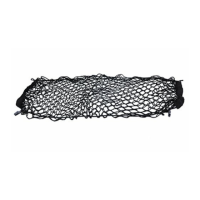
This document outlines the installation instructions for a Honda Cargo Net, accessory part number 08L96-TG7-100, designed for the 2016 Pilot model. The publication, version 1, was issued in June 2015. The instructions are specifically intended for skilled technicians with the appropriate tools, equipment, and training, and are not recommended for "do-it-yourselfers." The primary function of the cargo net is to secure items within the vehicle's cargo area, preventing them from shifting or rolling around during transit.
The cargo net can be installed in two distinct configurations: Horizontal Position and Vertical Position, offering versatility based on the user's needs for cargo containment.
To install the cargo net in the horizontal position, the first step involves preparing the vehicle's interior. This requires pulling each strap of the third-row seats and folding down both the left and right third-row seats. This action creates a flat loading surface and exposes the attachment points for the cargo net. Once the seats are folded, the cargo net is laid out in the cargo area. The next step is to attach four snaps, which are part of the cargo net assembly, to the corresponding loops located in the vehicle's cargo area. The illustration shows these loops positioned at the four corners of the cargo area, allowing the net to stretch across the floor. Following this, four snaps from the cargo net are attached to the cargo hooks, which are typically found on the floor or lower side panels of the cargo area. This configuration effectively creates a flat barrier that keeps items from sliding forward or backward on the cargo floor.
The vertical position offers a different method of cargo containment, suitable for preventing items from falling out of the trunk when the tailgate is open or for creating a barrier between the cargo area and the passenger compartment. To install the cargo net in the vertical position, the net first needs to be prepared. This involves folding the cargo net in half. Once folded, the zipper on each side of the net must be zipped up. This action transforms the flat net into a more compact, upright barrier. After folding and zipping, four snaps on the cargo net are attached to the loops in the vehicle. These loops are likely located higher up on the side panels or ceiling of the cargo area, allowing the net to hang vertically. The final steps for the vertical installation involve attaching two loops from the cargo net to two hooks in the vehicle. Subsequently, two upper snaps on the net are attached into the two loops that were just secured. Finally, two lower snaps from the cargo net are attached to two cargo hooks, which are typically located lower down in the cargo area. This creates a taut, vertical barrier.
The document does not explicitly detail maintenance features. However, general maintenance for such an accessory would typically involve:
The instructions emphasize the importance of careful handling to avoid damaging the vehicle's body during installation. The detailed illustrations accompanying the text provide clear visual guidance for each step, making the installation process straightforward for trained technicians. The overall design of the Honda Cargo Net aims to provide a practical, secure, and flexible solution for managing cargo in the 2016 Pilot, enhancing both convenience and safety for the vehicle owner.
 General
| Brand | Honda |
|---|---|
| Model | 08L96-TG7-100 |
| Category | Automobile Accessories |
| Language | English |



 To Next Page